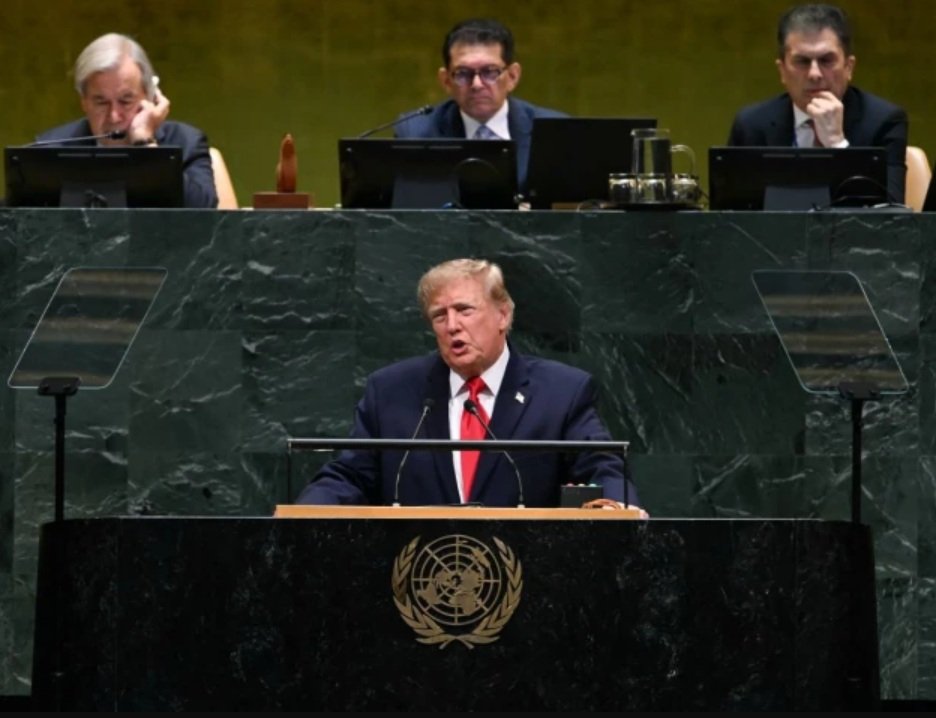

Saudi Arabia is pressing President Donald Trump to launch direct U.S. military action against Yemen’s Houthis as the Iran-aligned movement expands its territorial gains and moves closer to the strategic Bab el-Mandeb Strait.
But Trump has so far stopped short of committing American forces to a new offensive in Yemen.
The hesitation comes as U.S. military leaders debate the risks of opening another front while American forces are already engaged in the wider war with Iran, including operations around the Strait of Hormuz.
According to U.S. officials cited by NBC News, some senior military leaders have argued against direct strikes because of concerns over limited stocks of defensive and long-range weapons and the additional risks to American troops.
Others have argued that Washington should respond to the Houthi attacks on Saudi Arabia and support a major regional ally.
The disagreement has placed Yemen at the centre of a much wider strategic calculation for Washington.
Trump reportedly canceled planned Houthi strikes
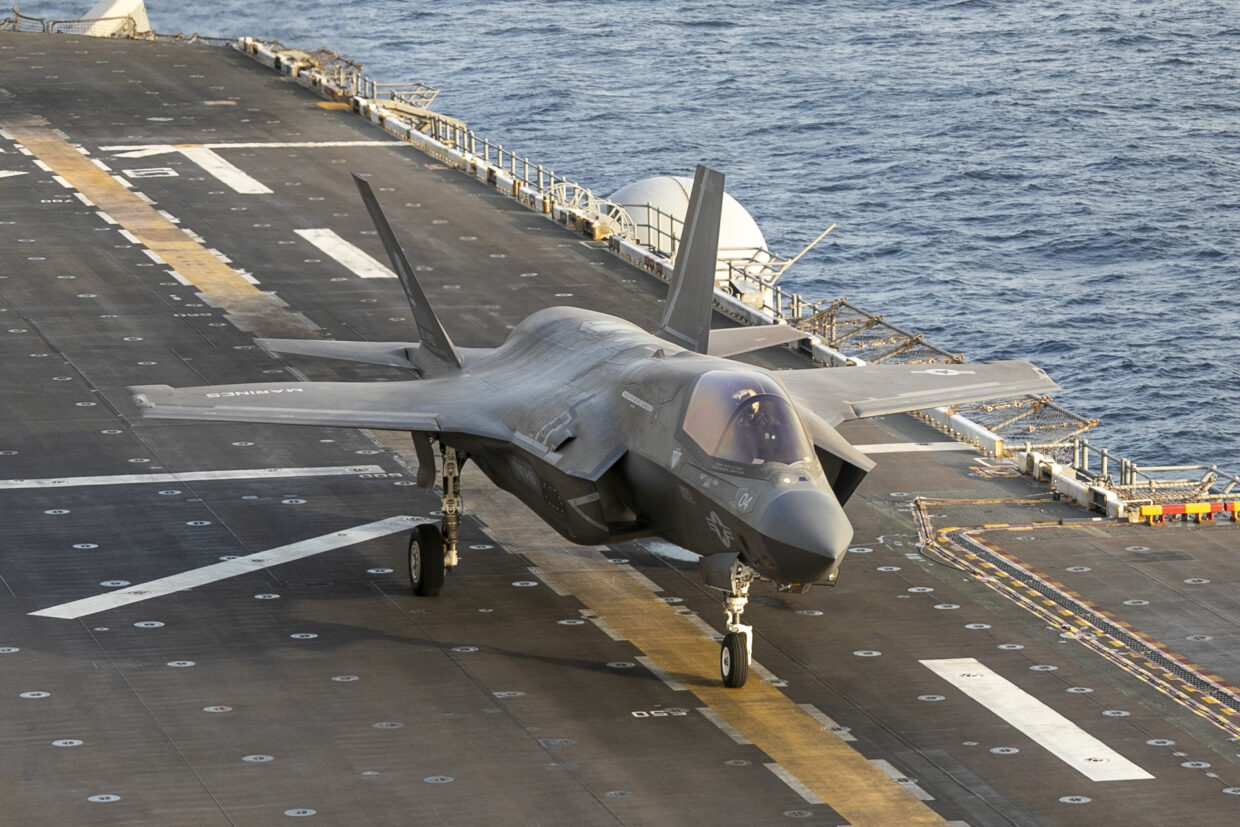
The United States came close to launching a new round of attacks against Houthi targets over the weekend.
According to U.S. officials cited by NBC News and other American media, Trump had ordered strikes to begin Sunday afternoon, with the operation reportedly scheduled for around 5 p.m. Eastern time.
The military was informed several hours earlier that the order had been canceled.
The decision does not appear to have permanently removed military action from consideration. Instead, Washington is continuing to assess its options while Saudi Arabia increases pressure for American involvement.
The cancellation is particularly significant because the Pentagon had reportedly already begun preparations for the operation.
It indicates that the question in Washington is no longer whether the Houthis represent a threat, but whether direct American intervention is the appropriate response.
Why Saudi Arabia wants Trump to act
Riyadh’s pressure on Washington has intensified as Houthi forces have made rapid gains inside Yemen.
The group has seized important positions along the Red Sea coast and moved toward areas overlooking the Bab el-Mandeb Strait.
The Houthis captured the port city of Mocha earlier this month and subsequently reached the Hanish islands, creating a new military position close to one of the world’s most important maritime routes.
Saudi Arabia now faces a threat from a Houthi movement that is operating from a stronger geographic position than it held during much of the post-2022 period.
The concern is not limited to territory.
Houthi missile and drone attacks have increasingly targeted Saudi territory and infrastructure.
Saudi authorities recently reported intercepting a Houthi missile fired toward Riyadh, while Saudi Arabia has also reported attacks against other areas of the kingdom.
For Riyadh, the combination of territorial expansion and attacks against Saudi territory is creating pressure for a stronger military response.
Houthis claim Saudi F-15 was shot down over Marib
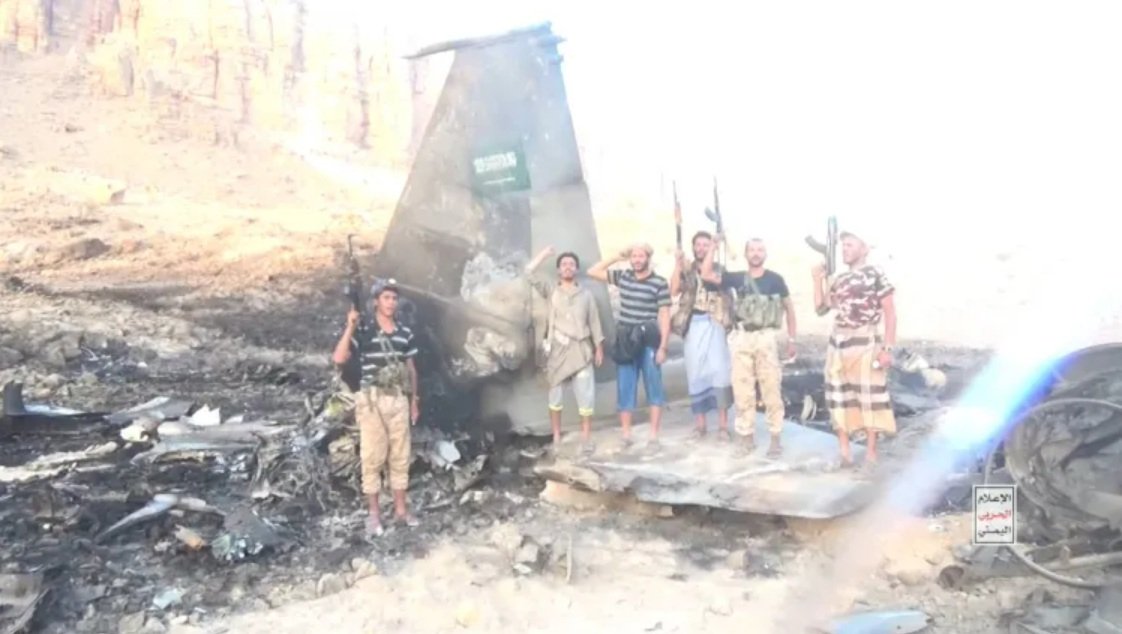
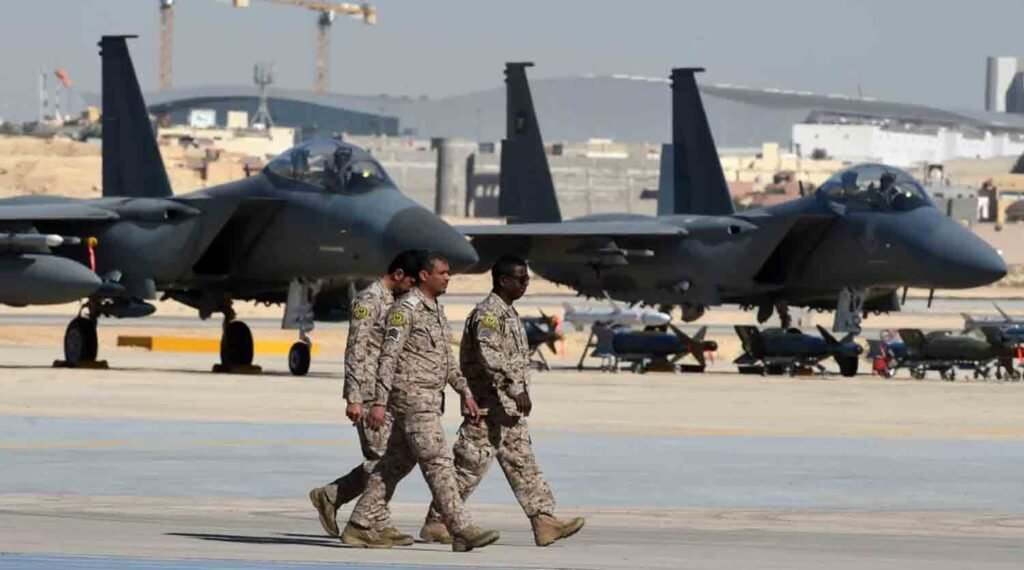
One of the most serious recent developments was the Houthi claim that its forces shot down a Saudi F-15 fighter jet over Marib.
The Houthi military spokesman said the aircraft was hit by a locally produced surface-to-air missile.
The group released video and images that it said showed the aircraft wreckage.
Janes identified the aircraft shown in the footage as an F-15SA, the Saudi-specific Advanced Eagle variant, and described the incident as the first reported combat loss of the F-15SA. However, the Houthi account has not been independently confirmed by Saudi authorities.
That distinction is important.
The reported loss should therefore be described as a Houthi claim, rather than an independently established Saudi combat loss.
Nevertheless, the incident has added another layer of pressure on Riyadh because Saudi Arabia has traditionally relied heavily on its advanced fighter fleet to maintain air superiority over Yemen.
Marib is becoming a critical battlefield
The fighting around Marib carries importance beyond the immediate military contest.
Marib contains significant oil and gas resources and has long been one of the most important strongholds of forces opposed to the Houthis.
Control of the area would provide the Houthis with additional economic and strategic leverage.
It would also place greater pressure on Saudi-backed Yemeni forces and potentially alter the balance of power across central Yemen.
That is one reason the current offensive is being viewed differently from earlier phases of the Yemen conflict.
The Houthis are not simply conducting missile attacks from territory they already control.
They are attempting to expand their territorial position while simultaneously strengthening their leverage over strategic waterways.
Bab el-Mandeb is the bigger strategic concern
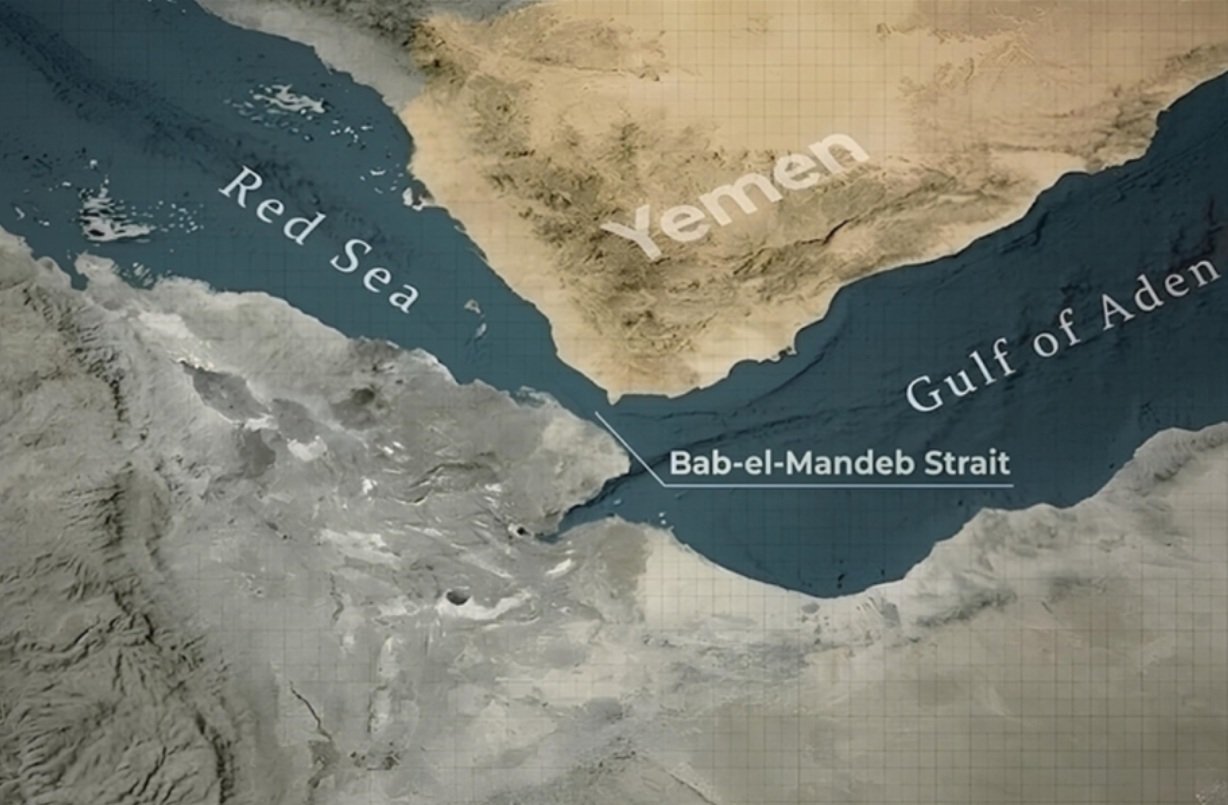
The most consequential development may be taking place around Bab el-Mandeb, the narrow maritime passage connecting the Red Sea with the Gulf of Aden.
The waterway is essential for shipping between the Indian Ocean and the Suez Canal.
Its importance is particularly high for energy shipments and commercial traffic moving between Asia, the Middle East and Europe.
Reuters reported earlier this month that Houthi forces had reached the Hanish islands after capturing Mocha, creating a potential new threat to shipping through Bab el-Mandeb.
The latest fighting has intensified that concern.
The Houthis are now battling for strategic heights near the Red Sea that overlook Bab el-Mandeb and Mayyun Island.
Control of the Kahboub mountains in Taiz and Lahj provinces could give the group additional leverage over the surrounding coastline and routes into the strait.
For Washington, this transforms Yemen from a Saudi security issue into a potential international maritime-security problem.
A second maritime chokepoint is now under pressure
The timing makes the situation particularly serious.
The United States is already dealing with severe disruption around the Strait of Hormuz because of the Iran war.
Hormuz connects the Persian Gulf with the Gulf of Oman and is one of the world’s most important energy corridors.
Bab el-Mandeb provides another critical route between the Gulf region and global markets.
If both waterways remain under military pressure at the same time, the consequences could extend well beyond the Middle East.
Oil and gas shipments could face higher insurance costs, longer routes and additional security requirements.
Shipping companies could also divert vessels around the Cape of Good Hope, adding significant time and cost to voyages between Asia and Europe.
That is why the Houthi advance is attracting attention far beyond Yemen.
Pentagon officials fear another U.S. front
The military argument against direct intervention is centred partly on resources.
The United States is already operating aircraft, warships, missile-defence systems and surveillance assets across the Middle East because of the Iran conflict.
A Yemen operation would require additional intelligence, aerial refuelling, strike aircraft, naval support and precision weapons.
The demand for air-defence interceptors is an especially sensitive issue.
U.S. forces are already defending American installations and partners from Iranian missile and drone attacks.
Some military officials therefore fear that expanding the war to Yemen could consume weapons needed elsewhere.
There is also the question of personnel.
A direct American campaign against the Houthis could expose U.S. bases and ships to retaliation.
It could also encourage attacks by other Iran-aligned armed groups in the region.
The Houthis have said they will not target U.S. ships
Another factor influencing Washington is the Houthis’ reported position toward American shipping.
Reuters reported that U.S. officials recently met Houthi representatives in Oman and that the group told American officials it had no intention of attacking U.S. vessels.
That does not remove the broader threat.
But it gives Washington a reason to distinguish between protecting international shipping and entering a direct military campaign on behalf of Saudi Arabia.
President Trump also spoke with Yemeni President Rashad al-Alimi on Sunday after the Houthi gains around Bab el-Mandeb.
According to Reuters, Al-Alimi sought direct American military support, but Trump did not commit to providing it.
Washington has already been helping Riyadh
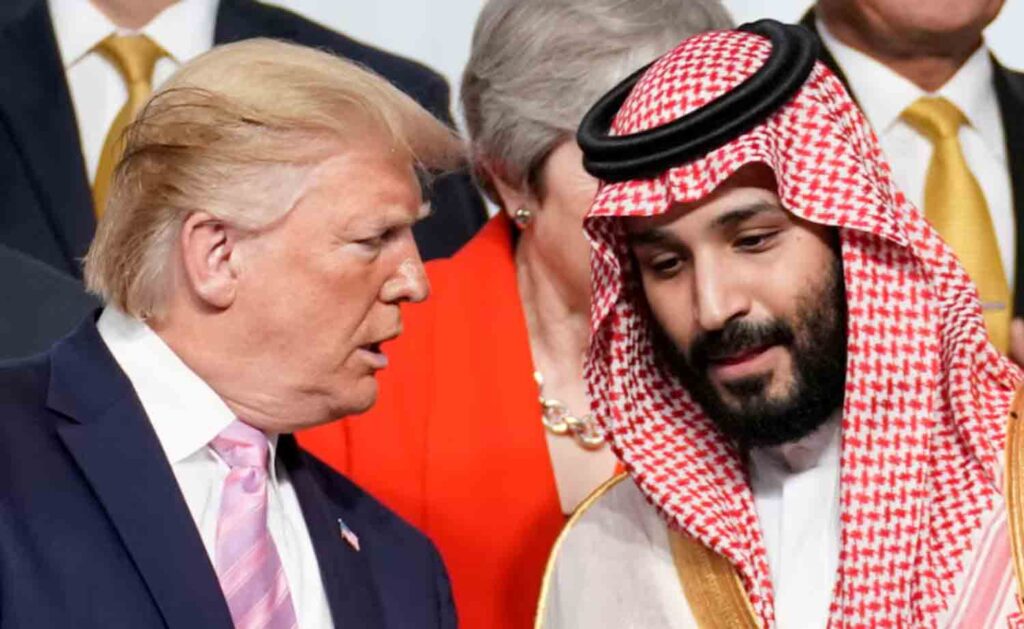
The United States has not simply stood aside.
Washington has reportedly provided Saudi Arabia with intelligence, planning assistance, military advisers and logistical support.
The disagreement is over whether that assistance should progress to direct American offensive operations.
That distinction is strategically important.
Intelligence sharing and defensive support allow Washington to help an ally while maintaining some distance from the battlefield.
U.S. airstrikes would make America an active participant in the Yemen war.
Once American aircraft begin striking Houthi positions, Washington could face pressure to continue operations if the initial attacks fail to change the battlefield.
Yemen is not an easy target
The Houthis have spent years developing methods for surviving air campaigns.
They operate from mountainous terrain, dispersed facilities and underground or concealed positions.
Their missile and drone capabilities also allow them to retaliate without maintaining conventional air superiority.
Previous Saudi-led military operations demonstrated the difficulty of defeating the movement through air power alone.
The Houthis survived years of Saudi-led intervention and emerged with significant missile and drone capabilities.
Reuters has described how the group developed from a local insurgency into a regional military force with the ability to threaten shipping and infrastructure well beyond Yemen.
That history is likely part of the Pentagon’s calculation.
A U.S. strike could inflict substantial damage.
It would not necessarily end the Houthi threat.
Iran’s role adds another layer
The Houthis are closely aligned with Iran, and Reuters has reported that Iranian weapons and advice helped the movement’s recent advance along Yemen’s Red Sea coast.
Tehran, however, has denied controlling the group.
The relationship is therefore more complicated than a simple command structure.
Iranian assistance has helped expand Houthi military capabilities, but the movement also has its own Yemeni political and military interests.
For Washington, however, the distinction may have limited practical value.
Any major U.S. attack on the Houthis could be interpreted by Tehran as another extension of the wider Iran conflict.
That creates the possibility of another escalation at a time when Washington is already trying to manage the war with Iran.
Saudi Arabia faces a rapidly changing military map
The battlefield around Yemen has changed significantly in recent weeks.
The Houthis have expanded along the Red Sea coast, captured Mocha and moved toward the strategic islands and mountains around Bab el-Mandeb.
At the same time, fighting has intensified around Taiz, Lahj and Marib.
The internationally recognised Yemeni government has said its forces are reorganising and preparing to retake lost positions.
Saudi-backed forces therefore face the possibility of fighting on multiple fronts simultaneously.
That is increasing Riyadh’s dependence on outside support.
The humanitarian cost is rising
The renewed offensive is also producing a rapidly worsening humanitarian situation.
The World Health Organization said at least 674 people had been killed and nearly 3,000 injured since August 6, according to reporting on September 22.
More than 158,000 people have reportedly been displaced during September, while the World Food Programme has warned that Yemen’s already severe food crisis is worsening.
Yemen imports most of its food, making disruption to ports and transport routes particularly dangerous.
Further fighting around Mocha, Hodeidah or other Red Sea infrastructure could therefore have consequences far beyond military calculations.
Saudi Arabia is also looking beyond Washington
The uncertainty over American intervention is encouraging Riyadh to explore other options.
Saudi Arabia has sought assistance from other partners, including the United Kingdom, while diplomatic channels involving Oman remain active.
Reports also indicate that Saudi Arabia is considering an Oman-based diplomatic track following Trump’s decision to halt the planned strikes.
That does not mean Riyadh has abandoned military options.
It indicates that the kingdom may be trying to avoid depending on a single American decision while the battlefield changes rapidly.
Trump faces pressure from both sides
For the White House, the situation presents competing demands.
Saudi Arabia wants a stronger American response.
Some U.S. military officials believe Washington should support its ally more directly.
Other commanders are concerned about weapons stocks, troop exposure and the possibility of expanding the Iran war.
Meanwhile, the Houthis are continuing their territorial advance and moving closer to a strategically vital maritime chokepoint.
Trump’s decision to cancel the planned strikes has therefore bought Washington time, but it has not resolved the underlying issue.
What could happen next?

Washington has several possible courses of action.
The United States could continue providing Saudi Arabia with intelligence, logistics and defensive assistance while avoiding direct strikes.
Trump could also authorize a limited operation against Houthi military infrastructure if attacks on Saudi Arabia or threats to international shipping intensify.
Another possibility is a stronger diplomatic push through Oman, particularly if Washington can secure assurances concerning U.S. shipping and regional security.
The military option remains available, but the cancellation of the latest planned operation indicates that the administration is weighing its wider consequences.
Yemen could reshape the wider Middle East war
The most important development is not simply whether Trump orders an airstrike.
It is the emergence of a new strategic link between Yemen, Saudi Arabia, Iran, Hormuz and Bab el-Mandeb.
The Iran war has already placed enormous pressure on the Gulf’s security architecture.
The Houthi advance now threatens to add another pressure point at the southern entrance to the Red Sea.
For Saudi Arabia, the priority is preventing the Houthis from consolidating their gains and threatening the kingdom’s territory and economic infrastructure.
For Washington, the priority is protecting American interests without committing forces to another open-ended campaign.
And for the Houthis, control of strategic territory and proximity to Bab el-Mandeb could provide greater leverage than the movement has possessed in years.
Trump has not ruled out military action.
But for now, Washington is holding back while the situation on the ground continues to change.
The next major decision may come if the Houthis move further toward Bab el-Mandeb, threaten international shipping directly, or inflict another major blow on Saudi military forces.
Until then, the United States appears to be trying to support Saudi Arabia without becoming fully responsible for another war in Yemen.