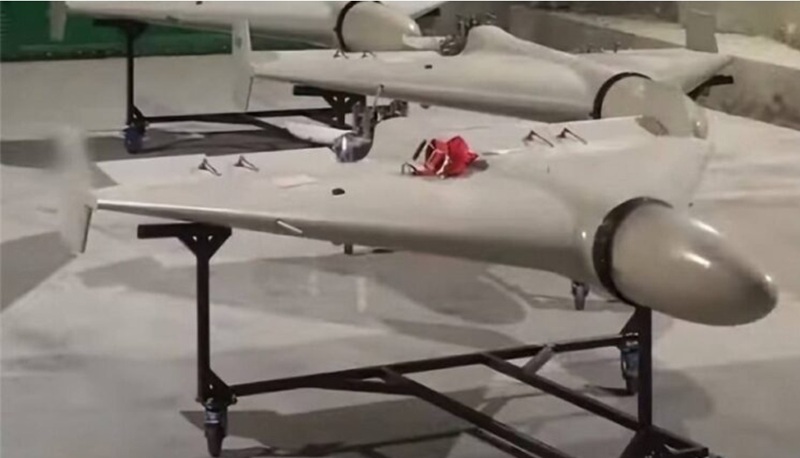
A drone that once looked almost too simple to matter has become one of the most consequential weapons of modern warfare.
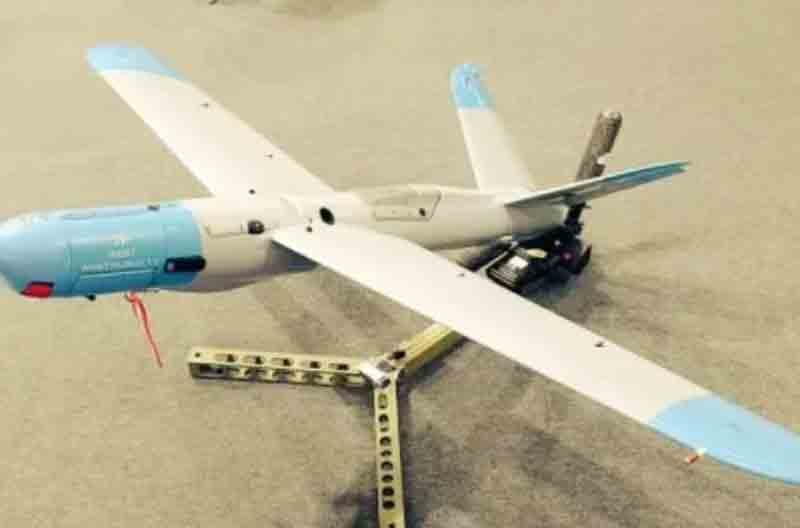
The Iranian-made Shahed began as a relatively inexpensive one-way attack drone. Russia turned it into a weapon of mass employment in Ukraine. Now, according to a new Wall Street Journal investigation, the supply chain behind the weapon increasingly runs through China, where manufacturers and intermediaries have supplied engines, servomotors, gyroscopes, communications equipment and other components.
That does not mean China is simply handing Iran or Russia finished Shahed drones. Beijing has said it regulates exports of dual-use goods and has rejected accusations involving unauthorized military transfers.
The significance lies elsewhere.
The Shahed demonstrates how modern weapons can be built without a country possessing every piece of the technology itself. A design can originate in one country, components can come from several others, assembly can happen somewhere else and the finished weapon can subsequently be modified for a completely different battlefield.
That is a much harder problem to contain than a conventional arms sale.
And for India and Pakistan, there is an additional reason to pay attention.
They have already had a glimpse of this future.
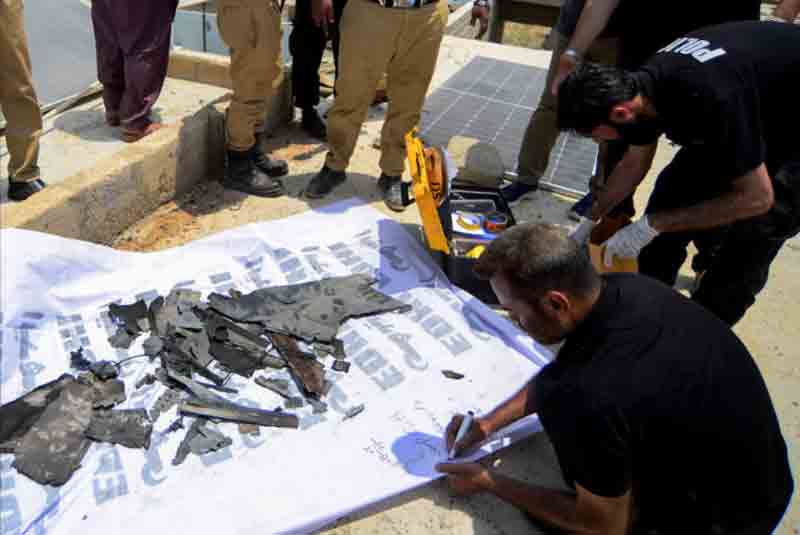
During their four-day confrontation in May 2025, drones and loitering munitions moved from the periphery of South Asian warfare into the centre of it. Both countries used unmanned systems for surveillance, attacks and probing of air defences.
The next stage of that competition is unlikely to be about simply acquiring more drones.
It will be about how cheaply they can be produced, how quickly they can be replaced and how economically they can be stopped.
That is where the Shahed story becomes relevant to South Asia.
The Shahed was never supposed to win a conventional beauty contest
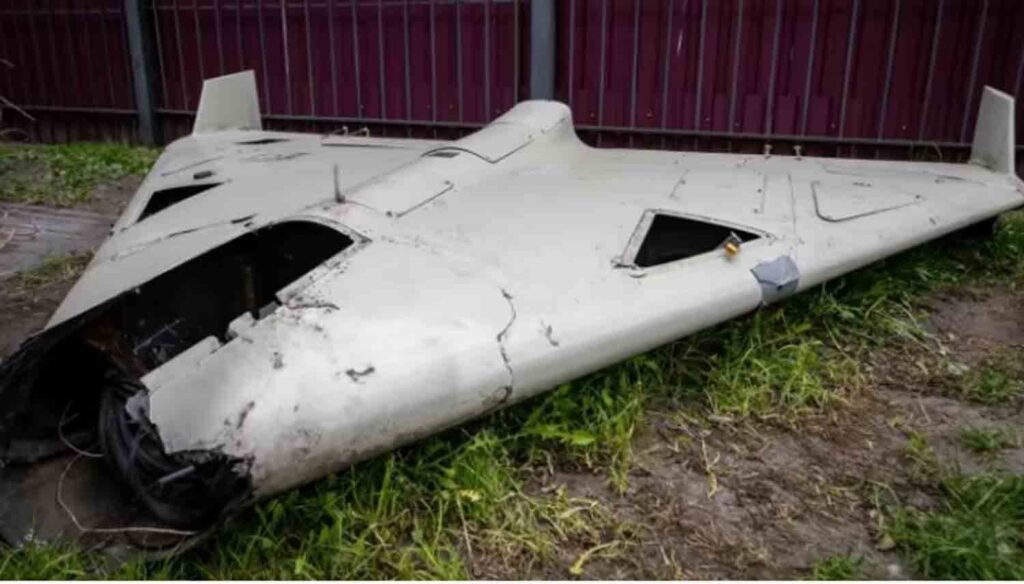
The Shahed-136 is not an aircraft that would impress anyone comparing it with a modern fighter.
It is slow by military aviation standards. Its design is relatively simple. Its payload is limited.
But judging it as if it were competing with a fighter aircraft misses the point.
The Shahed was designed around a different calculation.
It was cheap enough to launch repeatedly.
That changes the economics of air defence.
A defender may shoot down one drone and achieve a tactical success. But if the interceptor costs several times more than the drone, the attacker can continue sending drones until the defender’s stock of affordable responses becomes the limiting factor.
This is precisely why Shahed-type attacks have been so useful to Russia in Ukraine. They can be employed alongside cruise and ballistic missiles, forcing defenders to decide how to allocate scarce and expensive air-defence weapons.
The drone does not have to be the most sophisticated object in the sky.
It simply has to create a problem that costs more to solve than it costs to create.
That is a very different way of thinking about air warfare.
China’s role is more important than the headline suggests
The Wall Street Journal investigation makes an important point about how the Shahed evolved.
Iran’s engineers developed the weapon under conditions of isolation, but they were not operating in a completely closed technological environment.
The investigation traces components through suppliers in different countries and identifies China as the most important hub in the supply chain. Western-origin components were sometimes routed through companies in mainland China or Hong Kong, while Chinese-made parts increasingly replaced them over time.
The engine story is particularly revealing.
Iran initially struggled to obtain an engine suitable for a drone that had to fly for long periods at sustained speed. The investigation traces Iranian acquisition of German-designed Limbach engine technology and later the growing importance of Chinese manufacturing and distribution networks.
This is how the weapons industry is changing.
A country under sanctions no longer necessarily has to obtain a complete weapon from abroad.
It can obtain the ingredients.
And China, because of the sheer scale and diversity of its manufacturing sector, is uniquely positioned in that environment.
That is why the issue is bigger than Iran.
The Shahed itself is changing
Perhaps the most important detail in the new report is that the Shahed is no longer quite the same weapon that first attracted attention.
Russia has been modifying the Iranian design, and Ukrainian officials have reported increasingly sophisticated Chinese components in newer systems.
Some newer Russian Shahed-type drones use turbojet engines rather than the propeller-driven propulsion associated with earlier versions.
That matters because speed changes the defensive problem.
The original drones gave defenders more time to detect, track and engage them. A much faster version compresses that reaction window.
The Wall Street Journal reported that the newer turbojet-powered drones can reach roughly 300 miles per hour—about three times the speed of older versions. Ukrainian officials have linked Chinese-made engines to these newer systems.
Other improvements reportedly include communications equipment, modems and navigation-related components.
In other words, the cheap drone is becoming less crude.
That combination—low cost plus better performance—is what militaries should be worried about.
South Asia has already entered this debate
India and Pakistan do not need Ukraine to explain why this matters.
Their own experience in May 2025 was enough.
The four-day conflict was notable not simply because drones were used, but because both sides employed them in large numbers and for different purposes.
They were used for reconnaissance, probing, attack and attempts to expose or overwhelm air-defence systems. Brookings noted at the time that many of the UAVs were deliberately expendable, intended in part to prompt the use of costly defensive weapons.
The Stimson Center subsequently concluded that the 2025 crisis represented the first major instance in which both India and Pakistan used drones with the intent of causing damage to each other.
That distinction matters.
Drones had previously appeared along the Line of Control and in cross-border smuggling.
In May 2025, they became part of the actual military contest.
And once a weapon becomes part of a military’s experience, it is very difficult to remove it from future planning.
Pakistan is unlikely to ignore the Iranian lesson
Pakistan’s drone strategy is developing within an unusually broad defence relationship.
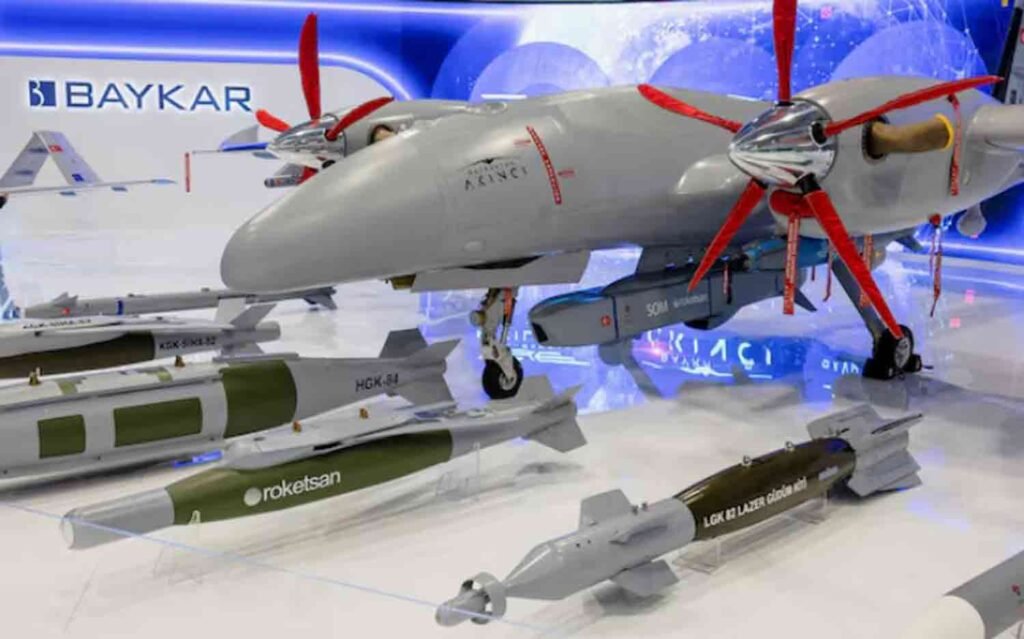
China supplies a large portion of Pakistan’s major military equipment. Türkiye has become another important defence partner, particularly in unmanned systems. Pakistan also has its own drone programmes.
Islamabad is now trying to build a more sustainable domestic UAS industry.
In May 2026, Pakistan’s Ministry of Defence Production held a session with private-sector drone developers and said the government wanted stronger cooperation between state institutions and private companies to create a sustainable domestic drone ecosystem. The ministry described drone technology as a national priority.
That is perhaps more significant than any individual drone purchase.
The lesson Pakistan appears to be drawing is that it cannot rely entirely on imported systems.
A future conflict could consume drones at a rate that peacetime procurement cannot match.
The country that can keep producing them after the first stockpile is exhausted has an obvious advantage.
Pakistan’s Prime Minister Shehbaz Sharif also said in July that drones had achieved more than 60% indigenisation, although such government statements should be treated as official claims rather than independently verified measures of the entire drone sector.
The direction is nevertheless clear: Islamabad wants more domestic control over the technology.
India is making a similar calculation
India’s response has been even more visible in official procurement.
In August 2026, the Indian Ministry of Defence signed contracts worth approximately ₹1,577 crore with Tata Advanced Systems and NIBE for loitering munition systems and associated munitions and equipment for the Army.
That follows earlier Indian moves to expand both offensive drone capabilities and counter-drone systems.
In December 2025, India’s Defence Acquisition Council approved proposals including loitering munitions and integrated drone detection and interdiction systems.
And in July 2026, the council approved an anti-UAV electronic-warfare system, a jet-based kamikaze drone system and other capabilities.
Those decisions tell us something important.
India is not looking at drones as a niche capability.
They are becoming part of the wider force structure.
The next contest will be between the drone and the price of killing it
This is probably the most important lesson from the Shahed.
For years, military planners focused on whether a weapon could penetrate an air-defence system.
Now another question has to be asked:
How much does it cost to stop it?
If a $20,000-class weapon forces a defender to use a much more expensive interceptor, the attacker has created an economic advantage even when the drone is destroyed.
That does not make expensive air-defence systems irrelevant.
Quite the opposite.
Modern militaries need layered air defence because the same battlefield can contain aircraft, cruise missiles, ballistic missiles and drones.
But the layers cannot all depend on expensive interceptors.
The defender needs cheaper ways of dealing with cheap threats.
That is why counter-UAS guns, electronic warfare, short-range systems and interceptor drones are becoming increasingly important.
India has already recognised this in its procurement plans.
Pakistan is working on the same problem.
The 2025 India-Pakistan conflict offers an important warning
There is another lesson that deserves more attention.
The May 2025 fighting demonstrated that drones occupy an unusual place in the escalation ladder between India and Pakistan.
Brookings noted that UAVs and loitering munitions occupied a kind of middle ground between less escalatory artillery exchanges and more serious missile strikes.
That could make them attractive to decision-makers in a future crisis.
A drone can be launched without risking a pilot.
It can conduct reconnaissance without sending a fighter aircraft across the border.
It can test an air-defence network.
It can be used in limited attacks while keeping the appearance of escalation under control.
But that apparent advantage has a dangerous side.
If a drone hits a radar, command centre or other military asset, the victim may not know whether it was an isolated action or the opening phase of something much larger.
In a nuclear-armed region, ambiguity can be dangerous.
A cheap drone may therefore be less politically innocent than it looks.
India and Pakistan are learning different things from the same war
The two countries are unlikely to draw identical conclusions from 2025.
India has a much larger economy and a broader defence-industrial base. It can invest simultaneously in high-end fighters, missiles, satellites, air defence, electronic warfare and large numbers of unmanned systems.
Pakistan has fewer resources, which makes cost efficiency more important.
For Islamabad, the attraction of drones is partly obvious: they can provide surveillance and strike options without requiring a fleet of expensive manned aircraft.
For New Delhi, drones are more likely to become one layer in a much larger network.
That difference could shape the future competition.
India may seek to integrate unmanned systems into an increasingly sophisticated multi-domain force.
Pakistan may put greater emphasis on numbers, flexibility and the ability to impose costs on a larger adversary.
Both approaches can coexist.
The Chinese factor makes Pakistan’s position particularly interesting
 China’s role in this story is not simply about Iran.
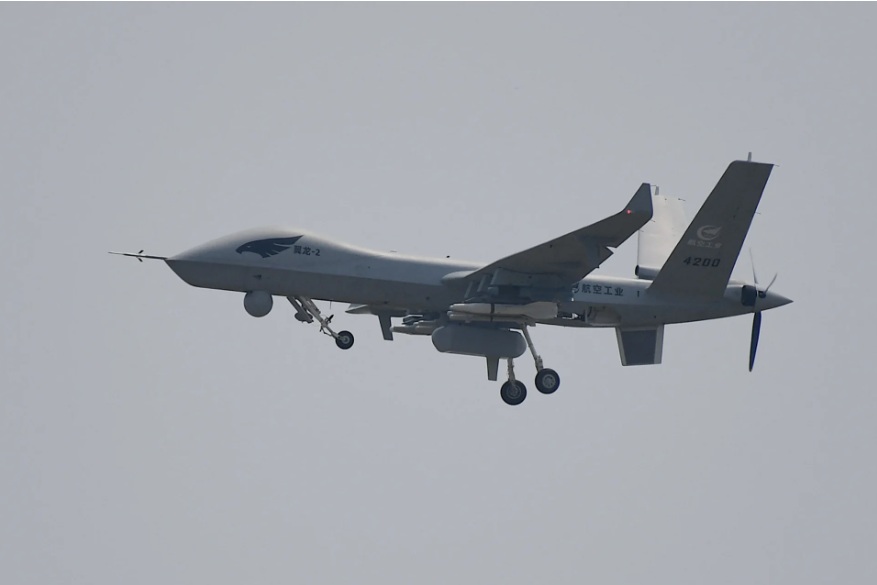
Pakistan is one of Beijing’s closest defence partners.
Chinese aircraft, missiles, air-defence systems and unmanned platforms already form an important part of Pakistan’s military inventory.
That means developments in China’s drone industry can have a relatively direct effect on Pakistan’s capabilities.
India, meanwhile, is trying to reduce its dependence on foreign military supply chains and expand domestic production.
That gives the two countries very different relationships with the same technological trend.
Pakistan can potentially benefit from China’s enormous manufacturing ecosystem.
India sees the same ecosystem partly as a strategic vulnerability because China is also its principal military rival.
This is one reason the drone race cannot be separated from the wider India-China competition.
The most important Chinese advantage may not be the drone itself
China does not need to dominate the global market for complete attack drones to have enormous influence over unmanned warfare.
It can dominate the components.
That may be more important.
Engines, motors, electronics, communications equipment, navigation components and manufacturing machinery are all parts of the modern drone ecosystem.
A country can build an indigenous drone and still depend on foreign components.
This is exactly why the Shahed supply chain is worth studying.
It illustrates the difference between owning a weapon design and controlling the industrial ecosystem required to keep making it.
For India and Pakistan, that distinction will become increasingly important.
Pakistan’s challenge is sustaining production
Pakistan has made considerable progress in developing indigenous unmanned systems, but the real test will come during a prolonged crisis.
Can factories produce thousands rather than hundreds?
Can components be replenished?
Can electronic-warfare-resistant communications be maintained?
Can engines and other critical parts be produced domestically or sourced reliably?
And can the country continue manufacturing while conventional military supply chains are under pressure?
These are industrial questions as much as military ones.
Iran’s experience suggests that sanctions do not necessarily stop a determined country from developing drones.
But it also demonstrates how dependent such programmes can become on international component networks.
Pakistan will want to avoid being vulnerable at that point.
India’s challenge is different: making scale affordable
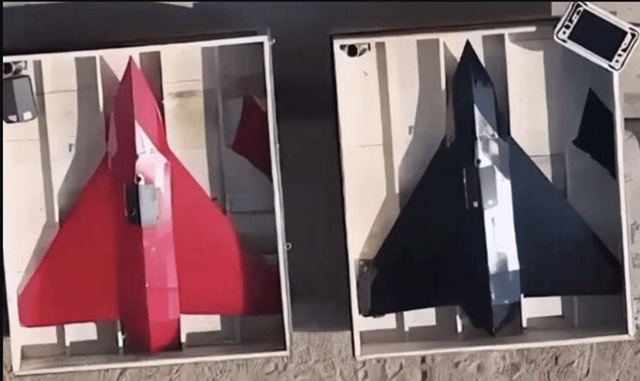
India has the industrial base to produce large numbers of drones.
The question is whether it can produce them at the right price.
A country can spend billions developing an exquisite unmanned aircraft.
That does not solve the problem of an enemy launching hundreds of cheap systems.
The Indian government’s recent procurement decisions suggest that New Delhi understands this.
The Army is acquiring loitering munitions.
Counter-UAS systems are being pursued.
The Air Force is demonstrating short-range loitering munitions and counter-drone capabilities.
India is also investing in indigenous production.
The challenge now is to turn these separate programmes into an affordable, integrated system.
The Shahed’s evolution should worry both sides more than its original design
There is a tendency to dismiss the Shahed because the original drone is relatively unsophisticated.
That would be a mistake.
The interesting part is not where the Shahed started.
It is how quickly the concept has evolved.
A simple drone has become a family of systems.
Russia has modified it.
Ukraine has developed new methods to intercept it.
Iran has exported the technology.
China’s industrial ecosystem has supplied important components.
And other militaries are now developing their own low-cost one-way attack systems.
The basic idea has escaped its original designer.
That is how military technology becomes influential.
The next generation could close the gap between drone and missile
A faster Shahed-type drone points toward a wider trend.
The old categories are becoming less useful.
A traditional cruise missile is expensive but fast and accurate.
A conventional drone is cheaper but slower and often less destructive.
Loitering munitions sit somewhere between the two.
As propulsion, navigation and electronics improve, the distinction becomes increasingly blurred.
A weapon can be relatively inexpensive, fly hundreds of kilometres, carry a meaningful warhead, navigate autonomously and arrive fast enough to challenge conventional air defences.
That is the direction the technology is moving.
India and Pakistan will have to plan accordingly.
The battlefield may increasingly favour the side with the better factory
This is perhaps the most uncomfortable conclusion.
For much of the 20th century, military advantage was associated with technological sophistication and industrial capacity.
The drone era brings those two factors back together.
A drone does not have to be perfect.
It has to be good enough.
If it can be manufactured quickly and cheaply, its weaknesses can sometimes be compensated for by numbers.
That is the lesson Russia has drawn from Iran.
It is one reason China matters so much to the story.
And it is something India and Pakistan are now being forced to consider.
The decisive question in a future South Asian air campaign may not be who has the better drone on day one.
It could be who still has drones on day thirty.
There is a second race happening at the same time
The offensive drone race gets most of the attention.
The defensive race may ultimately be more important.
Every cheap attack drone creates demand for a cheap answer.
India is already pursuing integrated drone detection and interdiction systems, electronic warfare and other counter-UAS capabilities.
Pakistan is also working on domestic counter-drone and unmanned systems through its defence-production establishment.
The two countries will therefore be competing on both sides of the equation.
They will build drones.
Then they will build weapons to destroy drones.
Then they will build better drones designed to defeat those defences.
And the cycle will continue.
This could make the next crisis faster and more confusing
The proliferation of drones will not necessarily make a future India-Pakistan conflict more destructive from the beginning.
It could make it more ambiguous.
A drone can be launched for surveillance.
Another can carry explosives.
A third can act as a decoy.
A fourth may be intended to trigger an air-defence response.
The defender has to decide quickly what it is facing.
That creates room for mistakes.
The May 2025 conflict already showed how difficult it can be for both sides to establish a common picture of what happened. The International Institute for Strategic Studies noted that the two governments presented sharply different accounts of the drone and missile campaign.
More unmanned systems could make that problem worse.
India has one advantage Pakistan cannot ignore
India’s economic and industrial scale gives it greater capacity to absorb a long drone war.
Its defence-industrial policy is increasingly aimed at domestic production, and recent government contracts demonstrate that unmanned systems are becoming part of that industrial strategy.
Pakistan therefore has an incentive to focus not simply on producing more drones but on making its systems inexpensive, resilient and difficult to neutralise.
This is one area where the Iranian experience offers a useful lesson.
Iran did not build the world’s most advanced drone industry.
It built a drone industry that could survive pressure and keep producing.
That is a different achievement.
Pakistan has another advantage: it is not starting from zero
Pakistan already has a mature aerospace and defence-industrial base compared with many countries developing their first military drones.
It also has long-standing cooperation with China and an expanding relationship with Türkiye.
The government’s current effort to bring private drone companies into a more organised national ecosystem could therefore prove important if it develops beyond policy statements and exhibitions into sustained procurement, testing and production.
The next few years will show whether Pakistan can turn that ecosystem into genuine mass-production capacity.
India will probably try to make the cost equation work in its favour
The obvious Indian response is not simply to buy more missiles.
It is to build a layered system in which the cheapest appropriate weapon is used against the cheapest threat.
That could mean electronic warfare against some drones, guns or short-range systems against others, interceptor drones against still others, while expensive missiles are reserved for the threats that genuinely require them.
India’s recent procurement direction suggests movement toward that layered approach.
If New Delhi can make that system work economically, it can blunt much of the advantage that mass drone attacks are designed to create.
The real significance of China’s Shahed connection
The most interesting part of the WSJ investigation is therefore not the accusation or counter-accusation over individual components.
It is the picture it paints of modern military production.
Iran supplied the design and battlefield concept.
Russia supplied scale and adaptation.
China’s enormous industrial ecosystem supplied important pieces of the puzzle.
Ukraine supplied the testing ground for countermeasures.
And now countries around the world are taking the idea and adapting it to their own requirements.
That is how a weapon changes warfare.
Not because one country invents something revolutionary.
But because other countries discover that the same idea can be made cheaper, faster and more widely available.
The next South Asian arms race may be measured in thousands
India and Pakistan have spent decades competing over fighter aircraft, missiles and air-defence systems.
Those contests are not going away.
But another competition is developing underneath them.
Who can build more drones?
Who can build them more cheaply?
Who can protect the supply chain?
Who can produce better electronic-warfare systems?
Who can intercept drones without wasting expensive missiles?
And, perhaps most importantly, who can continue doing all of this after the first week of a war?
The Shahed has changed the question from “How advanced is the weapon?” to “How sustainable is the weapon?”
That is a profound change.
For India, it means that a technologically sophisticated air-defence network will need an equally sophisticated answer to the economics of mass attack.
For Pakistan, it means that Chinese and Turkish technology can provide an important foundation, but domestic production and supply-chain resilience will matter just as much.
For China, the lesson is that its manufacturing strength gives it influence over warfare well beyond the systems it officially exports.
And for the wider region, there is a more uncomfortable possibility.
The next major India-Pakistan confrontation could begin not with fighters crossing the border, but with waves of unmanned aircraft probing radar networks, testing air defences and forcing commanders to make decisions before they fully understand what is happening.
The Shahed has already demonstrated how powerful that model can become.
India and Pakistan have now seen enough of the future to know that the drone is not a sideshow.
The real race has begun.
And it will be fought not only in the air, but in factories, supply chains, software laboratories and air-defence command rooms.