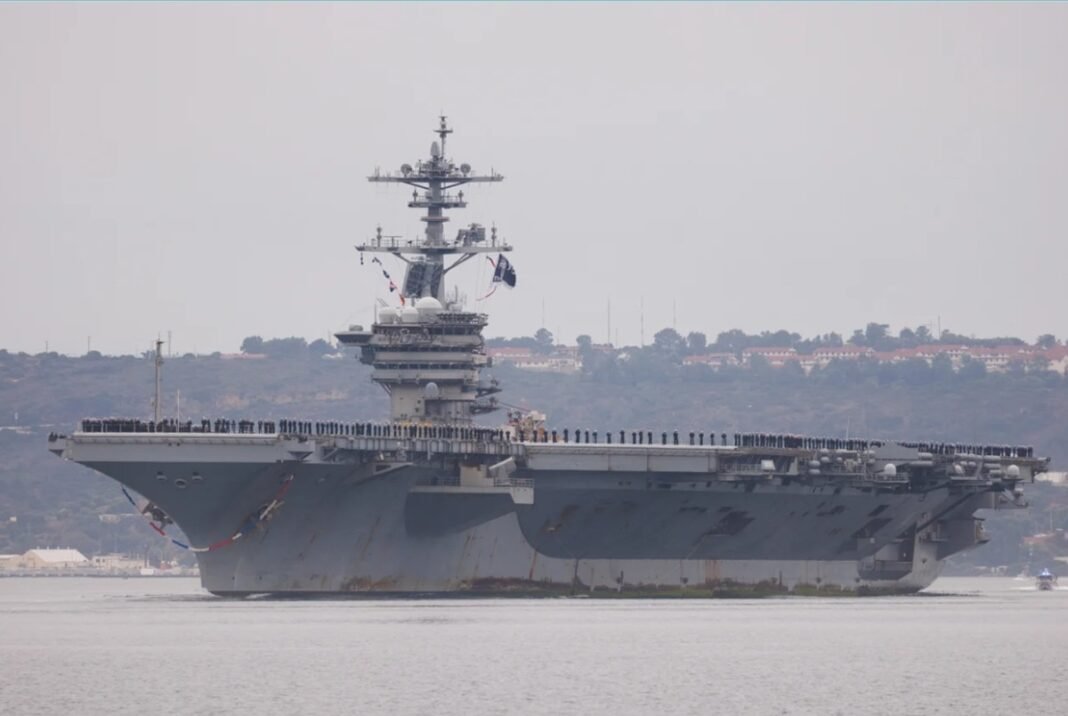
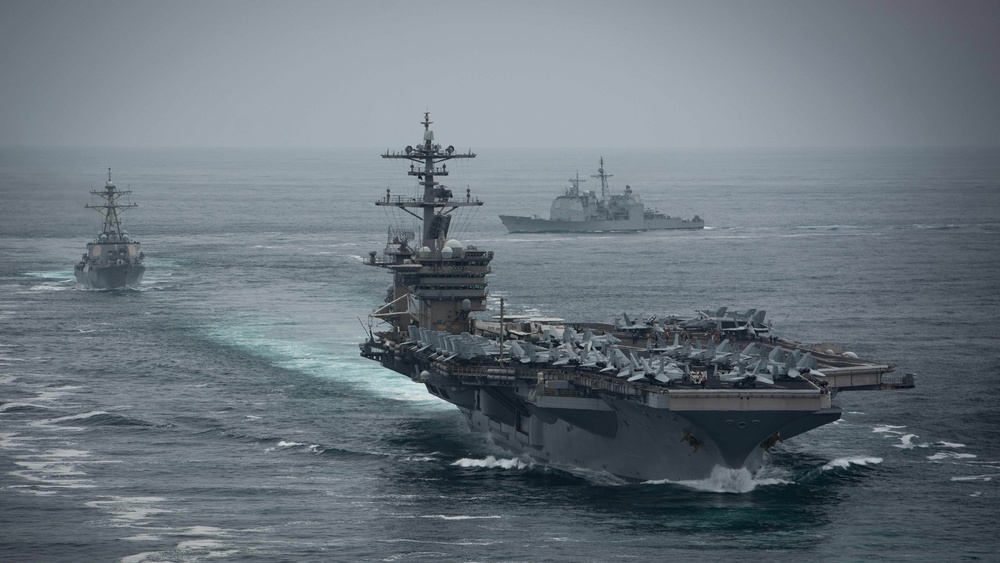
The coming deployment of the USS Theodore Roosevelt to the Middle East is being presented as a routine carrier rotation. It is anything but routine.
The nuclear-powered carrier and roughly 5,000 sailors are expected to leave San Diego in the coming weeks for a deployment of at least seven months. Navy leaders are telling the crew to prepare for eight months, a remarkably long commitment for a force already worn down by the U.S. war with Iran.
![DVIDS - Images - USS Theodore Roosevelt (CVN 71) [Image 4 of 42]](https://d1ldvf68ux039x.cloudfront.net/thumbs/photos/2001/6045175/2000w_q95.jpg)
The Roosevelt is expected to relieve the Japan-based USS George Washington, which only recently replaced the USS Abraham Lincoln in the region. The Lincoln had spent more than 250 days at sea without a port call while supporting the Iran operation, creating serious concerns about the strain on sailors and their families.
On the surface, this is a carrier swap.
Strategically, it tells a different story.
Washington is no longer planning its Middle East naval presence around the assumption that the war with Iran will end quickly. The Navy is preparing for a sustained operation involving combat power, maritime enforcement, air defence, logistics and deterrence.
That is a significant change in the character of Trump’s Middle East policy.
Why does the US need another carrier in the Middle East?
The immediate reason is simple: the United States still needs a carrier strike group capable of generating air power in and around the Arabian Sea while the Iran conflict continues.
Operation Epic Fury began on February 28, with CENTCOM saying its forces were targeting Iranian military infrastructure and capabilities. The campaign has since expanded into a prolonged confrontation in which the United States is also enforcing a naval blockade against Iranian shipping.
The naval mission is therefore no longer limited to supporting occasional air strikes.
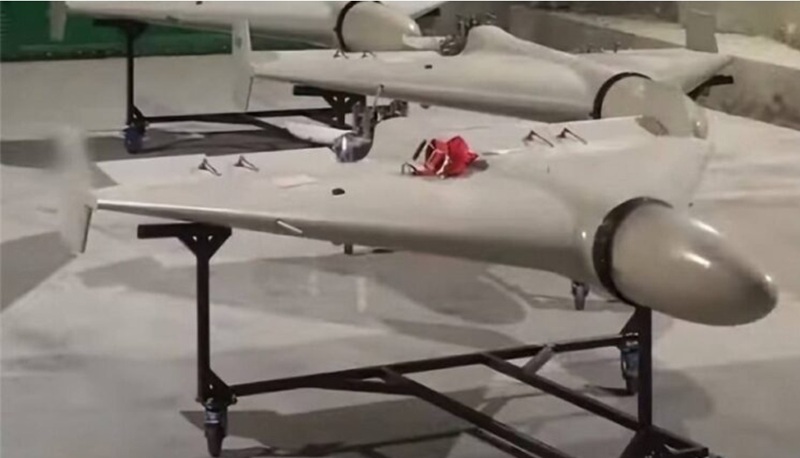
The U.S. fleet has to maintain a persistent presence capable of responding if Iran launches missiles or drones, threatens American or allied forces, attempts to interfere with shipping, or challenges the blockade.
A carrier provides something land bases cannot always provide: a mobile airfield that can move with the crisis.
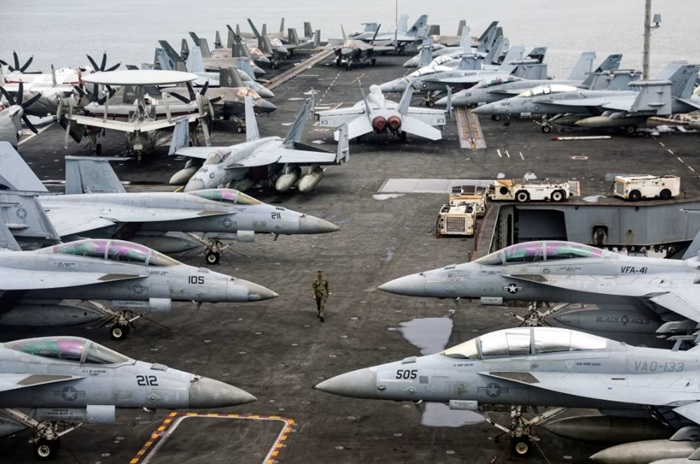
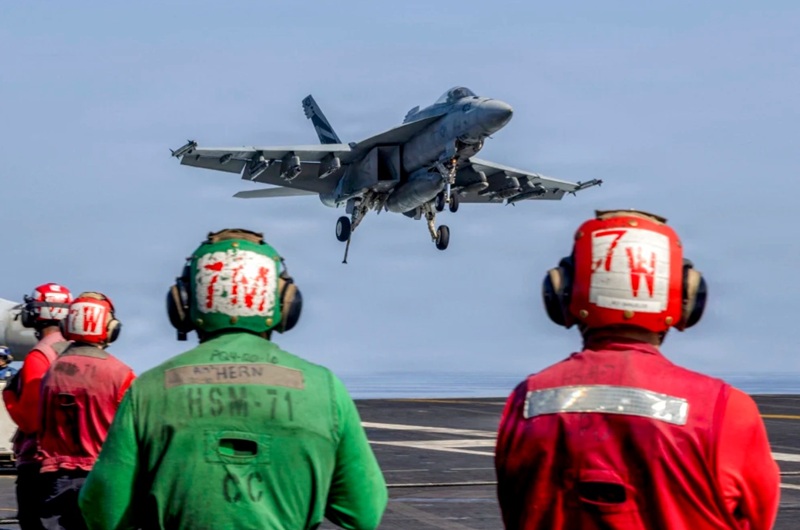
Theodore Roosevelt’s Carrier Air Wing 11 includes F/A-18E/F Super Hornets, EA-18G Growlers for electronic warfare, E-2D Hawkeyes for airborne early warning and MH-60 helicopters, among other aircraft.
That combination gives the strike group several functions at once.
It can conduct combat operations.
It can provide air defence.
It can conduct surveillance.
It can support maritime operations.
And its presence itself can act as a warning to Iran.
The mission is bigger than bombing Iran
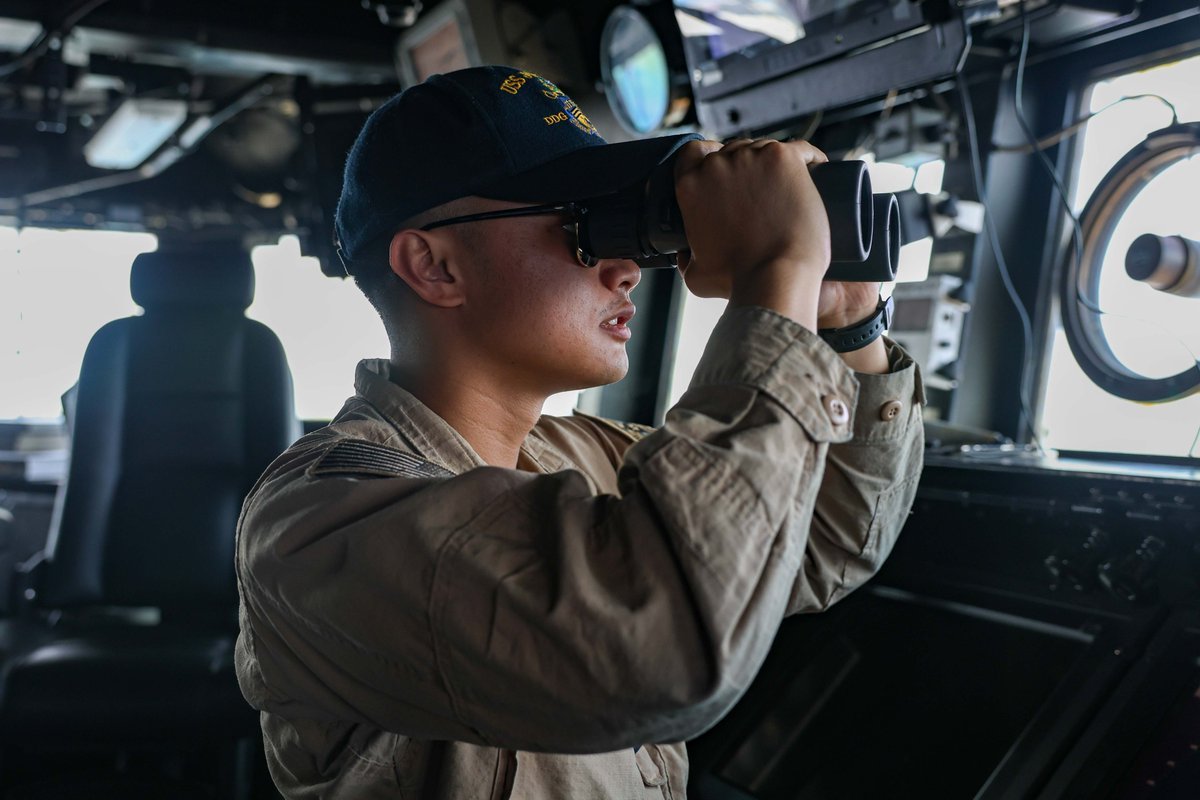
There is an important distinction between what the Navy has publicly announced and what the carrier is capable of doing.
The Navy has not released a detailed operational tasking for Theodore Roosevelt’s coming deployment.
But its expected role can be understood from the operation already underway and from the missions being performed by U.S. carrier forces in the region.
The carrier strike group will likely be expected to maintain strike readiness, protect U.S. forces, contribute to air and missile defence, support maritime security and help sustain the blockade if those missions continue.
The USS George H.W. Bush is already operating in the region in support of maritime security and stability, while CENTCOM has documented U.S. forces enforcing blockade measures against vessels attempting to reach Iranian ports.
In other words, the carrier is not being sent merely because Washington wants another large warship in the Arabian Sea.
It is being inserted into an operational system that has become much more demanding than the Pentagon initially anticipated.
The Strait of Hormuz has changed the mission
The biggest reason for the Navy’s continued presence may be the Strait of Hormuz.
The waterway connects the Persian Gulf with the Gulf of Oman and the Arabian Sea and is one of the world’s most important routes for oil and gas shipments.
Iran’s ability to disrupt or restrict traffic through the strait has turned maritime security into a central part of the conflict.
The Trump administration has increasingly described the U.S. military mission in terms of maintaining control of the waterway and preventing Iran from using the strait as economic leverage. Trump said in July that the United States had established a blockade and asserted that Washington controlled access through the waterway.
The Navy has since carried out mine-clearance operations. On August 25, Trump said the United States had cleared mines from the main shipping lane, a claim subsequently confirmed by U.S. officials.
That development helps explain why Washington is reluctant to reduce naval forces even as the intensity of some combat operations changes.
A carrier is not only a strike platform.
It is part of the infrastructure of coercion and maritime control.
The US strategy is shifting from warfighting to sustained pressure
This is perhaps the most important development behind the Roosevelt deployment.
Six months into the conflict, Washington’s strategy has evolved.
The opening phase was dominated by the destruction of Iranian military capabilities.
The current phase increasingly combines military pressure with economic isolation and control of maritime access.
The White House announced Operation Economic Outcast on August 24, describing it as a campaign intended to sever Iran’s remaining economic connections with the outside world.
That policy makes the naval blockade even more important.
Washington is attempting to squeeze Iran from several directions at once:
- degrade its military capabilities;
- restrict its oil exports;
- disrupt its access to international finance;
- prevent weapons and military supplies from reaching Iran;
- maintain pressure around the Strait of Hormuz;
- and keep enough military power in the region to deter retaliation.
The Theodore Roosevelt deployment fits neatly into that strategy.
It is evidence that the administration is preparing for prolonged coercion, not simply another short military operation.
Trump initially wanted a quick outcome. The Navy is now planning for months.
That contrast is striking.
The war has now lasted far longer than the kind of short campaign many initially expected.
Reuters reported Thursday that the conflict has settled into a costly stalemate, with Iran still retaining missile and drone capabilities despite severe losses. The same assessment said the war has strained U.S. military readiness and depleted significant quantities of precision munitions.
The Navy’s own leadership is acknowledging the consequences.
Chief of Naval Operations Adm. Daryl Caudle said he would prefer seven-month deployments and generally opposes extensions, but added that operational circumstances ultimately determine how long ships remain on station.
That is military language for a much larger strategic problem:
Washington has not yet found a reliable exit from the conflict.
Until it does, the Navy has to keep rotating ships into the region.
The Abraham Lincoln has exposed the cost
Theodore Roosevelt is also being deployed because the Navy cannot keep asking the same crew to absorb an open-ended war.
The Abraham Lincoln’s deployment became one of the clearest examples of what prolonged carrier warfare does to personnel.
The carrier spent more than 250 days at sea without a port call. Reports raised concerns over food and other supplies, living conditions and sailors’ mental health. The Navy has acknowledged that the length of the deployment created significant stress, even while disputing some accounts of conditions aboard the ship.
The problem is not simply morale.
A carrier strike group is an enormous industrial system.
Aircraft need maintenance.
Weapons need replenishment.
Food and fuel need to arrive.
Sailors need medical care.
Equipment needs repair.
Ships need parts.
Crews need time ashore.
A warship can remain operational for a very long time, but that does not mean it can do so indefinitely without consequences.
The Navy now says it has improved its logistics system after learning from the Lincoln experience.
Caudle said supplies are being moved through a more systematic network involving Diego Garcia, Singapore, Japan, the Philippines and U.S. sources, allowing the Navy to replenish carrier groups at sea more effectively.
That logistical improvement may be as important as the carrier rotation itself.
The Navy is trying to solve the port-call problem
There is another lesson from the Lincoln.
A carrier does not necessarily need to leave the war zone to recover operationally.
But its sailors do need some form of reset.
Navy leadership is therefore working with U.S. 5th Fleet to identify possible port visits for carriers operating in the Arabian Sea.
Officials have discussed locations in Africa, India and even Singapore as possible places for ships to obtain some relief while maintaining the broader deployment cycle.
That tells us how geographically stretched the operation has become.
A carrier based in San Diego can be fighting a war around Iran while relying on logistics and port infrastructure spread across the Indian Ocean and Asia.
The Middle East operation has therefore become a global naval undertaking.
The hidden cost: the Pacific
There is another problem with sending Theodore Roosevelt to the Middle East.
The carrier that the Roosevelt will replace — USS George Washington — had been based in Japan.
Its move into the Middle East has already left the Western Pacific without a U.S. aircraft carrier, at least temporarily.
That has caused concern among U.S. allies and analysts because China remains the principal long-term military competitor identified in U.S. defence planning.
The Pentagon is therefore facing an uncomfortable choice.
The Middle East needs carriers because of Iran.
The Indo-Pacific needs carriers because of China.
The Navy does not have an unlimited number of them.
Every carrier sent to one theatre is a carrier unavailable somewhere else.
That is the strategic price of the Iran war.
China is watching the gap
Beijing does not need to provoke a crisis simply because an American carrier has left the Western Pacific.
But the absence changes the calculations of every military planner in the region.
The U.S. Navy’s ability to maintain carrier presence in the Western Pacific is one of the visible indicators of American military power.
The temporary gap therefore has psychological as well as operational significance.
Recent reporting has already noted concern in Washington and among Asian allies about U.S. weapons stocks and force availability after months of fighting Iran. The Washington Post reported that more than 30 ships that had been expected in the Pacific were sent toward the Middle East during the war, while advanced missile-defence systems have also been shifted away from Asia.
This does not mean China is about to exploit the situation militarily.
But Beijing can see the same arithmetic Washington sees.
American naval power is being consumed in the Middle East.
This is becoming a test of America’s two-theatre strategy
For years, Washington has talked about preparing for competition with China while maintaining commitments in Europe and the Middle East.
The Iran war is testing whether the United States can actually sustain that posture during a prolonged conflict.
The problem is not only ships.
It is ammunition.
The Washington Post reported that the prolonged Iran war is causing concern over U.S. weapons stockpiles and readiness in Asia.
That creates a much bigger strategic question.
If Washington must keep large numbers of ships and missiles in the Middle East for another year, what happens to the resources available for the Indo-Pacific?
The Theodore Roosevelt deployment therefore has implications far beyond Iran.
It is also a test of whether the United States can sustain global military commitments simultaneously.
Trump’s Middle East policy is becoming more transactional
There is another change worth watching.
The administration’s approach increasingly appears to combine military power with demands that regional partners carry more of the burden.
Washington is still providing the decisive military capability, but the direction of policy suggests that Gulf states and other partners will be expected to strengthen their own defences and assume greater responsibility for regional security.
That is consistent with Trump’s broader preference for allies to spend more on their own security.
But the Iran war complicates the idea.
The United States may want partners to do more, yet the strategic importance of the Gulf means Washington cannot easily walk away from the region.
The result is not an American withdrawal.
It is closer to selective, force-heavy engagement.
When American interests are directly threatened, Washington is willing to deploy enormous military power.
But it increasingly wants allies to absorb more of the routine security burden.
Saudi Arabia and the Gulf are watching carefully
The Gulf monarchies have no interest in seeing Iran regain the ability to threaten shipping, energy infrastructure or neighbouring states.
But they also have no interest in becoming the battlefield for a permanent U.S.-Iran confrontation.
That creates a delicate relationship with Washington.
The United States wants regional partners to support the pressure campaign.
The Gulf states want the American security umbrella.
At the same time, they want a path toward de-escalation.
That tension is one reason the future of the Strait of Hormuz matters so much.
The waterway is not merely a military objective.
It is an economic lifeline for the entire Gulf.
The naval blockade has changed the meaning of a carrier presence
Before the current conflict, a U.S. carrier in the region could be described primarily as a deterrent.
Now deterrence is only part of the mission.
The carrier force is operating inside an active economic and military pressure campaign.
The Navy has helped enforce restrictions on Iranian shipping, protect U.S. and allied maritime interests and maintain the ability to respond to attacks. CENTCOM has publicly documented boarding and diversion operations against vessels suspected of violating the blockade.
That creates a much more demanding operational environment.
The United States has to remain prepared for combat while simultaneously managing commercial shipping and avoiding an uncontrolled escalation.
It is one reason a persistent carrier presence remains useful even when large-scale strikes decrease.
Iran has not been knocked out of the game
This is another reason the Roosevelt deployment should not be interpreted simply as routine reinforcement.
The United States has inflicted severe damage on Iran’s conventional military infrastructure, according to U.S. officials.
But Tehran retains missiles and drones.
Those capabilities are relatively difficult to eliminate completely, particularly when they can be dispersed, concealed and produced through underground or hardened facilities.
Reuters reported Thursday that Iran remains capable of threatening the region despite extensive losses, contributing to the stalemate that has developed after six months of war.
That leaves Washington with a difficult choice.
It can reduce the military presence and risk giving Iran room to rebuild or challenge the blockade.
Or it can maintain pressure and accept the financial and personnel costs.
For now, the Navy is preparing for the second option.
The Roosevelt deployment may last longer than seven months
The Navy is officially describing the deployment as at least seven months.
The more revealing detail came from Master Chief Petty Officer of the Navy John Perryman: sailors are being told to plan for eight months.
That does not mean the ship will necessarily remain deployed for exactly eight months.
It means Navy leadership is trying to give families a realistic planning assumption rather than repeating the uncertainty that surrounded the Lincoln.
And even eight months may not be the final figure.
Caudle’s warning that “the enemy gets a vote” is important because carrier deployments are ultimately determined by operational requirements.
If the Iran conflict remains unresolved, the next carrier rotation could face the same problem.
That is how temporary extensions become a permanent deployment cycle.
The Navy is building a carrier treadmill
This is perhaps the most important institutional consequence.
The United States now has to maintain a continuous carrier rotation in the Middle East while also rebuilding the readiness of ships returning from extraordinarily long deployments.
USNI News says carrier deployments since the October 2023 Hamas attack and the subsequent Houthi threat to shipping have averaged about 8.5 months. The Navy has also recorded exceptionally long deployments, including USS Gerald R. Ford’s 326-day mission.
The Roosevelt is therefore not an isolated case.
It is part of a broader problem.
The Navy’s traditional deployment model was built around predictable rotations.
The Middle East has become unpredictable again.
The financial burden is growing
The operational strain is also appearing in the Pentagon’s budget.
Caudle told reporters that the fiscal 2026 budget did not anticipate Operation Epic Fury and that the Navy is seeking supplemental funding. He estimated the Navy’s share of the broader Department of War supplemental requirement at roughly $6 billion to $8 billion.
That is another indication that the conflict has moved beyond a short-term operation.
A long war changes the defence budget.
It consumes munitions.
It accelerates maintenance.
It increases fuel costs.
It increases personnel demands.
And it competes with other priorities.
For the Navy, the most difficult competition may be between the Middle East and the Indo-Pacific.
What the Theodore Roosevelt deployment says about Trump’s Middle East policy
The carrier’s movement offers a useful window into the evolution of Trump’s strategy.
The administration began the Iran campaign with an emphasis on destroying military and nuclear capabilities. The White House described Operation Epic Fury as an effort to dismantle Iran’s security apparatus and prevent it from threatening the United States and its allies.
Six months later, the strategy has acquired another layer.
Containment.
The United States is trying to keep Iran from restoring military capacity, restrict its economic lifelines, control maritime access and maintain enough military pressure to influence any eventual negotiations.
That is a much more open-ended mission.
It also explains why the Navy needs a carrier in the region even when Washington is talking about negotiations.
The carrier is part of the negotiating position.
The blockade is part of the negotiating position.
The sanctions are part of the negotiating position.
The threat of renewed strikes is part of the negotiating position.
Diplomacy and military pressure are now operating simultaneously.
But there is a contradiction in the strategy
The longer the United States keeps large forces committed to the Middle East, the more difficult it becomes to maintain its stated focus on China.
This is not merely a question of prestige.
A carrier strike group requires escorts, logistics ships, aircraft, maintenance and large quantities of ammunition.
The same resources cannot be fully available in two theatres at the same time.
The George Washington’s movement from Japan to the Middle East has already exposed the problem.
The United States can rotate another carrier into the Pacific later.
But it cannot manufacture additional carrier strike groups overnight.
China, meanwhile, continues to expand the world’s largest navy by number of ships.
That does not make the United States strategically weaker everywhere.
It does mean the opportunity cost of the Iran war is becoming harder to ignore.
The next phase may depend on whether the Strait of Hormuz stays open
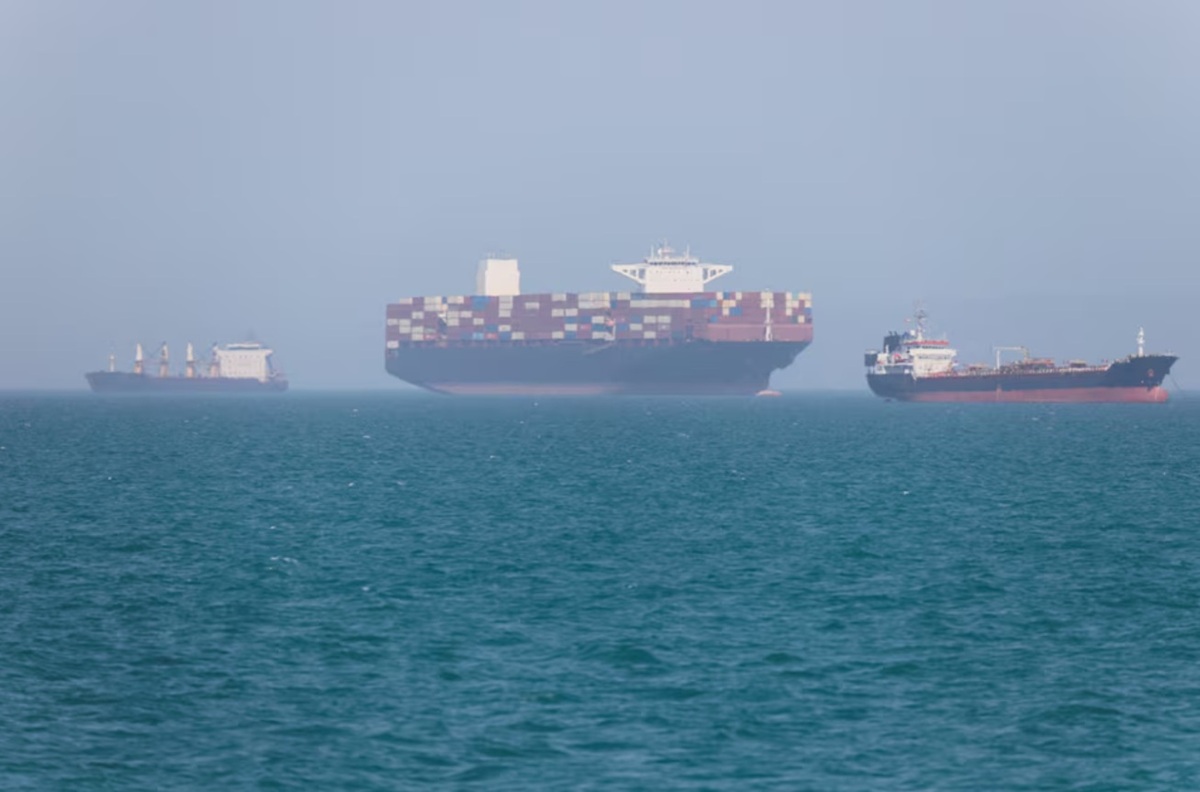
If the waterway is stabilised and commercial shipping resumes at scale, Washington may eventually reduce the size of its naval commitment.
If Iran continues to threaten shipping or the blockade remains necessary, the United States will have a strong reason to keep carriers and escorts in the region.
That makes Hormuz one of the most important indicators to watch.
Trump has already said U.S. forces cleared mines from the principal shipping lane.
But mine clearance does not by itself resolve the political dispute.
A secure shipping lane requires confidence that Iran will not attempt to close it again.
Until that confidence exists, the U.S. Navy will have an incentive to remain close.
What happens if the war ends?
Even a ceasefire would not necessarily mean an immediate American naval withdrawal.
Washington would have to consider several risks.
Could Iran rebuild its missile and drone forces?
Could it restore its naval capabilities?
Could it resume attacks on shipping?
Could its proxies return to operations?
Could the nuclear programme be verified?
Those questions would influence how quickly the United States could reduce its military presence.
A carrier could therefore remain part of the post-war deterrence architecture even after active strikes end.
That is another reason the Roosevelt deployment is important.
It may be preparing for the post-war balance, not just the current fighting.
The bigger lesson: America is moving from expeditionary war to permanent pressure
The United States has spent decades conducting military operations in the Middle East.
But the current model is different from the large ground wars of Iraq and Afghanistan.
Washington is not deploying hundreds of thousands of troops to occupy Iran.
Instead, it is combining:
air power, naval power, intelligence, sanctions, blockade enforcement and economic pressure.
That approach is less manpower-intensive than an occupation.
But it can still become indefinite.
And the Theodore Roosevelt’s eight-month planning assumption is a clear sign that the Navy understands the risk.
The Roosevelt is a symbol of both strength and strain
A Nimitz-class carrier carrying around 5,000 sailors is one of the most powerful instruments of military power in the world.
Its arrival tells Iran that the United States can sustain combat aviation far from home.
It reassures allies that Washington is not leaving the region while the conflict remains unresolved.
It gives commanders a mobile airfield and a large package of aircraft, sensors and electronic-warfare capabilities.
But the same deployment also exposes the limits of American power.
The Navy has already pushed crews through extraordinarily long deployments.
It is drawing ships from the Pacific.
It is consuming expensive munitions.
It is asking Congress for additional money.
And it is trying to repair the damage to morale and readiness caused by an operation that has lasted much longer than many expected.
That is the paradox of the Roosevelt mission.
The carrier demonstrates that America can sustain the war. It also demonstrates how expensive sustaining it has become.
What to watch next
Several developments will determine whether the Roosevelt’s deployment remains a seven-to-eight-month rotation or becomes another open-ended commitment.
The Strait of Hormuz: If shipping returns to normal and Iran’s ability to disrupt the waterway diminishes, the U.S. naval requirement could eventually fall.
Iran’s missile and drone forces: Tehran’s ability to rebuild and launch attacks will determine how much air-defence and strike power Washington keeps nearby.
The blockade: If the maritime pressure campaign continues, carriers and escort ships will remain important to the operation.
Diplomacy: A credible agreement could reduce the need for a permanent high-end naval presence, but the current stalemate makes the timing uncertain. (Reuters)
The Indo-Pacific: If the Middle East deployment continues, Washington will face increasing pressure to demonstrate that China has not been given a strategic opening.
Navy readiness: The treatment of crews, port-call schedules, maintenance and deployment extensions will show whether the Navy can sustain this tempo without damaging its long-term readiness.
The real significance of the Theodore Roosevelt deployment
The arrival of another carrier will inevitably generate headlines about American military power.
But the more important story is what it says about the war itself.
A conflict that was supposed to produce a decisive result has evolved into a prolonged campaign of military and economic pressure.
The United States is now trying to maintain pressure on Iran while keeping the Strait of Hormuz open, protecting its forces and allies, enforcing a maritime blockade and preserving enough leverage to shape whatever comes next.
That requires ships.
It requires aircraft.
It requires logistics.
And it requires crews willing to spend months away from home.
Theodore Roosevelt is being sent because Washington has not yet reached the point where it can safely reduce those requirements.
For Iran, the deployment is a warning that the United States is preparing for endurance rather than a quick exit.
For America’s Gulf partners, it is reassurance that Washington remains militarily engaged.
For China, it is evidence that the United States is being forced to devote enormous resources to a second major theatre.
And for the U.S. Navy itself, it is another test of whether the fleet can maintain a global presence while fighting a war that has already consumed far more time, ammunition and manpower than originally anticipated.
The carrier is therefore more than a replacement for the Abraham Lincoln.
It is a measure of how much the Middle East has changed American military planning.
And the longer the Theodore Roosevelt remains on station, the harder it will be for Washington to argue that the Iran war is merely a temporary campaign.
It will look increasingly like a new, open-ended phase of American strategy in the Middle East.