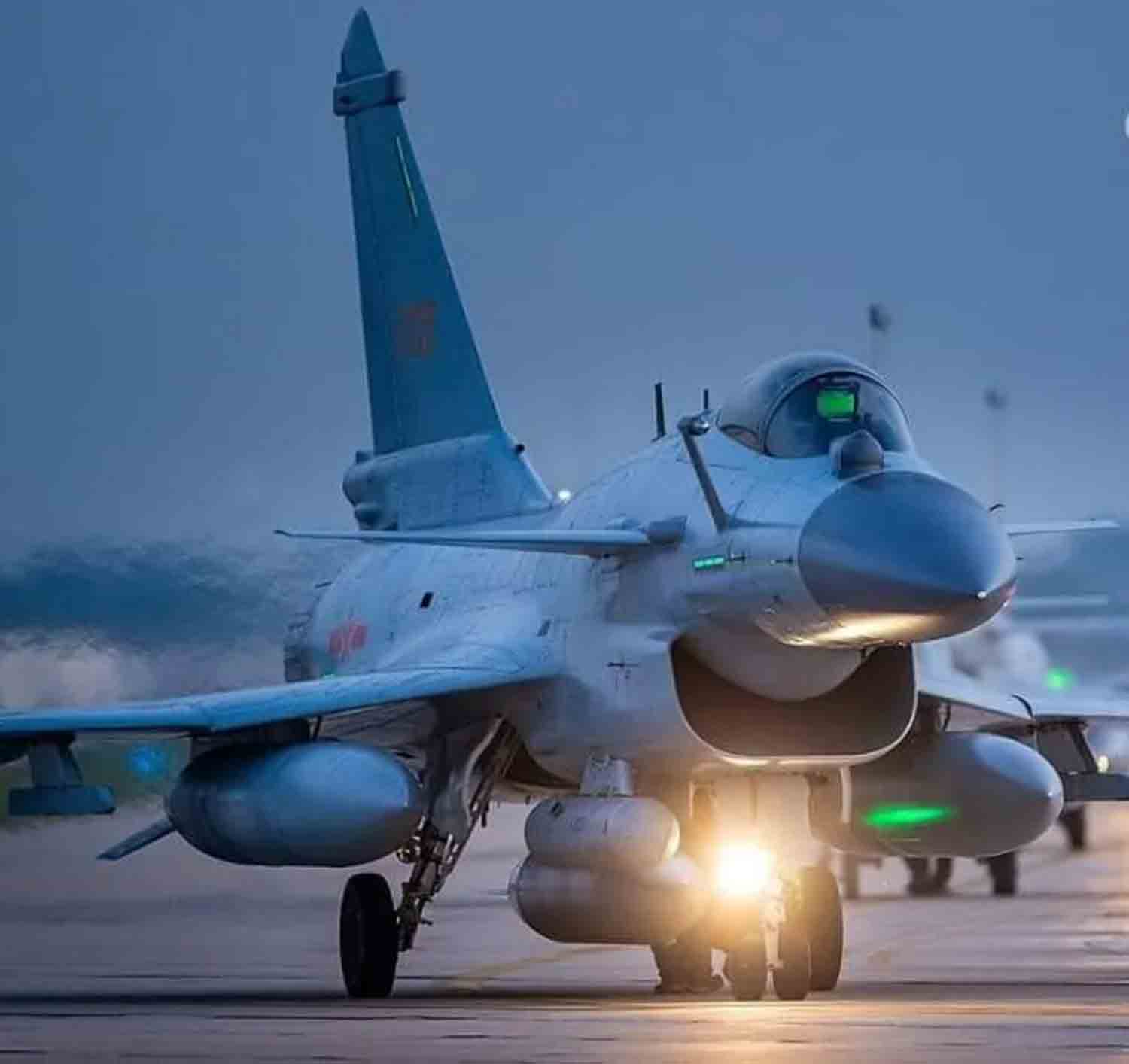
Bangladesh is making two moves that, taken separately, might look like routine defence and diplomatic decisions. Taken together, however, they point to something much larger: Dhaka may be trying to expand its strategic room for manoeuvre at a time when its relations with India are under strain and its partnership with China is deepening.
Bangladesh is moving closer to formal negotiations with China over a possible purchase of J-10CE fighter jets and attack helicopters, according to Prime Minister Tarique Rahman’s Information and Broadcasting Adviser Zahed Ur Rahman. A government panel is preparing a draft agreement, although the final number of aircraft, price and delivery schedule have not yet been announced. Local reporting has put the possible fighter purchase at up to 24 aircraft.
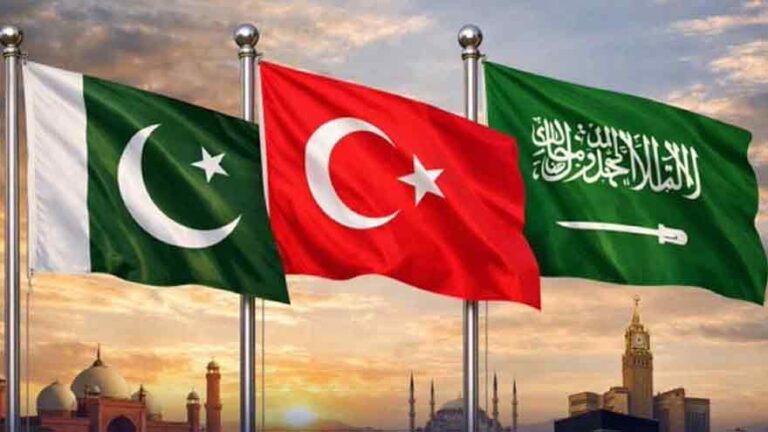
At almost the same time, Dhaka has signalled that it could consider joining the Makkah Joint Defence Agreement, signed on August 7 by Saudi Arabia, Pakistan and Türkiye. Bangladesh’s Foreign Affairs Adviser Humayun Kabir said Dhaka viewed positively an invitation for Prime Minister Tarique Rahman to participate in the framework, while stressing that any decision would be based on Bangladesh’s national interests.
Neither development by itself amounts to a formal strategic realignment.
But together they raise a more important question:
Is Bangladesh moving from its traditional balancing policy toward a much wider security network linking China, Pakistan, Saudi Arabia and Türkiye?
The answer is not yet clear.
But the direction is becoming harder to ignore.
The J-10CE deal is bigger than a fighter purchase
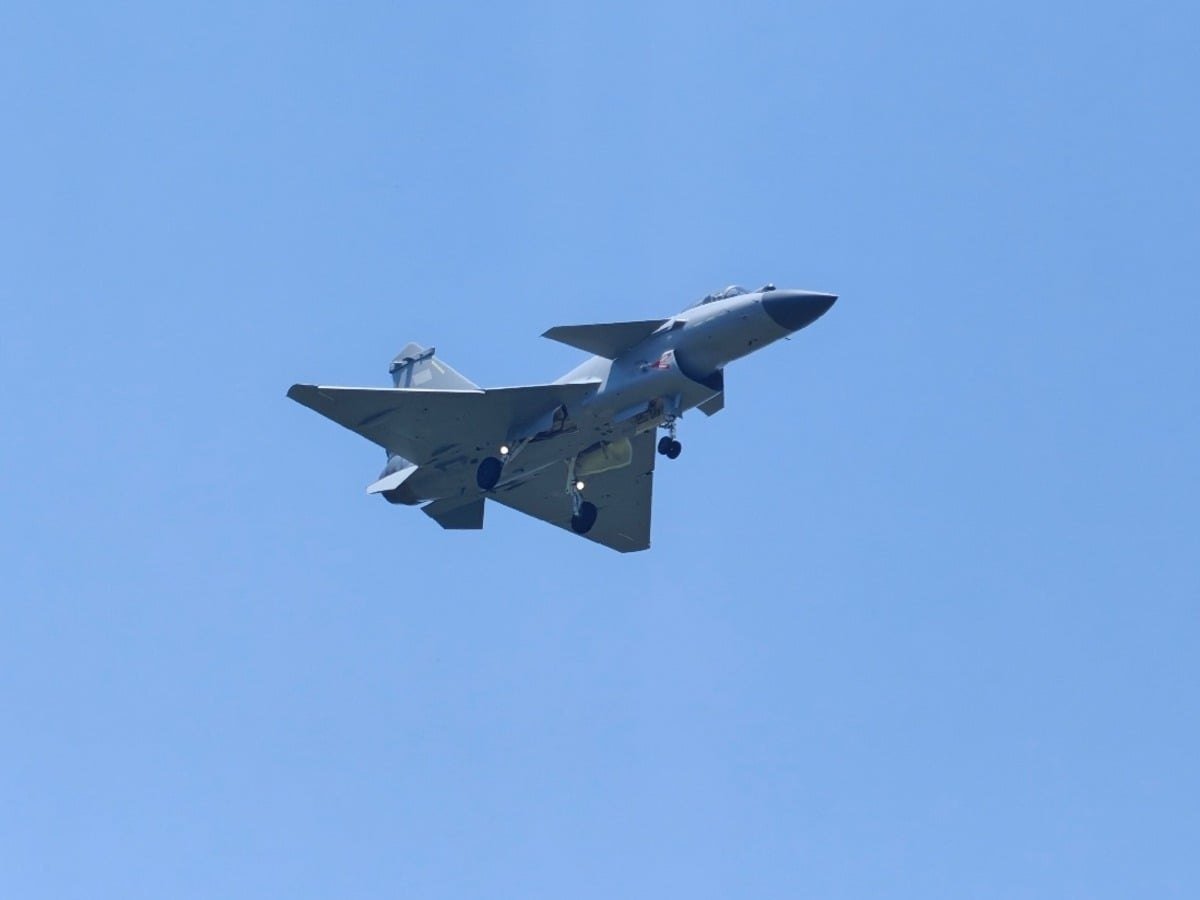
The immediate story is about fighter jets.
The strategic story is about who will shape Bangladesh’s air-power architecture for the next two decades.
The J-10CE is the export version of China’s J-10 family, and Pakistan is currently its only confirmed foreign operator. The aircraft attracted international attention after Pakistan said J-10CEs were used during the May 2025 India-Pakistan clashes. Those Pakistani claims remain disputed, but Bangladesh’s leadership has acknowledged that the aircraft’s reported battlefield performance influenced Dhaka’s interest.
That is important because Bangladesh is not simply buying an aircraft that looks attractive on paper.
It is buying into a wider ecosystem of Chinese defence technology, training, maintenance, weapons and logistics.
China is already Bangladesh’s largest defence supplier. Over the past two decades, Beijing has supplied Dhaka with naval vessels, combat aircraft, tanks, missiles and other military equipment.
A J-10CE acquisition would therefore deepen an existing relationship rather than create a new one.
That makes the political implications more significant.
Why Bangladesh needs a stronger air force
Bangladesh is not preparing for an imminent war with a neighbour.
Its defence modernization has to be understood primarily in terms of long-term capability, deterrence and strategic autonomy.
The country’s geography gives the air force particular importance.
Bangladesh sits between India, Myanmar and the Bay of Bengal. Its security environment includes a long land border with India, maritime interests in the Bay of Bengal and a complicated relationship with Myanmar.
The Bangladesh Air Force has also been operating a mixed fleet in which older-generation aircraft remain important.
The acquisition of a modern multirole fighter would therefore give Dhaka a more capable air-combat platform while creating a foundation for future modernization.
A fleet of up to 24 J-10CEs, if eventually confirmed, would not transform Bangladesh into a major regional air power.
But it could significantly improve the quality of its combat aviation.
And the choice of China matters.
Why China is the obvious supplier
There is a practical reason Dhaka is looking toward Beijing.
Bangladesh already operates a substantial amount of Chinese-origin military equipment.
That means Chinese aircraft are not entering an unfamiliar military environment.
Training, maintenance philosophy, spare parts, weapons integration and technical support can be built around an ecosystem Bangladesh already understands.
There is also a financial consideration.
Bangladesh has historically found Chinese defence equipment attractive because Beijing can offer systems at prices and with financing arrangements that may be more accessible than some Western alternatives.
China’s importance to Bangladesh’s defence sector is well established. Research on the bilateral relationship has described Beijing as Bangladesh’s dominant defence supplier, with Chinese equipment accounting for a very large share of Dhaka’s military imports during recent periods.
The J-10CE therefore represents continuity.
But the timing is new.
The May 2025 India-Pakistan clash changed the J-10CE’s political value
The J-10CE would probably not have generated the same level of interest in Bangladesh without the events of 2025.
Pakistan’s use of Chinese fighter aircraft during its confrontation with India gave the J-10 family a highly visible operational narrative.
Again, the claims surrounding aircraft losses remain contested and should not be treated as independently established proof of the J-10CE’s superiority.
But perception matters in defence procurement.
For Bangladesh’s planners, the important question is not whether every Pakistani claim was correct.
It is whether the aircraft demonstrated enough capability in a real conflict to justify closer examination.
Bangladesh’s government has now openly indicated that this battlefield experience attracted its attention. (Reuters)
That makes the J-10CE decision politically more interesting than a normal procurement.
And then comes the Makkah Pact
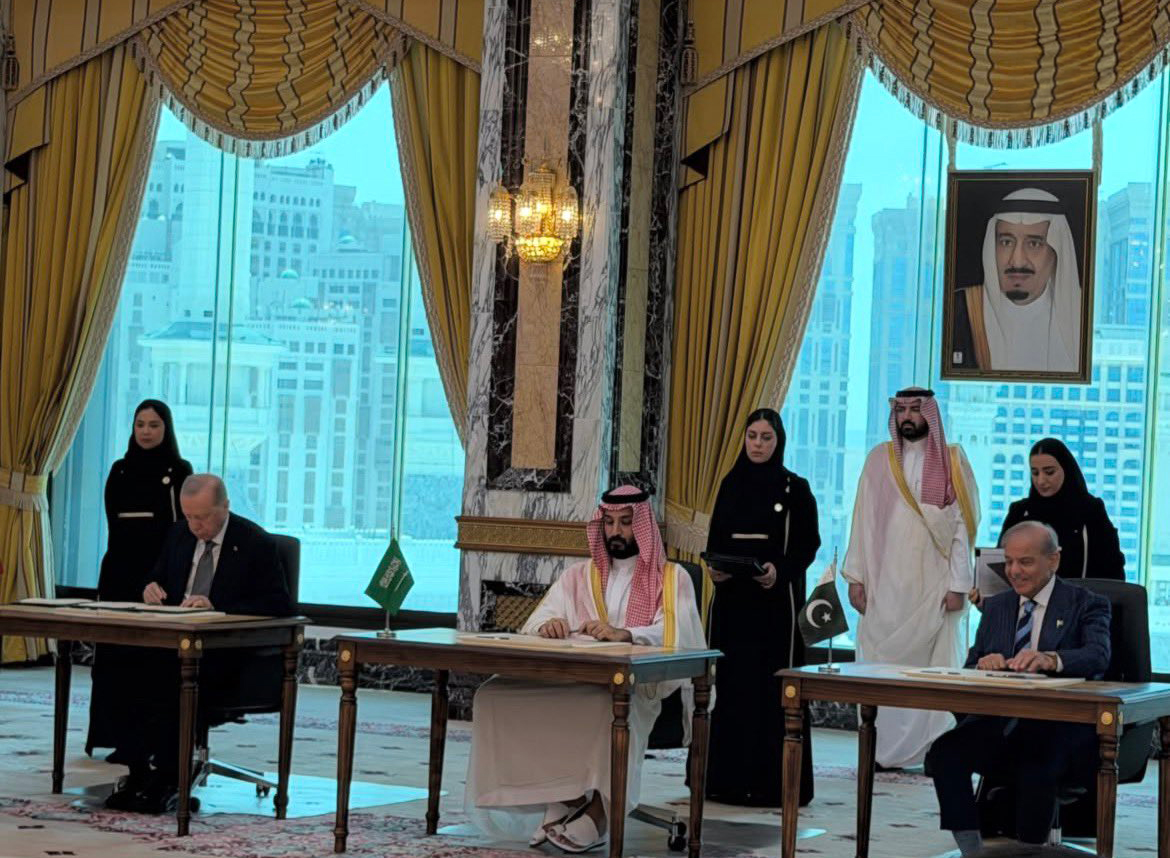
The second development is potentially even more consequential.
On August 7, Saudi Arabia, Pakistan and Türkiye signed the Makkah Joint Defence Agreement.
The agreement says an armed attack against one of the three countries will be regarded as an attack against all three, and commits the members to broader defence cooperation and collective deterrence.
Pakistan has stressed that the agreement is defensive and is not directed against any particular country. The pact is also open to possible expansion, according to Pakistani officials.
It would be a mistake to simply label it an “Islamic NATO.”
The agreement does not possess NATO’s integrated command structure, institutional depth or military bureaucracy.
But it is still strategically important.
It brings together three countries with very different strengths:
- Saudi Arabia brings financial resources, energy influence and strategic weight in the Arab and Muslim world.
- Türkiye brings a large military, a growing defence industry and increasingly sophisticated indigenous weapons capabilities.
- Pakistan brings a large standing military, extensive combat experience and nuclear deterrence.
That combination creates a new regional security mechanism.
And Bangladesh is now considering whether it wants a place inside it.
Why would Bangladesh want to join?
There are several possible reasons.
The first is strategic diversification.
Bangladesh does not want its security relationship to depend exclusively on India, China or the United States.
A relationship with Saudi Arabia, Türkiye and Pakistan gives Dhaka another diplomatic and security channel.
The second is economic.
Saudi Arabia is extremely important to Bangladesh because of trade, investment, energy and the large Bangladeshi expatriate workforce in the Gulf.
Türkiye has also become an increasingly significant economic and defence partner for countries across Asia and the Muslim world.
The third is political.
Bangladesh’s relationship with Pakistan has changed significantly since Sheikh Hasina’s fall in 2024.
The fourth is strategic autonomy.
Dhaka may believe that having more relationships makes it harder for any single major power to pressure Bangladesh.
That is the logic of multi-alignment.
And it appears increasingly relevant to Tarique Rahman’s foreign policy.
Dhaka’s China policy is already moving in this direction

Bangladesh’s current trajectory cannot be understood without looking at Tarique Rahman’s June visit to China.
During his first overseas tour as prime minister, Rahman visited Malaysia and China, with the China trip producing a series of agreements and commitments covering trade, investment, connectivity, diplomacy and defence.
The two countries also announced a deeper strategic framework, while defence and foreign-policy cooperation was expanded. Analysts at the National University of Singapore’s Institute of South Asian Studies described the visit as part of Bangladesh’s attempt to recalibrate its foreign policy while preserving strategic autonomy.
That is an important distinction.
Dhaka may not be choosing China instead of India.
It may be choosing China plus Saudi Arabia plus Türkiye plus Pakistan — while keeping the door open to India and the United States.
That is a very different strategy.
India is the country watching most closely
No country will study these developments more carefully than India.
The reason is geography.
India surrounds Bangladesh on three sides and has deep economic, security and historical ties with Dhaka.
But India-Bangladesh relations have been under considerable strain since the fall of Sheikh Hasina in 2024. The issue of Hasina’s presence in India has become one of the major obstacles to restoring political trust, and Prime Minister Tarique Rahman’s expected India visit has itself become caught up in the broader diplomatic dispute.
Against that background, a Bangladeshi decision to acquire Chinese J-10CE fighters would inevitably attract attention in New Delhi.
And joining a defence arrangement that includes Pakistan would be even more sensitive.
That does not mean Bangladesh is preparing to align against India.
But from India’s perspective, the combination would create a new strategic variable.
The Pakistan connection is the most politically sensitive part
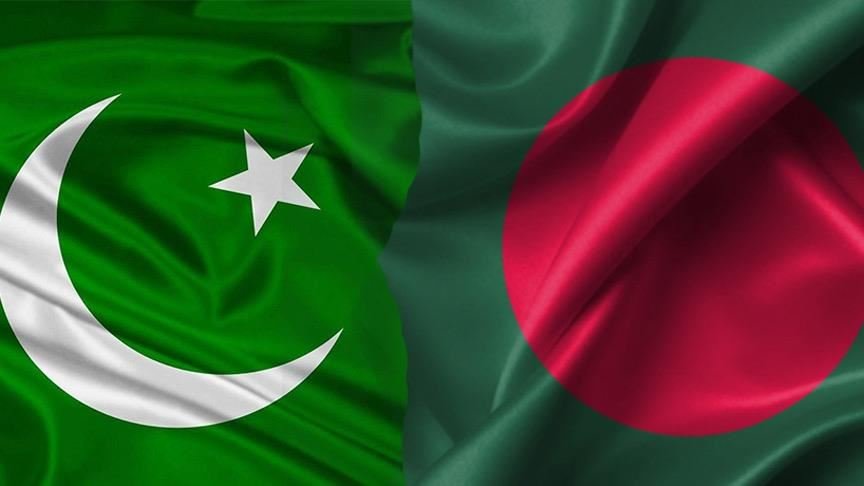
The J-10CE itself is Chinese.
The Makkah Pact is Saudi-Turkish-Pakistani.
Put the two developments together and Pakistan becomes an indirect but important link in Bangladesh’s emerging security environment.
This is particularly significant because Bangladesh and Pakistan have been rebuilding their relationship after years of political distance.
For decades, India benefited from a Bangladesh-Pakistan relationship that remained relatively constrained.
That equation is changing.
A Bangladesh that simultaneously buys advanced Chinese aircraft and enters a Saudi-Turkish-Pakistani security framework would give Islamabad a much more significant diplomatic relationship in South Asia.
But Dhaka will also have to be careful.
Bangladesh’s economy remains heavily dependent on trade, investment and access to global markets. An overtly anti-India posture would carry substantial economic and geopolitical costs.
That is why Dhaka is more likely to describe its policy as Bangladesh First and strategic independence rather than alignment against any country.
The China-Pakistan connection makes the picture even more interesting
There is another layer.
Pakistan is China’s largest recipient of Chinese major arms exports. SIPRI’s latest data shows that China accounted for about 61% of Pakistan’s major arms imports during 2021–25. China was also the world’s fifth-largest arms exporter in that period.
So if Bangladesh buys the J-10CE and later moves closer to the Makkah Pact, an unusual strategic triangle begins to emerge:
China → Bangladesh
China → Pakistan
Saudi Arabia/Türkiye/Pakistan → Bangladesh
These relationships do not form a formal military alliance.
But they create overlapping defence networks.
That could eventually produce greater interoperability, training exchanges, arms cooperation and political coordination among countries that were previously connected only loosely.
Bangladesh could become a bridge between South Asia and the Gulf
This may ultimately be the most interesting consequence.
Bangladesh is geographically outside the Middle East.
But it has enormous human and economic connections to the Gulf.
Millions of Bangladeshis have historically worked across Gulf states, while Saudi Arabia is an important source of employment, remittances and investment.
If Dhaka joins the Makkah framework, Bangladesh could become the pact’s first major South Asian extension beyond Pakistan.
That would change the character of the arrangement.
It would no longer be simply a Gulf-Türkiye-Pakistan security mechanism.
It could begin developing into a broader network linking the Arab Gulf, Türkiye and South Asia.
That would be strategically significant even if the pact never develops into anything resembling NATO.
But Bangladesh will not want to become a frontline state
This is where expectations about the Makkah Pact need to be moderated.
The agreement was created in a Middle Eastern security environment shaped by missile, drone and regional conflict threats.
Bangladesh’s security priorities are different.
Dhaka’s most immediate concerns involve border security, maritime interests, economic resilience, terrorism, transnational crime and military modernization.
Bangladesh is unlikely to want an alliance obligation that could automatically drag it into conflicts in the Middle East.
That means Dhaka would probably seek carefully defined commitments if it joins.
The language of the pact — particularly the principle that an attack on one is an attack on all — would therefore require serious examination by Bangladeshi policymakers.
The political attraction of membership is one thing.
The military obligations are another.
Could China welcome Bangladesh joining the Makkah Pact?
Probably — but with qualifications.
China has close relations with Saudi Arabia, Türkiye, Pakistan and Bangladesh.
Beijing has also sought stronger diplomatic and economic relations across the Muslim world.
A larger network linking these states could create more space for Chinese economic and strategic influence.
But China is unlikely to want the Makkah Pact to become an explicitly anti-Iranian or anti-Western military bloc.
Beijing’s interests are broader.
China has relationships with Iran as well as Saudi Arabia and maintains economic ties across the Gulf.
Its preferred regional model is generally one in which China can work with multiple competing states rather than being forced into a rigid alliance structure.
For Bangladesh, therefore, the ideal Chinese position may be one that supports greater regional connectivity without demanding that Dhaka choose sides.
What does this mean for the Bay of Bengal?
This is another dimension that deserves attention.
Bangladesh’s acquisition of advanced combat aircraft is not only about its land borders.
The country has major maritime interests in the Bay of Bengal.
Its coastline gives it access to important sea lanes connecting South Asia with Southeast Asia and the wider Indian Ocean.
India has a major strategic presence in the Bay of Bengal, while China has steadily expanded its economic and maritime footprint across the Indian Ocean.
Bangladesh therefore sits at an increasingly important intersection.
Modern fighter aircraft, naval modernization and defence cooperation can all be interpreted through this wider maritime competition.
Dhaka may not be seeking offensive power projection.
But it clearly wants the ability to protect its own strategic space.
What the J-10CE deal could mean for Bangladesh’s military
If Bangladesh eventually purchases the J-10CE, the impact will extend beyond the aircraft themselves.
Dhaka would need to develop:
- new pilot and ground-crew training systems;
- weapons and spare-parts supply chains;
- maintenance and technical infrastructure;
- advanced air-defence integration;
- command-and-control improvements;
- training for networked air combat;
- long-term financing and sustainment arrangements.
That last point is often overlooked.
Buying 12, 16 or 24 modern fighters is relatively easy compared with maintaining them for 20 to 30 years.
The real test of the acquisition will therefore be whether Bangladesh can sustain the fleet.
A fighter purchase without adequate weapons stocks, maintenance capacity, pilot training and supporting infrastructure does not automatically create effective air power.
The bigger question: Is Bangladesh pivoting to China?
The easy answer is yes.
The more accurate answer is: not necessarily.
Bangladesh is clearly deepening defence cooperation with China. The J-10CE talks are further evidence of that.
But Dhaka is simultaneously looking toward Saudi Arabia, Türkiye and Pakistan.
That does not resemble a classic one-country alignment.
It resembles strategic hedging.
Bangladesh wants Chinese defence technology.
It wants Saudi investment and Gulf economic links.
It wants stronger relations with Türkiye.
It is rebuilding ties with Pakistan.
And it still needs workable relations with India and access to Western markets.
The challenge is keeping all of those relationships compatible.
Three possible futures for Bangladesh
1. Bangladesh becomes a multi-aligned regional power
This is the most strategically attractive outcome for Dhaka.
Bangladesh buys Chinese fighters but keeps economic relations with India, maintains Western market access and joins selected regional security mechanisms.
In this scenario, the country becomes more independent rather than becoming a Chinese ally.
2. The China-Pakistan axis becomes too visible
This is the scenario most likely to concern New Delhi.
If Bangladesh acquires J-10CEs, expands military ties with China and joins a defence pact containing Pakistan, India could interpret the combination as a strategic shift rather than ordinary diversification.
That could produce a security dilemma.
India might respond with greater military deployments, closer defence cooperation with Bangladesh’s neighbours or stronger diplomatic pressure on Dhaka.
Such a cycle would be bad for Bangladesh.
3. Dhaka uses everyone without joining anyone’s camp
This may be the most likely long-term strategy.
Bangladesh could buy Chinese weapons, cooperate with Türkiye, maintain close Saudi ties, improve relations with Pakistan and simultaneously repair its relationship with India.
In this model, Dhaka does not become part of a Chinese bloc or an Islamic military bloc.
It becomes a swing state with multiple partnerships.
That would give Bangladesh considerably more diplomatic leverage.
But it would also require exceptional diplomatic skill.
The India factor could determine how far Dhaka goes
There is a limit to Bangladesh’s strategic diversification.
India is not simply another foreign power for Dhaka.
It is Bangladesh’s largest neighbour, an essential economic partner and a country with enormous geographic leverage.
Any Bangladeshi government understands that permanent confrontation with India would be costly.
That is why the J-10CE purchase should not automatically be interpreted as an anti-India decision.
The same applies to the Makkah Pact.
Bangladesh may be trying to tell India something very different:
Dhaka has options.
That is a powerful diplomatic message.
But it becomes dangerous if the message is interpreted as:
Dhaka has chosen sides.
The difference between those two perceptions could determine the future of South Asian security.
The real strategic shift may be Bangladesh’s confidence
Perhaps the most important development is not the aircraft or the pact.
It is the growing confidence with which Bangladesh is pursuing multiple external relationships.
For years, Bangladesh’s foreign policy was heavily influenced by its relationship with India and its economic engagement with China.
The new government appears more willing to diversify.
Tarique Rahman’s China visit, the J-10CE discussions, renewed Pakistan ties and interest in the Makkah Pact all point toward a foreign policy that is more assertive about strategic autonomy. Analysts have described the China outreach as a possible recalibration rather than necessarily a straightforward pivot.
That distinction matters.
Bangladesh may be discovering that it can bargain with several powers simultaneously.
What to watch next
The next few months will reveal whether these developments represent a genuine strategic shift or simply a series of pragmatic transactions.
First, watch the J-10CE negotiations. The number of aircraft, financing arrangements, weapons package and delivery schedule will reveal how serious Dhaka’s modernization plans really are.
Second, watch the Makkah Pact. The crucial question is whether Bangladesh merely participates politically or actually accepts the pact’s collective-defence obligations.
Third, watch India. New Delhi’s diplomatic response to the fighter deal and possible pact membership will be one of the clearest indicators of how seriously it views Dhaka’s changing defence posture.
Fourth, watch China. If Beijing expands training, maintenance, weapons or defence-industrial cooperation alongside the J-10CE deal, the aircraft purchase could become the foundation of a much deeper military relationship.
Fifth, watch Pakistan-Bangladesh defence ties. If the relationship expands beyond diplomacy into military training, exercises or defence production, the strategic significance of the Makkah connection will increase.
Sixth, watch Türkiye. Ankara’s growing defence industry could become another major supplier and technology partner for Bangladesh if Dhaka decides to diversify beyond China.
Bangladesh is not choosing a camp — at least not yet
The temptation will be to describe these developments as Bangladesh moving into a China-Pakistan camp.
That would be premature.
The more interesting interpretation is that Dhaka is trying to construct a wider strategic safety net.
The J-10CE gives Bangladesh access to advanced Chinese combat aviation.
The Makkah Pact offers a possible new security relationship involving Saudi Arabia, Türkiye and Pakistan.
India remains indispensable because of geography and economics.
The United States and Western markets remain essential because of Bangladesh’s export-driven economy.
And China is becoming increasingly important not only as a defence supplier but as an economic and strategic partner.
The challenge for Dhaka is to keep these relationships complementary rather than allowing them to become mutually exclusive.
That is the real test of Bangladesh’s new foreign policy.
If Dhaka succeeds, Bangladesh could emerge as one of Asia’s more important multi-aligned middle powers, using relationships with China, India, Pakistan, Saudi Arabia, Türkiye and the West to maximize its strategic autonomy.
If it fails, the same strategy could produce a regional security dilemma in which India sees encirclement, China sees opportunity, Pakistan sees partnership and Bangladesh finds itself caught between competing power blocs.
The J-10CE negotiations and the Makkah Pact may therefore be two separate headlines.
But they are part of the same larger story:
Bangladesh is trying to change the balance between dependence and autonomy in its foreign and defence policy.
And the question for South Asia is no longer simply where Bangladesh stands between India and China.
It is whether Dhaka is becoming a new strategic bridge between South Asia, China and the emerging Saudi-Türkiye-Pakistan security network.
That could make Bangladesh far more consequential in the regional balance of power than its military size alone would suggest.