India’s interest in sixth-generation fighter aircraft is strategically understandable. But New Delhi faces a more immediate dilemma: can it simultaneously address the Indian Air Force’s present capability gaps, develop its indigenous fifth-generation AMCA, acquire foreign fighters and invest in the technologies required for sixth-generation warfare?
India is looking towards the next era of air warfare.
The Indian Air Force is studying a future in which a fighter aircraft will no longer operate as an isolated platform. A sixth-generation combat aircraft is expected to combine stealth, artificial intelligence, advanced sensors, electronic warfare, secure communications and long-range weapons while controlling drones and other unmanned systems.
The future fighter may effectively become a flying command-and-control node.
For India, interest in international sixth-generation programmes therefore makes strategic sense.
But from a wider regional perspective, the more important question is whether New Delhi is trying to solve too many problems at once.
India wants to maintain its conventional air-power advantage, replace ageing aircraft, expand indigenous fighter production, develop a fifth-generation stealth aircraft, solve its long-standing engine problem and potentially enter the global competition for sixth-generation technology.
These are not separate challenges.
They are competing demands on the same defence budget, industrial base and technological ecosystem.
That is India’s strategic dilemma.
Can New Delhi modernise its air force for today’s security environment while simultaneously investing in the aerospace technologies of the next two decades?
India is pursuing several generations of air power at the same time
India’s fighter modernisation roadmap has become increasingly crowded.
The country is pursuing:
- The Tejas Mk1A and Tejas Mk2 programmes.
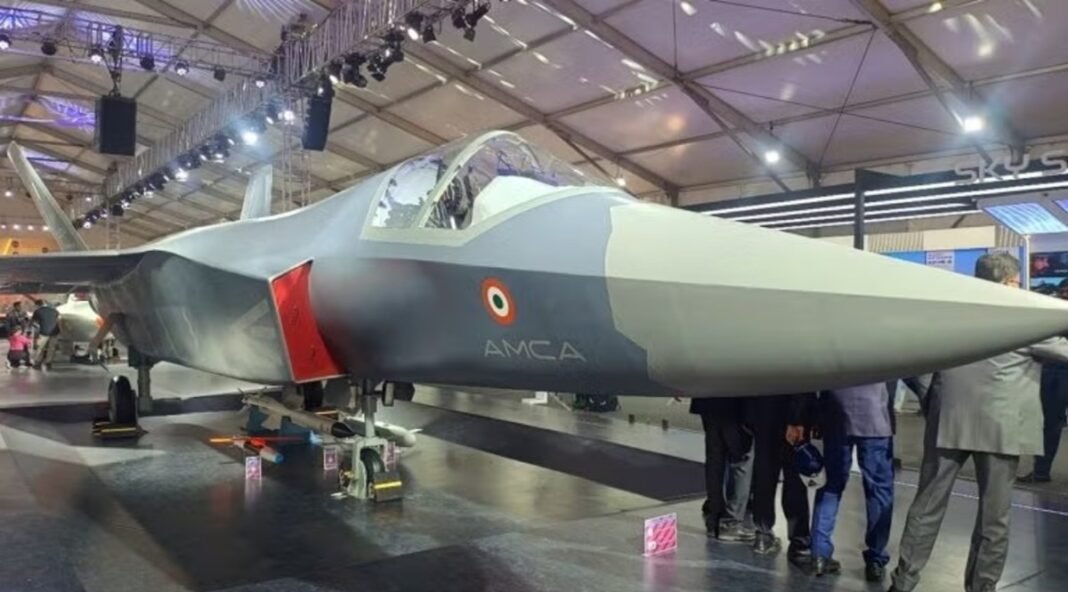
- The Advanced Medium Combat Aircraft, or AMCA.
- The proposed acquisition of 114 foreign Multi-Role Fighter Aircraft under MRFA.
- An indigenous high-thrust fighter engine.
- Collaborative combat aircraft and unmanned systems.
- Possible participation in an international sixth-generation fighter programme.
On paper, these programmes can form a logical progression.
The problem is timing.
The Indian Air Force faces immediate concerns over fighter squadron numbers and the retirement of older aircraft. These operational requirements cannot simply wait for programmes that may take another decade or longer to enter service.
That is why the MRFA programme continues to remain strategically relevant.
But the MRFA also creates a contradiction.
Every major investment in imported aircraft raises questions about how much money, political attention and industrial capacity remain available for India’s indigenous programmes.
New Delhi is therefore caught between two objectives.
It needs aircraft now.
But it wants technological independence later.
Balancing those two requirements will determine the future of Indian air power.
The sixth-generation race is not simply about aircraft
India cannot ignore the global transformation taking place in military aviation.
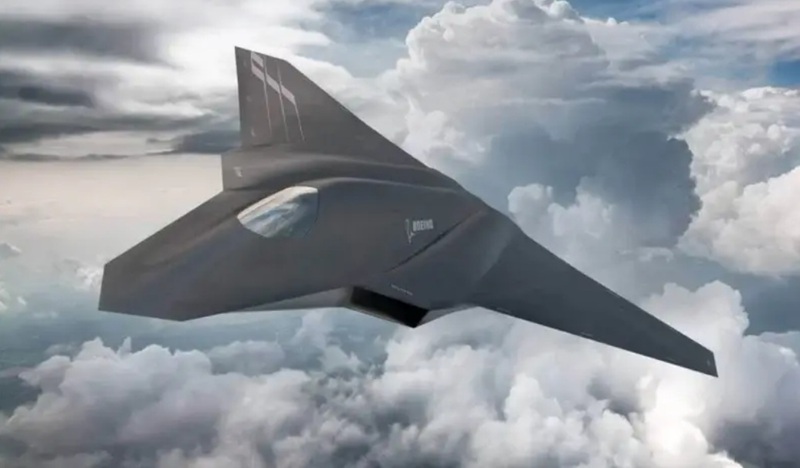
The United States is moving ahead with its Next Generation Air Dominance programme and the F-47.
China is developing advanced next-generation combat aircraft, including projects widely identified as the J-36 and J-50.
Meanwhile, Britain, Italy and Japan are developing the Global Combat Air Programme, while Europe is searching for new ways to build a future combat-air capability after the collapse of the original Franco-German FCAS fighter partnership.
The race is no longer simply about producing a better fighter aircraft.
Future air warfare will increasingly depend on an interconnected system involving:
- Artificial intelligence.
- Autonomous drones.
- Collaborative combat aircraft.
- Electronic warfare.
- Long-range sensors.
- Space-based surveillance.
- Secure communications.
- Advanced data networks.
- Long-range precision weapons.
The aircraft will be important.
But the network around it may be equally important.
For India, this creates an opportunity as well as a problem.
New Delhi may not need to independently develop every component of sixth-generation warfare. It could pursue targeted international partnerships in areas where its domestic capabilities remain weak.
But joining an international fighter programme is a much more complicated decision.
GCAP offers opportunity—but India would not be a founding partner
The Global Combat Air Programme involving Britain, Italy and Japan is moving beyond the conceptual stage.
The three countries aim to field their future combat aircraft from 2035 and have established a joint industrial structure involving BAE Systems, Leonardo and Mitsubishi Heavy Industries.
In July, the programme received a major boost when the three governments awarded Edgewing a £4.6 billion contract for the next phase of design and development.
Britain has also committed £8.6 billion to GCAP over four years.
The programme’s momentum makes it potentially attractive for India.
But it also creates an obvious challenge.
India would be entering a programme already shaped by three founding members.
Those countries have invested money, technology and political capital. They will naturally seek to protect their industrial interests and sensitive technologies.
India’s participation would therefore depend on the terms it could negotiate.
The critical questions would include:
Would India receive meaningful technology access?
Could Indian companies design critical systems?
Would India receive intellectual-property rights?
Could Indian industry manufacture advanced components?
And would New Delhi have genuine influence over the programme’s future direction?
For India, joining GCAP without securing meaningful technology and industrial participation would have limited strategic value.
The objective cannot simply be to become a buyer of a sixth-generation aircraft.
India’s stated ambition is to become an aerospace power.
Those are two very different objectives.
FCAS offers India an important warning
The collapse of the original FCAS fighter partnership between France and Germany should also serve as a warning.
The programme was intended to create a European next-generation fighter supported by drones, advanced sensors and a wider combat network.
But years of disagreements over industrial responsibility, leadership and intellectual property eventually undermined the partnership.
France’s Dassault Aviation and Airbus, representing German and Spanish interests, struggled to resolve the fundamental question at the centre of most multinational defence programmes:
Who controls the technology?
The lesson for India is significant.
International collaboration is not simply about sharing engineering costs.
It is also about national interests.
Every participating country wants industrial workshare. Every government wants jobs. Every major company wants control over valuable technology.
If European aerospace powers could not easily resolve these issues, India should be cautious about assuming that international participation will automatically provide technological sovereignty.
Any future partnership must therefore be judged on what India actually gains—not on the prestige of joining the programme.
The AMCA remains India’s real strategic test
India’s most important aerospace programme may still be the AMCA.
The Advanced Medium Combat Aircraft is intended to give India an indigenous fifth-generation stealth fighter capability.
The government has approved the initial development programme, which the Aeronautical Development Agency estimates will require approximately Rs 15,000 crore in research and development funding.
The figure, however, should be viewed cautiously.
The initial R&D allocation is not necessarily the total lifetime cost of developing, testing, producing and upgrading a complex fifth-generation fighter.
Global experience shows that advanced combat-aircraft programmes almost always become more expensive as they mature.
That is particularly important for India because the AMCA is expected to develop capabilities that the country has not previously mastered at this level.
India will have to advance in:
- Low-observable technologies.
- Advanced avionics.
- Sensor fusion.
- Electronic warfare.
- Artificial intelligence.
- Advanced materials.
- Weapons integration.
- High-performance propulsion.
The AMCA is therefore more than another fighter project.
It is a test of whether India can make the transition from developing aircraft with significant foreign dependencies to building a genuinely sovereign advanced combat-aircraft ecosystem.
From that perspective, India’s sixth-generation ambitions should not distract from the AMCA.
They should reinforce it.
India’s engine problem remains the biggest obstacle
The most difficult technological issue facing India’s future fighter ambitions may not be stealth or artificial intelligence.
It is the engine.
India has made progress in aircraft design and aerospace manufacturing.
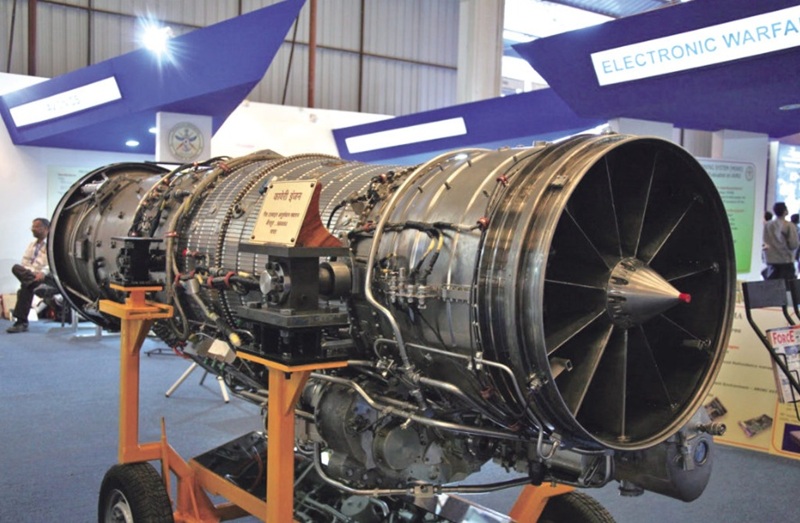
But it has yet to independently develop a high-thrust fighter engine for a frontline combat aircraft.
That weakness continues to shape every future programme.
The initial AMCA aircraft are expected to use the American GE F414 engine.
For later variants, India wants to develop a more powerful engine with an international partner.
Safran has proposed cooperation on a high-thrust engine programme, while Rolls-Royce has presented its own proposal involving co-development and Indian participation.
The competition between the two companies is strategically important.
New Delhi is not simply choosing an engine supplier.
It is potentially deciding the future technological foundation of India’s military aerospace industry.
The question is whether India can secure:
- Meaningful technology transfer.
- Indian intellectual-property participation.
- Domestic manufacturing.
- Access to advanced materials.
- Independent maintenance and upgrade capability.
Without these elements, India could continue building increasingly advanced aircraft while remaining dependent on foreign propulsion technology.
That would limit the country’s claim to aerospace autonomy.
For Pakistan and other regional observers, this issue may be more important than India’s immediate interest in sixth-generation programmes.
If India successfully develops or gains genuine mastery over high-performance fighter-engine technology, its long-term aerospace capabilities could change significantly.
If it does not, the country’s most advanced aircraft programmes will continue to rely on foreign suppliers.
The MRFA creates India’s most immediate financial dilemma
The proposed MRFA programme could become one of the largest fighter acquisitions in India’s history.
The Indian Air Force wants additional aircraft to address its declining squadron strength and maintain operational capability while indigenous programmes continue development.
That requirement is understandable.
But the programme’s estimated cost could run into tens of billions of dollars.
This creates a strategic trade-off.
Money spent on imported aircraft can solve an immediate capability problem.
But it does not necessarily solve India’s long-term industrial problem.
At the same time, India cannot simply abandon the MRFA and wait for Tejas Mk2 and AMCA.
Delays in indigenous programmes could leave the air force facing an extended capability gap.
This is the central contradiction.
India needs foreign fighters because its indigenous programmes are not yet ready. But large foreign purchases could reduce the financial space available to accelerate those indigenous programmes.
New Delhi will have to decide how much immediate operational capability it is willing to trade for long-term technological investment.
There is no easy answer.
India’s strategic challenge is particularly important in South Asia
India’s air-power decisions are not taking place in isolation.
They are shaped by a complex security environment involving both Pakistan and China.
For the Indian Air Force, future planning must account for the possibility of operating across more than one theatre.
This places additional pressure on India’s modernisation strategy.
A sixth-generation fighter may provide long-term advantages.
But it will not solve immediate questions about aircraft numbers, readiness, maintenance and the availability of combat platforms.
The regional military balance will therefore continue to be influenced by a combination of current and future systems.
For Pakistan, the emergence of India’s AMCA and possible participation in a sixth-generation programme is a development that requires close observation.
But the timeline matters.
These are long-term programmes.
India’s ability to convert technological ambition into operational aircraft will depend on production capacity, engine development, funding and programme management.
That distinction is crucial.
Announcing a future fighter programme and fielding a mature combat aircraft are separated by years of technological and industrial challenges.
India’s aerospace ambitions are significant.
Their execution remains the real test.
China makes India’s long-term planning unavoidable
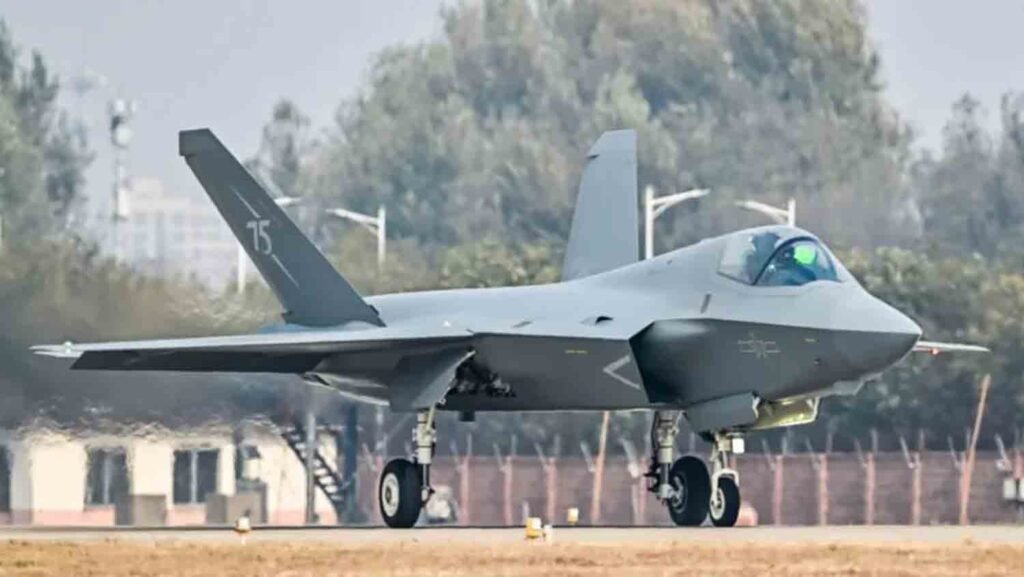
China’s rapid military modernisation is one reason India cannot ignore the sixth-generation race.
The development of advanced Chinese aircraft and unmanned systems increases pressure on New Delhi to think beyond the current generation of combat aviation.
But China also demonstrates the scale of the challenge.
Advanced aerospace capability is not built through a single fighter programme.
It requires a vast industrial ecosystem.
Engines, materials, electronics, radar, artificial intelligence, drones, missiles and manufacturing capacity all develop together.
India is attempting to build many of these capabilities simultaneously.
That is strategically necessary.
But it also creates the risk of fragmentation.
India may have the resources to pursue all these ambitions over the long term.
The question is whether it can pursue them all at the speed required by its security environment.
The danger of too many programmes
India’s defence modernisation has sometimes faced a recurring problem.
Ambitious programmes multiply faster than they mature.
The result can be delays, rising costs and increasing dependence on foreign systems.
The current fighter roadmap risks repeating that pattern.
Tejas Mk1A.
Tejas Mk2.
AMCA.
MRFA.
A new fighter-engine programme.
Collaborative combat aircraft.
And potentially a sixth-generation international programme.
There is a strategic logic behind each one.
But logic at the individual programme level does not always create a coherent national strategy.
The real requirement is sequencing.
India does not need every programme to move at maximum speed simultaneously.
It needs a clear hierarchy.
A coherent strategy would first ensure that existing aircraft programmes enter production.
It would protect the AMCA as India’s principal indigenous fifth-generation project.
It would treat the engine programme as a national technological priority.
And only then should New Delhi decide how deeply it wants to commit to an international sixth-generation programme.
Otherwise, India’s future fighter strategy could become a collection of ambitions competing for the same resources.
India should focus on technologies, not just the next fighter
There is another reason New Delhi should proceed cautiously.
The sixth-generation fighter itself may not be the most important technology of the future.
The decisive advantage could come from the systems operating around it.
India could potentially gain more by developing strengths in:
- Autonomous drones.
- Artificial intelligence.
- Electronic warfare.
- Sensor networks.
- Combat cloud architecture.
- Long-range missiles.
- Secure communications.
- Unmanned combat systems.
These technologies could also be integrated into India’s existing and future aircraft.
For example, collaborative combat aircraft could potentially operate with the Tejas, Rafale, Su-30MKI or AMCA long before a sixth-generation fighter enters service.
This would allow India to build relevant capabilities without waiting for a completely new aircraft.
The strategic debate should therefore not focus exclusively on whether India joins GCAP or another international programme.
The more important question is:
Which technologies will determine air superiority in the next 20 years, and which of those technologies must India control itself?
India’s real dilemma is time
Ultimately, India’s problem is not ambition.
It is time.
The Indian Air Force needs modern aircraft today.
Tejas Mk2 and AMCA need years of development and testing.
An indigenous fighter engine will take even longer to mature.
And a sixth-generation programme could remain decades away from operational service.
India therefore has to manage several timelines simultaneously.
It must prevent an immediate decline in combat capability.
It must ensure indigenous programmes move from prototypes to production.
And it must invest in technologies that will define future warfare.
This is an extremely difficult balancing act.
Spending too heavily on imported aircraft could delay indigenous capability.
Focusing entirely on indigenous programmes could create immediate operational gaps.
Moving prematurely into sixth-generation programmes could stretch the aerospace ecosystem even further.
That is India’s strategic dilemma.
The bottom line: India must choose a coherent air-power strategy
India is right to study sixth-generation fighter technologies.
The country cannot afford to remain outside a global transformation in military aviation.
But joining the race should not become an end in itself.
India’s most urgent strategic challenge is to build a coherent air-power architecture that connects present requirements with future ambitions.
That means delivering Tejas aircraft on time.
It means deciding whether and how the MRFA programme fits into the force structure.
It means protecting the AMCA.
And above all, it means solving the fighter-engine problem.
Only after establishing these foundations can India realistically decide how much it wants to invest in a sixth-generation fighter programme.
From a regional perspective, India’s long-term ambitions should be taken seriously.
But they should also be measured against the realities of aerospace development.
The next-generation fighter race will not be decided by announcements.
It will be decided by who can build engines, produce aircraft at scale, develop artificial intelligence, integrate drones and maintain complex combat systems over decades.
For India, the challenge is not whether it wants to join that race.
It clearly does.
The real question is whether New Delhi can modernise its air force for the wars it may have to fight today while building the technological foundation required for the wars of tomorrow.
That is India’s strategic dilemma—and the answer will shape the future military balance in South Asia for decades to come.