China’s military modernization is entering what Beijing considers a decisive phase, with retired People’s Liberation Army (PLA) Senior Colonel Zhou Bo arguing that the Chinese military will be capable of standing “toe to toe” with the United States by 2027.
In an interview published by the South China Morning Post (SCMP), Zhou said the PLA has made significant progress in modernization despite lacking recent large-scale combat experience. He argued that China’s expanding defence industry, rapid technological development, and increasing integration of artificial intelligence are reshaping the military balance between Beijing and Washington.
The interview comes as China accelerates preparations to meet its 2027 military modernization goals, widely viewed as a major milestone before the centenary of the PLA in 2027.
2027 Seen as a Major PLA Milestone
According to Zhou, China has established two major military objectives:
- Achieve key modernization goals by 2027, marking the PLA’s centenary.
- Complete broader military modernization by 2035.
He emphasized that these objectives are intended to build a world-class military while maintaining long-term, stable investment rather than pursuing sudden expansion.
Zhou argued that China’s military modernization has followed a gradual strategy aligned with the country’s overall economic development.
Combat Experience Remains a Key Difference
One of the central questions raised during the interview concerned the PLA’s lack of recent combat experience compared with the U.S. military.
Zhou acknowledged that the United States has accumulated extensive operational experience through conflicts in the Middle East and elsewhere.
However, he argued that battlefield experience alone should not be viewed as the sole measure of military effectiveness.
According to Zhou, modern warfare increasingly depends on advanced technology, integrated command systems, logistics, intelligence networks, and industrial capacity.
He suggested that the conflict in Ukraine has also provided valuable lessons that militaries can study without direct participation.
China’s Defence Industry ‘Second to None’
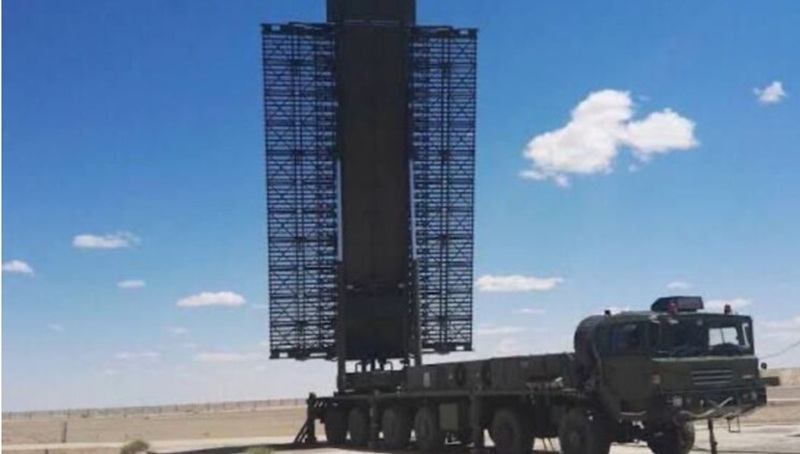
A recurring theme throughout the interview was the importance of China’s defence-industrial base.
Zhou stated that confidence in China’s military capabilities should stem not only from the armed forces themselves but also from:
- A powerful defence industry
- Long-term planning
- Stable investment
- Industrial manufacturing capacity
He argued that military strength increasingly depends on the ability to sustain production during prolonged conflicts rather than solely on frontline combat performance.
China has significantly expanded production across multiple defence sectors in recent years, including naval shipbuilding, missile manufacturing, aerospace development, and unmanned systems.
Artificial Intelligence Becoming Central to Future Warfare
Zhou also highlighted artificial intelligence (AI) as one of the most important drivers of future military competition.
According to the interview, AI can dramatically accelerate:
- Battlefield decision-making
- Intelligence processing
- Target selection
- Command and control
- Autonomous operations
However, Zhou cautioned against allowing AI to make final military decisions independently.
He argued that rules limiting AI’s role in life-and-death decisions should be established before technology advances further, while acknowledging that regulation often follows technological development rather than preceding it.
His comments reflect growing international debate over the role of autonomous systems in future conflicts.
China Expanding Nuclear Deterrence
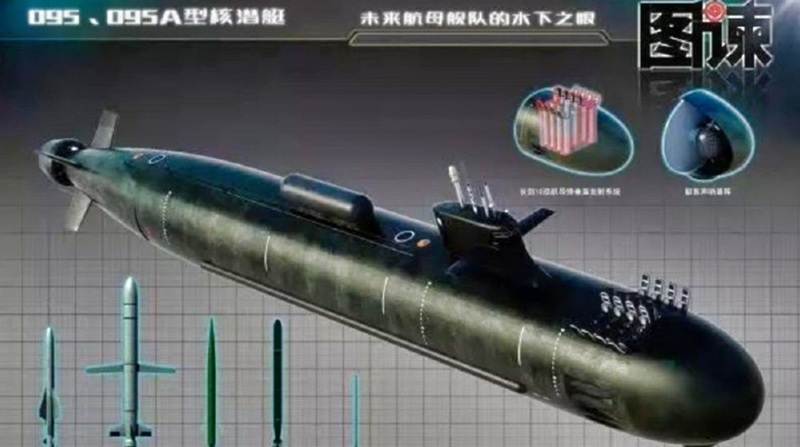
The interview also addressed China’s nuclear modernization.
Zhou argued that China’s growing nuclear arsenal should be viewed primarily as a deterrent rather than an offensive capability.
He suggested that Beijing’s nuclear expansion reflects changing international security conditions and the need to maintain strategic stability.
Although he acknowledged estimates that China is increasing the size of its nuclear force, he maintained that the country’s nuclear policy remains defensive in nature.
Taiwan Remains the Most Sensitive Issue
Taiwan featured prominently throughout the discussion.
Zhou reiterated Beijing’s longstanding position that Taiwan is part of China and argued that peaceful reunification remains the preferred outcome.
However, he also stated that China would not rule out the use of force if Taiwan were to declare formal independence or if external actors fundamentally altered the status quo.
Regarding U.S. arms sales to Taiwan, Zhou questioned whether continued weapons deliveries ultimately benefit the island, arguing that they increase military tensions while strengthening Beijing’s resolve.
He also suggested that Washington may eventually reconsider the long-term costs and benefits of continued arms transfers.
South China Sea and Regional Security

The interview also examined tensions in the South China Sea.
According to Zhou, China does not seek military conflict in the region but will continue defending what it considers its territorial claims.
He argued that while regional disputes persist, broader military confrontation remains unlikely unless external powers significantly escalate tensions.
The discussion also touched on the growing role of Japan, the Philippines, and the United States in regional security dynamics.
Can China Match the US Military?
When asked directly whether China could match the United States militarily, Zhou argued that the gap has narrowed considerably.
He cited several factors contributing to China’s progress:
- Expansion of advanced military technologies
- Larger defence-industrial production capacity
- Improved logistics
- Faster innovation cycles
- Artificial intelligence integration
- Modern command systems
At the same time, he acknowledged that the United States retains significant strengths in combat experience, global military presence, and operational integration.
Rather than claiming outright superiority, Zhou suggested that China is approaching a position where it can compete more effectively with the United States across multiple military domains.
Strategic Implications
The interview provides insight into how some Chinese strategic thinkers assess the evolving military balance between Beijing and Washington.
Zhou presents the PLA’s modernization as a long-term national project built on industrial capacity, technological advancement, artificial intelligence, and sustained investment rather than rapid expansion alone.
His remarks also reinforce Beijing’s messaging ahead of the PLA’s 2027 modernization milestone, emphasizing confidence in China’s growing military capabilities while reiterating official positions on Taiwan, nuclear deterrence, and regional security.
Although the interview reflects Zhou Bo’s personal views rather than official government policy, it offers a useful perspective on the strategic thinking surrounding China’s military transformation as competition with the United States continues to intensify.