
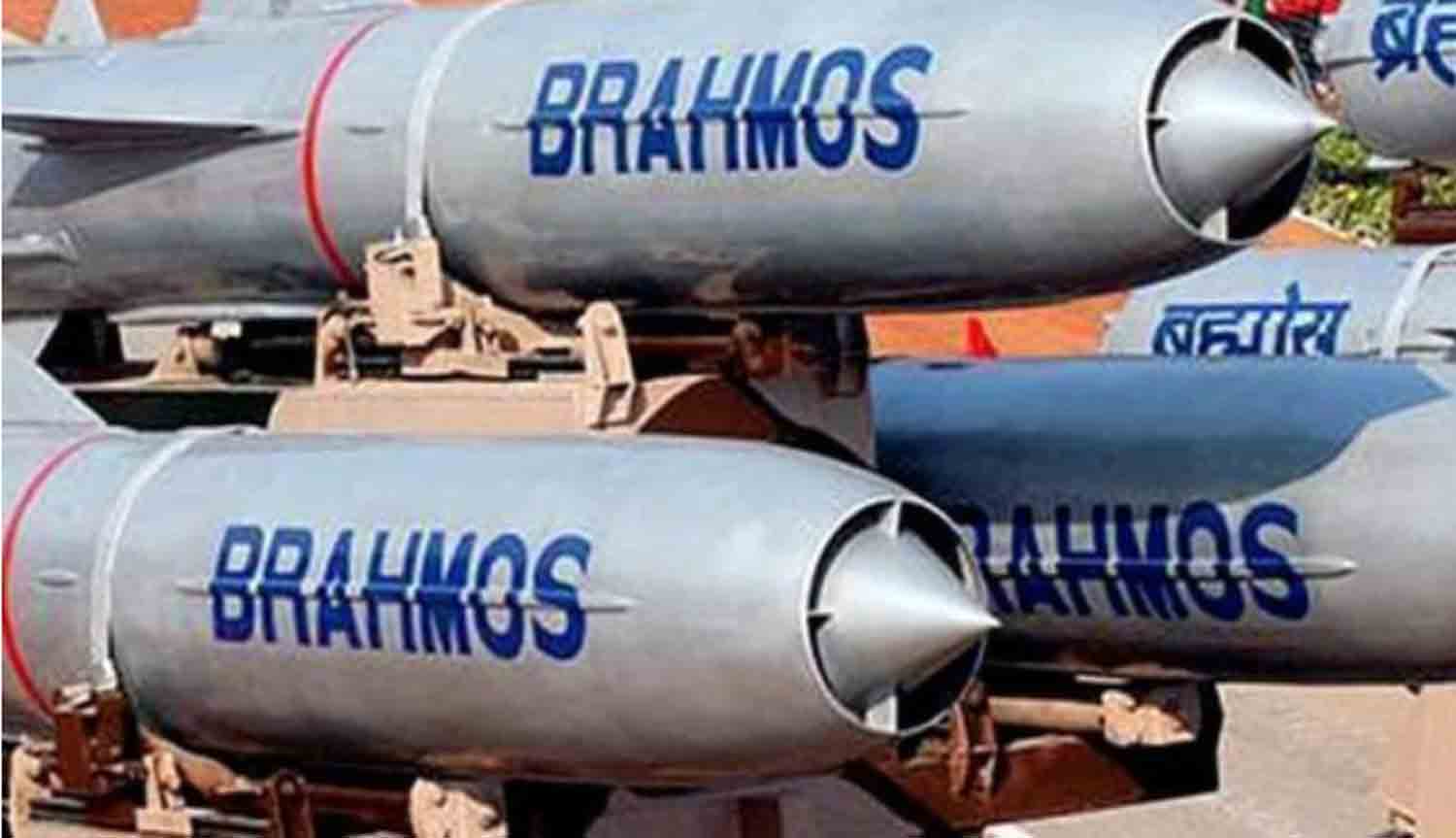
India is preparing to take a significant and potentially controversial step in its defence-industrial policy by bringing private companies into the development and production of strategic weapon systems.
The move is being presented in India as a major expansion of Atmanirbhar Bharat and a way to overcome production bottlenecks. But the more important story is what the decision reveals about the limitations of India’s existing strategic-weapons manufacturing model—and the security, quality-control and strategic risks that could emerge when highly sensitive weapons move into a wider private industrial ecosystem.
According to the Indian media report, the Defence Research and Development Organisation (DRDO) has invited private firms to qualify as Development-cum-Production Partners (DcPPs) for strategic weapons projects. At least two companies could be selected for each project, initially working with DRDO on prototypes and potentially receiving production orders if the systems are subsequently ordered in large numbers.
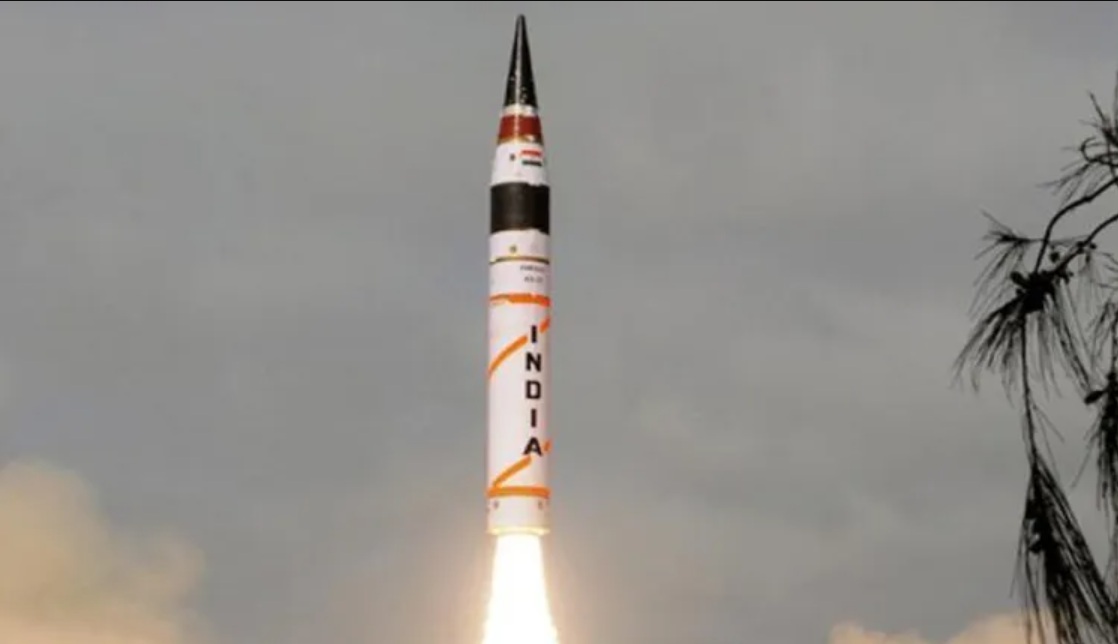
The reported weapons portfolio includes systems in the Agni strategic missile family and future strategic weapons, including systems associated with India’s nuclear deterrent.
DRDO invites private sector companies to make strategic weapons.
Process initiated under Development cum Production Partner model.@ETPoliticshttps://t.co/mRxi7zeNu0 pic.twitter.com/OOEaCzJQuI
— Manu Pubby (@manupubby) August 19, 2026
That is a considerably more sensitive proposition than the private-sector manufacture of conventional ammunition or tactical equipment.
The Real Question Is Not Whether India Can Build More Missiles
India’s problem is increasingly one of production capacity rather than simply missile design.
DRDO has developed a substantial portfolio of indigenous missile technologies, while government-owned Bharat Dynamics Limited (BDL) has historically been a major production agency.
But India’s armed forces increasingly require larger inventories, faster replenishment and greater industrial capacity.
Recent Indian reporting has acknowledged that the government is moving away from a model in which DRDO develops weapons and a small number of state-owned organisations manufacture them. The proposed defence acquisition framework and recent production partnerships are designed to bring private industry into this process.
The strategic-weapons initiative is therefore best understood as an attempt to solve an industrial bottleneck.
But that solution creates another question:
Can India expand production without diluting the exceptionally high security and quality standards required for strategic weapons?
That is where the real concerns begin.
Strategic Weapons Are Not Ordinary Defence Products
Private-sector participation in defence is not inherently problematic.
India already has numerous private companies involved in:
- missiles;
- radars;
- drones;
- electronic warfare;
- aerospace;
- ammunition;
- naval systems.
DRDO says that by March 2026, 134 companies had partnered with it as Development-cum-Production Partners or Production Agencies, while more than 2,200 industries were part of its wider industrial network.
The difference is the sensitivity of the weapons now being considered.
A strategic missile programme involves far more than manufacturing a metal airframe.
It can involve highly sensitive information relating to:
- propulsion;
- guidance;
- navigation;
- warhead integration;
- re-entry technology;
- telemetry;
- command systems;
- testing procedures;
- production tolerances;
- secure communications;
- storage and handling.
Expanding the number of organisations with access to portions of such technology inevitably expands the security-management challenge.
The “Two Companies Per Project” Model Creates Both Competition and Risk
The reported decision to select at least two companies for each project is intended to create competition and prevent dependence on a single manufacturer.
On paper, this has advantages.
If one production line encounters a problem, another could potentially maintain output.
Competition could also improve:
- efficiency;
- delivery schedules;
- manufacturing quality;
- innovation;
- cost control.
But there is another side.
Strategic weapons are not consumer products where competition can simply be maximised.
Two companies working on the same highly sensitive weapon programme means:
two industrial facilities, two supply chains, two groups of employees, two cybersecurity environments and potentially two sets of subcontractors.
Every additional node creates another potential point of compromise.
Therefore, the question should not simply be how many companies can manufacture India’s strategic missiles?
It should be:
How much sensitive technology needs to be shared with each company, and how effectively can the government monitor the entire chain?
India’s Private Defence Sector Still Has a Technology Gap
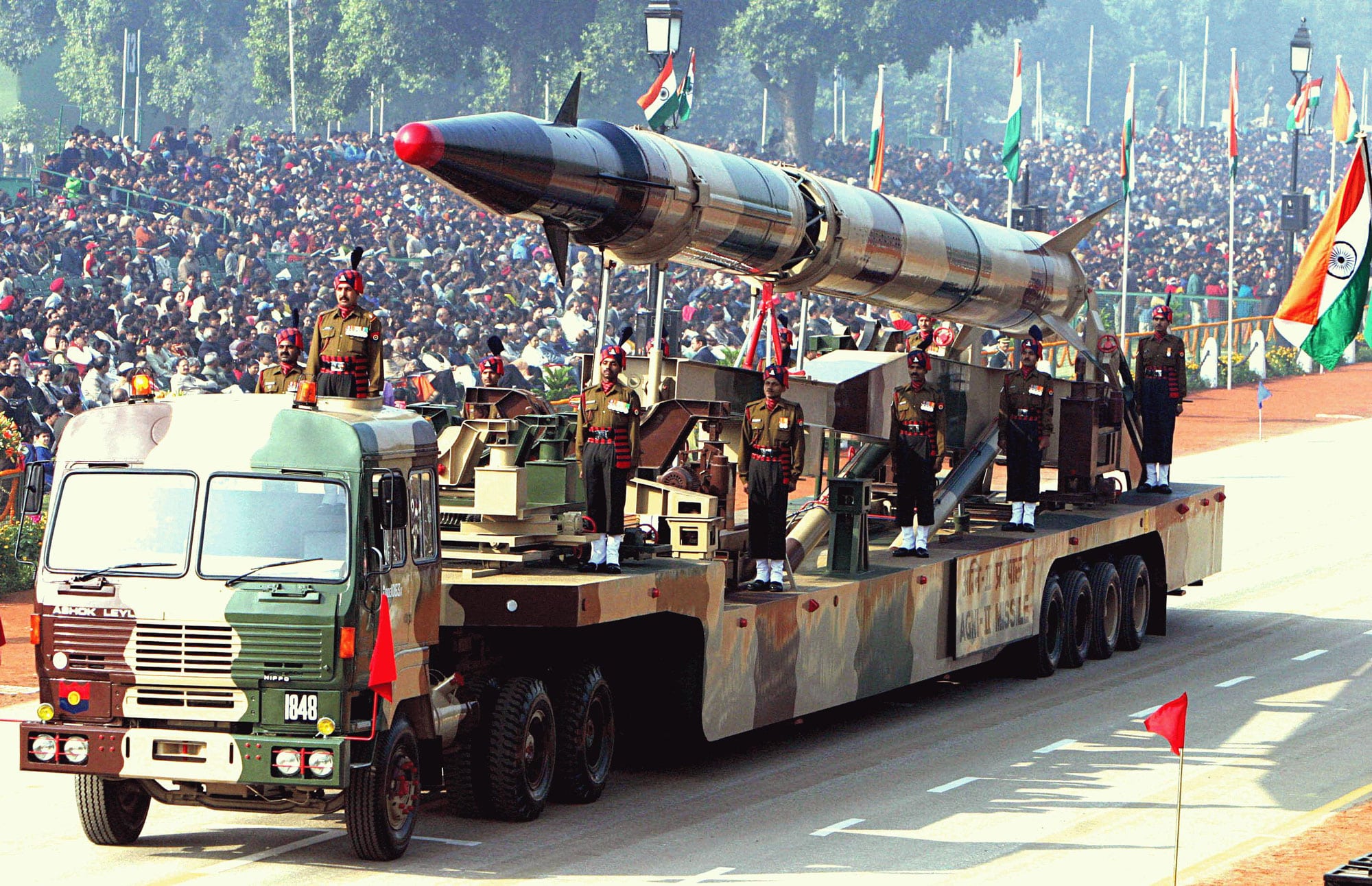
This is perhaps the biggest concern surrounding the new model.
India’s private defence industry has grown rapidly, but that does not mean all private companies possess the technological depth required for the most sophisticated strategic systems.
A June 2026 analysis by the South China Morning Post, citing Indian defence-industry concerns, reported that private firms accounted for about 24% of India’s defence output in 2025-26, but still faced shortcomings in advanced R&D and cutting-edge technologies.
This distinction matters.
There is a major difference between:
manufacturing a proven component at scale
and
mastering the underlying technology of a strategic weapon.
A company may have excellent factories, strong finances and experience producing conventional weapons while still lacking expertise in:
- advanced propulsion;
- precision guidance;
- hypersonic technologies;
- advanced materials;
- re-entry systems;
- strategic command-and-control integration.
DRDO therefore cannot simply transfer responsibility to private industry and expect the same results.
It will have to maintain substantial technical oversight.
India’s Own Experience Shows the Difficulty of Moving From Prototype to Production
India has repeatedly demonstrated the ability to develop and test advanced missile technologies.
But the transition from successful testing to large-scale induction has often been the harder part.
This is precisely why New Delhi is now trying to restructure its production model.
The May 2026 test of an Advanced Agni missile equipped with a MIRV system demonstrated continued progress in India’s strategic missile technology. India’s Defence Ministry said the missile carried multiple payloads directed toward geographically separated targets.
But a successful test does not answer questions about:
- production rate;
- stockpile size;
- reliability across large production runs;
- maintenance;
- component availability;
- long-term quality control.
The new private-sector model is essentially an attempt to address those issues.
Production Capacity Could Become the New Strategic Competition
This is perhaps the most important implication.
Modern strategic deterrence is not based solely on possessing a technically advanced missile.
It also depends on the ability to:
- produce sufficient numbers;
- maintain them;
- replace ageing systems;
- replenish inventories;
- sustain industrial output during crisis.
India appears increasingly conscious of this.
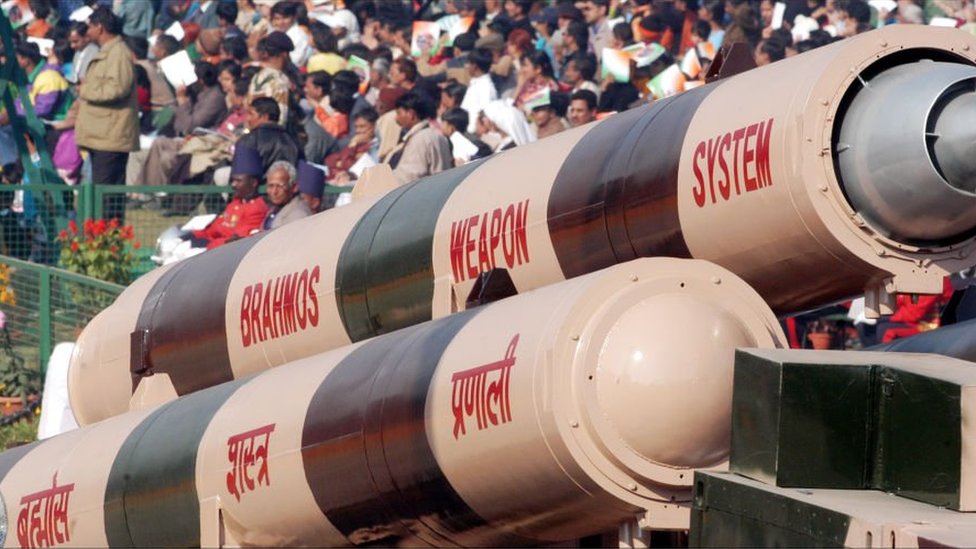
The expansion of private production agencies for missiles such as the UAV-launched precision-guided missile demonstrates the direction of travel. DRDO has already partnered Bharat Dynamics and Adani Defence Systems & Technologies for development and production of the ULPGM-V3.
The strategic-weapons initiative takes that model to a considerably more sensitive level.
But Faster Production Can Create a Quality-Control Problem
The pressure to produce more weapons quickly can conflict with the need for extremely rigorous testing.
A strategic missile cannot be treated like an ordinary industrial product.
Small variations in:
- propellant;
- materials;
- electronics;
- guidance components;
- manufacturing tolerances;
can affect performance.
If multiple private companies begin producing the same or related systems, maintaining identical standards becomes a major challenge.
The government will therefore need a rigorous system of:
independent inspection → batch testing → component verification → acceptance trials → lifecycle monitoring.
Without this, greater production capacity could come at the expense of consistency.
The Supply Chain Is the Hidden Vulnerability
Another concern is that an “Indian” missile does not necessarily mean that every component is Indian.
This is an increasingly important issue in India’s defence sector.
A strategic system may contain:
- imported electronic components;
- foreign machine tools;
- imported specialised materials;
- foreign-origin software;
- internationally sourced sensors.
India’s recent debate over Chinese components in military drones illustrates the broader problem: domestic assembly does not automatically equal strategic autonomy.
The more private companies involved, the more complicated the supply chain becomes.
And the supply chain may extend far beyond the primary contractor.
A major defence company could have dozens or hundreds of subcontractors.
The real security question is therefore:
Can India verify every critical component entering a strategic weapon?
That is a far harder task than simply inspecting the final missile.
Cybersecurity Becomes More Important With Private Production
Modern missiles increasingly depend on sophisticated digital systems.
The risks are therefore not limited to physical theft or espionage.
A private defence ecosystem introduces additional cybersecurity requirements involving:
- design databases;
- manufacturing systems;
- computer-aided engineering;
- testing software;
- supply-chain management;
- firmware;
- digital communications;
- employee access.
A compromised industrial network could potentially expose sensitive information long before a finished weapon leaves a factory.
The expansion of India’s strategic manufacturing base therefore requires a parallel expansion of industrial cybersecurity.
Can DRDO Monitor Multiple Private Contractors Effectively?
This is another unanswered question.
The Indian government has strong incentives to bring more companies into defence manufacturing.
But government oversight itself has finite resources.
If strategic programmes involve:
- DRDO;
- public-sector manufacturers;
- two or more private prime contractors;
- hundreds of subcontractors;
- multiple testing facilities;
the monitoring burden becomes enormous.
The government must ensure that industrial expansion does not outpace its ability to inspect and certify the resulting production network.
There Is Also a Conflict-of-Interest Question
Private companies ultimately operate for commercial purposes.
That is not inherently a problem.
But strategic weapons require decisions that cannot be driven exclusively by commercial considerations.
Questions may arise over:
- production priorities;
- contract pricing;
- intellectual property;
- technology ownership;
- export ambitions;
- subcontracting;
- workforce turnover.
The government must therefore establish very clear boundaries between commercial interests and strategic decision-making.
Export Ambitions Add Another Layer of Complexity
India increasingly wants to become a defence exporter.
The government has promoted indigenous missile systems for export to friendly countries, and private industry is expected to play an important role.
This creates an economic incentive for companies to develop production capacity.
But strategic weapons occupy a particularly sensitive category.
Exporting conventional missiles already involves:
- end-user controls;
- technology restrictions;
- international commitments;
- diplomatic considerations.
Strategic or nuclear-capable systems are considerably more sensitive.
India will therefore have to maintain a strict separation between exportable conventional systems and technology associated with strategic deterrence.
The China and Pakistan Factor
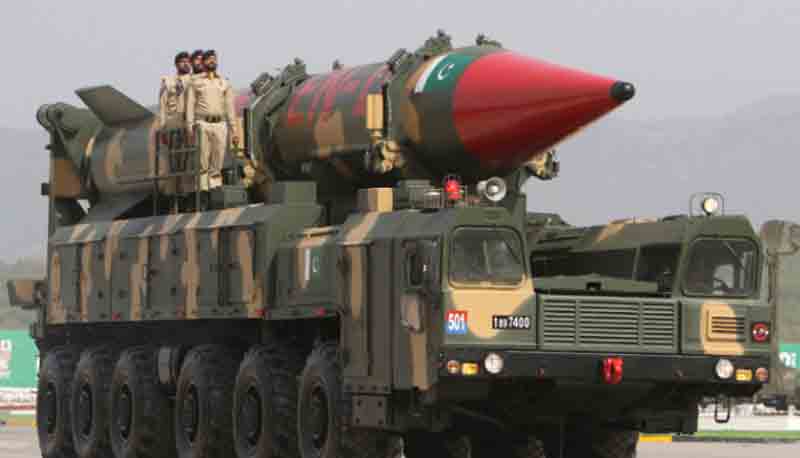
India’s decision is also being driven by its assessment of the regional security environment.
Indian defence reporting has increasingly linked missile production reforms to the need for greater readiness in the face of China and Pakistan.
But this should not be interpreted as evidence that India has suddenly acquired a decisive advantage.
The more accurate interpretation is that India is trying to improve the industrial depth behind its existing strategic capabilities.
Pakistan already possesses an established missile-development and production infrastructure and has pursued a diversified portfolio of ballistic and cruise missile systems.
China, meanwhile, has a much larger industrial base and extensive missile-production capacity.
India’s challenge is therefore not simply developing another missile.
It is developing the ability to sustain production at scale while maintaining reliability and security.
What Does This Mean for Pakistan?
From Pakistan’s perspective, the development deserves close monitoring, but not exaggerated interpretation.
India’s private-sector entry could eventually increase:
- production redundancy;
- manufacturing capacity;
- replenishment potential;
- development-to-production speed.
Those could become relevant to the long-term regional balance.
But an expression of interest does not mean that India has immediately increased its deployable strategic arsenal.
The important indicators will be:
- Which companies are actually selected?
- Which missile programmes are transferred?
- What production quantities are achieved?
- How quickly can the companies reach serial production?
- What proportion of critical components remains imported?
- What reliability standards are achieved?
- How much additional strategic capacity actually enters service?
Until those questions are answered, claims of a dramatic change in the South Asian strategic balance would be premature.
A Potential Weakness in India’s Strategy

There is an irony in the policy.
India’s objective is to reduce dependence on government-controlled production entities.
But if private companies themselves remain dependent on imported technology and components, New Delhi may simply replace one form of dependency with another.
Instead of dependence on foreign finished weapons, India could become dependent on foreign:
- semiconductors;
- propulsion components;
- specialised materials;
- machine tools;
- sensors;
- software.
True strategic autonomy therefore requires much more than private missile factories.
It requires a complete domestic ecosystem.
The Bigger Question: Is This Really “Atmanirbharta”?
India’s government is likely to present the initiative as another step toward Atmanirbhar Bharat.
But the real test is not how many Indian companies participate.
It is how much of the underlying technology India actually controls.
There are three levels of defence self-reliance:
Level 1 — Assembly
The weapon is assembled in India.
Level 2 — Manufacturing
Major components are manufactured domestically.
Level 3 — Technology Sovereignty
India controls the critical technologies, materials, software, components and intellectual property.
The third level is the real measure of strategic autonomy.
The new DRDO initiative could help India move from Level 1 toward Level 2.
Whether it moves significantly toward Level 3 remains uncertain.
The Strategic Risk for India
The biggest risk is therefore not that private companies will participate.
It is that production expansion could be mistaken for technological independence.
India could eventually have more missile factories without necessarily having complete control over every technology required to sustain those missiles.
The second risk is fragmentation.
If too many contractors and subcontractors become involved, maintaining security and common standards could become increasingly difficult.
The third risk is quality.
Strategic weapons require extremely consistent production standards.
And the fourth is institutional:
Can DRDO and the Ministry of Defence expand oversight as quickly as they are expanding the industrial base?
Those questions remain unanswered.
What Should Be Watched Next?
The next stage of the programme will tell much more than the current announcement.
Watch the companies
The identity of the selected private firms will indicate how deep India’s industrial capability really is.
Watch the weapons
If projects involve only conventional systems, the security implications will be different from participation in highly sensitive strategic programmes.
Watch production numbers
Orders and actual serial production are not the same thing.
Watch imported components
This will determine whether “Atmanirbharta” is genuinely deepening.
Watch testing standards
The reliability of privately manufactured systems will ultimately matter more than corporate announcements.
Watch Pakistan’s response
Islamabad will likely monitor whether India’s industrial reforms translate into a meaningful increase in strategic production capacity.
Final Assessment
India’s decision to invite private companies into strategic weapon development and production is significant—but it should not be confused with an immediate transformation of India’s nuclear or missile arsenal.
The move is fundamentally an industrial response to a production problem.
India has developed sophisticated missile technologies, but its state-dominated production model has faced capacity constraints. New Delhi now wants private industry to provide additional manufacturing depth and competition.
The concern is what happens when that expansion reaches the most sensitive end of the weapons spectrum.
Strategic missile manufacturing requires more than factories. It requires technology sovereignty, secure supply chains, rigorous quality control, cybersecurity, protection of classified information and sustained government oversight.
India’s own defence-industrial debate shows that its private sector is growing rapidly but still faces technology and R&D limitations in some advanced areas.
At the same time, India’s successful Advanced Agni MIRV test demonstrates that DRDO already possesses substantial strategic missile-development capability.
The unresolved question is whether that technological capability can be translated into secure, reliable and scalable production through an expanded private-sector network.
For Pakistan, the development is worth watching as an indicator of India’s long-term industrial trajectory—not as proof of an immediate shift in the regional strategic balance.
The real measure will come later:
not how many Indian companies are invited into strategic weapons production, but how many reliable systems they can actually manufacture, how quickly they can do it, and how much of the underlying technology India truly controls.
That is where the success—or failure—of India’s new strategic weapons model will ultimately be decided.