Prime Minister Narendra Modi is pushing India toward a much bigger role in space, from a national space station and human missions to a globally competitive commercial space industry. India has made genuine breakthroughs—from Chandrayaan-3 and space docking to its first private orbital rocket—but the gap between its ambitions and the scale of the United States and China remains substantial.
India’s space programme is entering a new phase.
For decades, the Indian Space Research Organisation (ISRO) was primarily a government-led scientific and developmental institution. That model produced major achievements at relatively low cost, including satellite communications, remote sensing, navigation, planetary missions and increasingly sophisticated launch vehicles.
But Prime Minister Narendra Modi now wants India to move beyond being a successful space agency and become a major space economy and space power.
That ambition was again on display around India’s National Space Day on August 23, 2026, when Modi highlighted the country’s growing private space sector and urged Indian startups to build globally competitive businesses. He has also repeatedly linked India’s space programme to the broader Viksit Bharat 2047 vision.
#WATCH | Delhi: During interaction with CEOs and Founders of Space Startups, Prime Minister Narendra Modi said, “…I believe we should create an aura where people from all over the world feel that if they want to build a life in this field, they should come to India—join an… https://t.co/B70vSL9Qwk pic.twitter.com/H3JM4NgCC2
— ANI (@ANI) August 23, 2026
The ambition is enormous.
India wants:
- a human spaceflight capability;
- its own space station;
- lunar missions and eventually human lunar exploration;
- advanced launch vehicles;
- a much larger commercial space industry;
- hundreds of space startups;
- greater foreign investment;
- stronger international partnerships; and
- a substantially larger share of the global space economy.
But there is an important reality check.
India has become a serious spacefaring nation, but it is not yet in the same league as the United States or China in launch cadence, orbital infrastructure, commercial scale, reusable launch technology or the size of its space economy.
The question for Modi is therefore no longer whether India can reach space.
It is whether India can scale its space capabilities fast enough to turn impressive individual missions into sustained global power.
Modi’s New Space Vision
Modi’s space ambitions have gradually expanded.
Earlier, India’s primary objective was to establish reliable access to space and develop satellites for communications, weather, navigation, agriculture, disaster management and national development.
That foundation has largely been built.
Now New Delhi is moving toward much more ambitious objectives.
The government’s Space Vision 2047 includes human spaceflight, a national space station and increasingly ambitious exploration missions. Official government material says India’s planned Bharatiya Antariksh Station (BAS) will consist of five modules in low Earth orbit, with the first module targeted for launch in 2028.
Modi has also previously articulated a broader roadmap that includes:
Gaganyaan → Bharatiya Antariksh Station → human lunar exploration.
At the 2025 Global Conference on Space Exploration, Modi said India was targeting the country’s space station by 2035 and an Indian astronaut reaching the Moon by 2040, while also identifying Mars and Venus as future areas of exploration.
These are no longer simply symbolic objectives.
They require an entirely different level of industrial, technological and financial capacity.
India Has Already Crossed Some Major Space Milestones
Any assessment of India’s ambitions must begin with what it has actually achieved.
The most important recent milestones include:
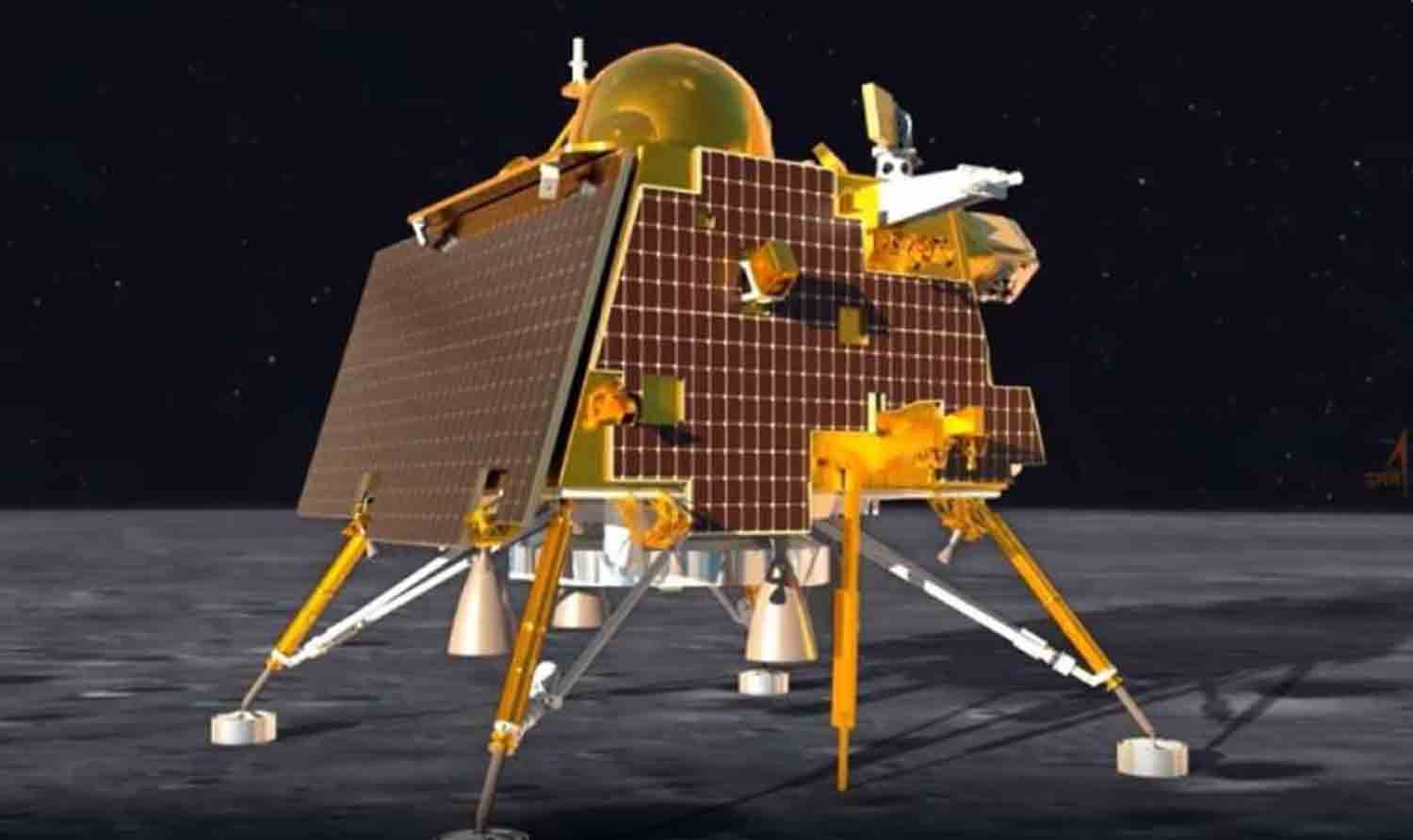
Chandrayaan-3
In August 2023, India became the first country to successfully land near the Moon’s south polar region.
That achievement significantly enhanced India’s reputation as a planetary exploration power. The mission also demonstrated India’s ability to recover from the failure of Chandrayaan-2 and redesign critical systems.
Aditya-L1
India’s solar observatory reached the Sun-Earth L1 region and began studying the Sun, expanding India’s scientific space capabilities beyond Earth and lunar missions.
Space docking
India’s SpaDeX mission demonstrated autonomous docking and undocking of satellites and power transfer in orbit, making India the fourth country to demonstrate docking capability in space.
This is particularly important because docking technology is fundamental to future space stations, in-orbit servicing and more complex human-spaceflight missions.
NISAR
The joint NASA-ISRO Synthetic Aperture Radar (NISAR) mission, launched in July 2025, gave India access to one of the world’s most sophisticated Earth-observation systems. ISRO says NISAR is the first dual-frequency SAR satellite and is now providing Earth-observation data.
Human spaceflight experience
Indian astronaut Group Captain Shubhanshu Shukla flew aboard the Axiom-4 mission to the International Space Station in 2025, giving India’s human-spaceflight programme valuable operational experience in astronaut training, microgravity research and international mission coordination.
These are substantial achievements.
But they do not automatically make India a peer of the world’s two dominant space powers.
Where Does India Rank in the World Space Race?
This question needs some caution.
There is no single universally accepted global ranking of space powers.
A country can be ranked according to:
- number of launches;
- satellite fleet;
- launch capacity;
- human spaceflight;
- deep-space missions;
- commercial space revenue;
- government spending;
- military space capability;
- reusable launch technology;
- private-sector investment; or
- scientific capability.
India performs strongly in some of these categories and much less strongly in others.
That produces a more complicated picture than simply saying India is “number three” or “number four.”
Launches: India Is Still Far Behind the Leaders
The clearest reality check is launch cadence.
Different launch databases use different definitions, but 2025 data consistently show a huge gap between the United States, China and India.
One launch dataset recorded approximately:
- United States — 193 launches
- China — 93
- Russia — 17
- Europe — 7
- India — 5
- Japan — 4
in 2025.
Another dataset using a different country-assignment methodology similarly placed India at five orbital launch attempts, compared with 181 for the United States and 92 for China.
The exact ranking can therefore vary depending on methodology.
But the strategic conclusion does not change:
India is nowhere close to the United States or China in launch frequency.
And launch frequency increasingly matters.
SpaceX’s enormous launch cadence has transformed the economics of orbital access.
China is also rapidly increasing its launch activity.
India’s challenge is therefore not simply developing a rocket that works.
It is developing a system that can launch frequently, cheaply and reliably.
The Private-Sector Revolution Is India’s Biggest New Opportunity
This is where Modi’s strategy is potentially transformative.
For decades, India’s space programme was overwhelmingly controlled by ISRO and the government.
That changed dramatically after the 2020 space-sector reforms.
Private companies were allowed to develop launch vehicles, satellites, propulsion systems and other space technologies.
The government created institutions to support this new ecosystem.
According to India’s Department of Space, the number of registered space startups increased from one in 2014 to around 440 by August 2026, while the country’s space economy was valued at approximately $9 billion.
That is one of the most important developments in India’s space programme.
The country is trying to move from:
ISRO → Indian space sector
to:
ISRO + private industry + startups + international capital + universities.
That is the model that could eventually produce scale.
Skyroot Has Changed the Equation
India’s private space ambitions received a major boost in July 2026.
Skyroot Aerospace successfully launched Vikram-1, becoming India’s first private company to conduct an orbital rocket mission. Reuters described the achievement as a key milestone in India’s attempt to build a commercial launch industry and said it made India the third country to reach orbital launch capability through private enterprise.
The significance goes beyond one rocket.
For the first time, an Indian private company has demonstrated that an orbital launch system can move from startup development to an actual orbital mission.
That changes the psychology of the sector.
India now has the possibility of developing multiple commercial launch providers rather than relying almost entirely on government launch infrastructure.
But One Private Launch Does Not Make a Commercial Space Power
This is where the reality check becomes important.
Skyroot’s achievement is impressive.
But the United States has companies such as:
- SpaceX;
- Blue Origin;
- Rocket Lab;
- Firefly Aerospace; and
- numerous satellite and launch companies.
China is also developing a large private and state-backed commercial space industry.
The United States alone accounted for the overwhelming majority of objects placed into orbit in 2025, driven heavily by commercial constellations. Data compiled from UN sources show that U.S. agencies and companies were responsible for 3,708 of 4,510 objects launched into space in 2025—about 82% of the global total.
India is therefore starting a commercial space race from a much smaller base.
India’s Space Economy Is Still Small
This may be the biggest gap between Modi’s rhetoric and current reality.
India’s space economy is estimated at around $9 billion in 2026, according to Indian government figures.
India’s own projections aim for approximately $40–45 billion over the next decade, with earlier government targets putting the economy at around $44 billion by 2033 and potentially $100 billion by 2040.
The global space economy, meanwhile, is already measured in the hundreds of billions of dollars.
Space Foundation estimated the global space economy at $613 billion in 2024, with the commercial sector accounting for most of the growth. It projected the global economy could surpass $1 trillion in the early 2030s.
That puts India’s challenge into perspective.
Even if India reaches $44 billion, it would still represent only a modest share of a trillion-dollar-plus global industry.
So India’s ambition to capture roughly 8% of the global space economy by the early 2030s is very ambitious and will require much faster commercial scaling.
India’s Space Institutions Are Changing
The institutional structure is also evolving.
ISRO
The Indian Space Research Organisation remains the technical and scientific core of India’s space programme.
It develops launch vehicles, satellites, planetary missions, human-spaceflight systems and major space technologies.
ISRO remains India’s most important space institution.
Department of Space
The Department of Space provides the government’s overarching administrative and policy framework.
It oversees India’s broader national space programme.
IN-SPACe
The Indian National Space Promotion and Authorisation Centre, or IN-SPACe, was created to facilitate private-sector participation.
Its role is increasingly important as India moves from a government-dominated model toward a mixed public-private space economy.
NSIL
NewSpace India Limited (NSIL) is the commercial arm of the Department of Space.
Its purpose includes commercialising ISRO technologies and services and expanding India’s position in the global space market.
Antrix
Antrix Corporation historically served as ISRO’s commercial arm and remains an important part of India’s space-commercialisation history, although NSIL has taken the leading role in many newer commercial activities.
Together, these institutions represent India’s attempt to create something it previously lacked:
a complete space ecosystem rather than simply a government space agency.
The Institutional Reform Is Probably More Important Than Another Moon Mission
This is a crucial point.
Chandrayaan-3 generated enormous international attention.
But India’s long-term space power will not be determined by how many spectacular missions it conducts.
It will depend on whether India can create an ecosystem capable of producing:
- rockets;
- satellites;
- propulsion systems;
- sensors;
- avionics;
- software;
- space communications;
- launch services;
- Earth-observation products;
- space-based navigation;
- orbital servicing;
- space stations; and
- human-spaceflight systems.
That requires thousands of companies and a much deeper industrial base.
The startup reforms are therefore potentially more consequential than individual missions.
Modi Wants Five Space Unicorns
Modi has explicitly linked space ambitions to entrepreneurship.
In his 2025 National Space Day message, he challenged Indian space startups to aim for five space-sector unicorns within five years. He also highlighted the emergence of more than 350 startups at that time.
By August 2026, the government says the number of registered space startups had reached around 440.
This is rapid growth.
But startup numbers alone do not equal industrial strength.
The critical questions are:
How much capital are these companies raising?
How many have paying customers?
How many are exporting?
How many can manufacture at scale?
How many can survive without government contracts?
Those indicators will determine whether India’s space startup boom becomes a genuine industrial revolution.
India’s Biggest Advantage: Cost
India has a genuine competitive advantage in space.
Cost efficiency.
The country’s space programme has developed a reputation for achieving difficult missions at comparatively low cost.
That was demonstrated most famously by Chandrayaan-3.
But cost leadership alone is no longer sufficient.
SpaceX has fundamentally changed the launch market through reusable rockets.
China is also moving aggressively into reusable launch systems.
In August 2026, Chinese private company LandSpace successfully landed the first stage of its Zhuque-3 orbital-class rocket, placing China alongside the United States’ leading private companies in reusable launch technology.
This is an important warning for India.
India’s low-cost advantage could disappear if it remains dependent on largely expendable launch vehicles while competitors move toward rapid reusability.
Reusability Is India’s Major Weakness
India is working on reusable launch technology and next-generation propulsion.
But it has not yet demonstrated the same operational maturity in reusable orbital launch as SpaceX.
That difference matters enormously.
A reusable rocket can potentially:
- reduce launch cost;
- increase launch frequency;
- shorten turnaround time;
- expand commercial demand;
- enable larger satellite constellations; and
- support future human-spaceflight programmes.
Without reusability, India risks becoming a competitive but secondary launch provider.
That would not match Modi’s ambition of global leadership.
India’s Heavy-Lift Capability Is Improving
There is nevertheless progress.
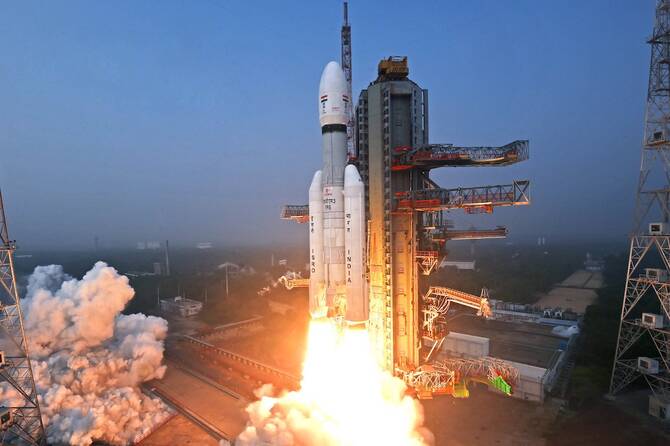
The LVM3 is becoming increasingly important.
In December 2025, ISRO’s LVM3-M6 launched the BlueBird Block-2 communications satellite, weighing approximately 6,100 kg, the heaviest payload launched from Indian soil, according to India’s Department of Space.
That demonstrated growing heavy-lift capability.
India is also developing a semi-cryogenic engine, which could improve future launch-vehicle performance.
ISRO reported successful tests of the semi-cryogenic engine’s power-head test article and further CE20 cryogenic-engine tests during 2025–26.
These technologies will be essential if India wants to support a space station and more ambitious lunar missions.
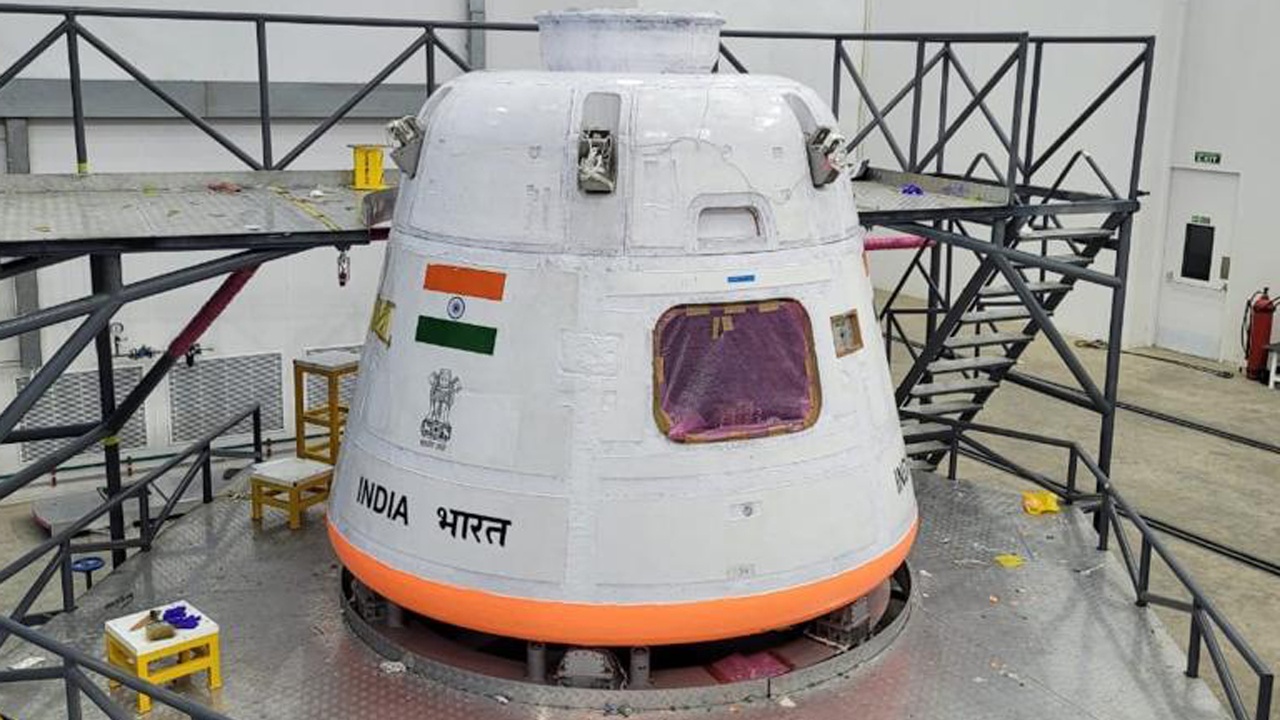
Gaganyaan Is the Next Big Test
India’s human-spaceflight programme is arguably the most important bridge between its current capabilities and Modi’s long-term vision.
Gaganyaan is intended to demonstrate India’s ability to send Indian astronauts into low Earth orbit using an Indian launch system.
The programme requires capabilities that robotic missions do not:
- human-rated rockets;
- crew escape systems;
- life support;
- astronaut training;
- mission control;
- emergency procedures;
- recovery operations;
- docking;
- long-duration human-spaceflight systems.
The experience gained from Shubhanshu Shukla’s Axiom-4 mission is useful here, but it is not equivalent to conducting an independent Indian crewed mission.
India still has to demonstrate the complete system.
The Bharatiya Antariksh Station Is an Even Bigger Challenge
India’s planned Bharatiya Antariksh Station could become one of the country’s defining space projects.
The government’s current architecture calls for a five-module station, with the first module targeted for 2028.
But a space station is not simply a large satellite.
It requires:
- repeated heavy launches;
- orbital docking;
- crew transport;
- life-support systems;
- resupply;
- space medicine;
- long-duration habitation;
- debris protection;
- station maintenance; and
- reliable launch cadence.
India’s experience with SpaDeX is therefore strategically relevant.
Docking technology is one of the building blocks for a future station.
NASA’s Moon-Base Interest Shows India’s Growing Importance
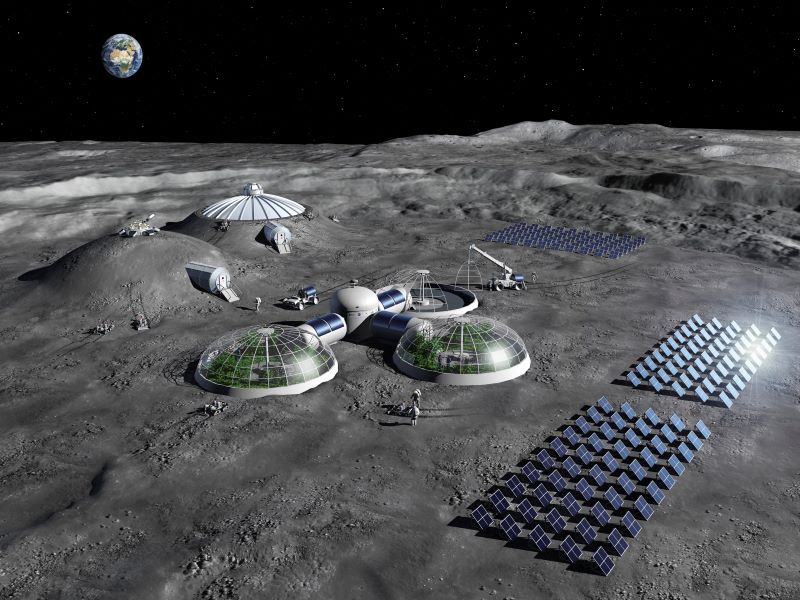
India’s position is also improving diplomatically.
NASA has invited ISRO to participate in discussions around its future lunar-base ambitions, building on India-U.S. civil-space cooperation under the Artemis framework. Discussions in August 2026 included human spaceflight, commercial space cooperation and scientific data sharing.
That does not mean India is suddenly a peer of NASA.
It does indicate something important:
major space powers increasingly see India as a useful partner rather than simply another developing space programme.
India’s scientific reputation, cost advantage and growing industrial base make it increasingly valuable in international space cooperation.
China Is the Benchmark India Cannot Ignore
Any serious assessment of India’s space ambitions has to include China.
China’s space programme has moved rapidly from catching up with established powers to competing at the leading edge.
China operates:
- its own space station;
- heavy launch vehicles;
- crewed spacecraft;
- lunar exploration programmes;
- Mars exploration capabilities;
- large satellite constellations;
- military space systems;
- reusable-launch development; and
- a rapidly growing commercial space industry.
China also has a much higher launch cadence than India.
That is the uncomfortable comparison.
India’s Chandrayaan-3 success was historic.
But China is building a much larger space-industrial system.
The United States Remains in a Different League
The U.S. lead is even larger.
The United States combines:
- NASA;
- SpaceX;
- Blue Origin;
- United Launch Alliance;
- Rocket Lab;
- major satellite manufacturers;
- military space organisations;
- enormous commercial constellations;
- reusable rockets;
- human spaceflight;
- lunar programmes;
- deep-space science; and
- massive private investment.
The commercial sector is the biggest difference.
Space Foundation estimated the global space economy at $613 billion in 2024 and found that commercial activity accounted for most of the growth.
India’s $9 billion space economy is growing rapidly, but it remains tiny by comparison.
India’s Real Ranking: Strong Third-Tier Major Power, Not Yet Peer
If the world’s space powers are considered as a spectrum rather than a simplistic league table, India’s position becomes clearer.
Tier 1: United States
Dominant in launch cadence, commercial space, reusable rockets, satellite constellations, human spaceflight and overall investment.
Tier 2: China
A full-spectrum space power with human spaceflight, space-station capability, heavy launch, lunar exploration, military space infrastructure and a growing commercial sector.
Tier 3: Russia, Europe, Japan and India
India belongs in this group in terms of overall spacefaring capability, although its strengths differ from those of Russia, Europe and Japan.
India is particularly strong in:
- cost-efficient missions;
- Earth observation;
- satellite applications;
- lunar exploration;
- launch development;
- space diplomacy; and
- rapidly growing startups.
But it still trails the leading powers in:
- launch cadence;
- reusable rockets;
- human-spaceflight maturity;
- commercial revenue;
- large constellations;
- heavy-lift scale;
- orbital infrastructure; and
- private investment.
That is a much more useful description of India’s global position than simply calling it a “top space power.”
India Has One More Major Advantage: Foreign Satellite Launches
India has built a substantial record in commercial launch services.
ISRO and Indian commercial space entities have launched hundreds of foreign satellites.
A 2026 Indian strategic-space report said India had launched more than 430 foreign satellites from over 35 countries through ISRO, Antrix and NSIL.
The LVM3’s successful launch of the 6.1-tonne BlueBird satellite has also strengthened international confidence in India’s heavy-launch capability. The Indian government said the mission enhanced commercial confidence in LVM3 as an international launch vehicle.
That is a genuine market opportunity.
But India needs to convert individual contracts into a high-frequency launch business.
The Global Commercial Space Market Is Moving Much Faster
This is where India’s targets become difficult.
The global space economy is already more than $600 billion.
The number of satellites and other objects entering orbit is exploding.
In 2025, more than 4,500 objects were launched into space, with U.S. commercial constellations accounting for the overwhelming share.
India’s commercial industry is therefore entering a market that is growing rapidly—but also becoming brutally competitive.
The future winners will not necessarily be the countries with the most impressive scientific missions.
They will be those that can:
manufacture cheaply + launch frequently + finance aggressively + sell globally.
India’s Space Sector Has a Financing Problem
The government can fund strategic programmes.
But building a large commercial space economy requires private capital.
A startup developing a rocket may need years of investment before generating significant revenue.
A satellite constellation requires enormous upfront capital.
A space station requires long-term public funding.
India therefore needs deeper:
- venture capital;
- private equity;
- institutional investment;
- insurance;
- export finance;
- public procurement;
- international partnerships; and
- satellite-service markets.
Without those financial mechanisms, the startup boom could produce many small companies but relatively few global-scale firms.
The Defence Dimension Is Becoming More Important
India’s space ambitions are not purely civilian.
Space is increasingly part of national security.
Satellites provide:
- intelligence;
- navigation;
- secure communications;
- missile warning;
- weather information;
- battlefield surveillance;
- maritime awareness;
- targeting support.
India has already demonstrated anti-satellite capability and is developing greater space situational awareness.
ISRO’s Indian Space Situational Assessment Report now tracks the country’s orbital environment and space hazards, reflecting the growing importance of protecting national space assets.
The next phase of India’s space strategy will therefore inevitably involve closer links between civilian, commercial and defence space capabilities.
Modi’s “Space Power” Vision Is Also About Geopolitics
There is a larger strategic reason for India’s space push.
Space gives India diplomatic influence.
A country capable of launching satellites for developing nations, providing Earth-observation data, participating in lunar exploration and training astronauts gains influence well beyond the direct economic value of its rockets.
India has already used space diplomacy with the Global South.
Its satellite launches for other countries and its cooperation with NASA, Europe and other partners provide New Delhi with another instrument of international influence.
This is particularly important as India attempts to position itself between the United States, Europe, Russia and the developing world.
India’s Problem Is Not Technology Alone
It would be wrong to conclude that India lacks the technology to become a major space power.
The evidence shows otherwise.
Chandrayaan-3 proved lunar landing capability.
SpaDeX proved orbital docking.
NISAR demonstrates sophisticated Earth observation.
LVM3 demonstrates increasingly heavy launch capability.
Skyroot demonstrates emerging private orbital launch capability.
Gaganyaan is developing human-spaceflight systems.
The problem is scale and speed.
India has repeatedly demonstrated that it can accomplish difficult individual missions.
What it has not yet demonstrated is the ability to operate at the high-frequency, commercially scalable level of the United States and increasingly China.
Modi’s Biggest Challenge: Turning Missions Into an Industry
This is the central reality check.
India has mastered the art of the mission.
Now it needs to master the art of the industry.
A successful lunar landing is a technological achievement.
A commercial space industry requires hundreds of companies making components, thousands of skilled workers, investors willing to take risks and customers willing to buy services.
A successful rocket launch is an achievement.
A launch company needs dozens or hundreds of launches.
A space station module is an achievement.
A space station requires continuous resupply, crew rotation and maintenance.
That is the difference between space exploration and space power.
Can India Reach Modi’s 2047 Space Ambitions?
Yes—but only if the country significantly increases the scale of its space ecosystem.
The targets themselves are technically possible.
The question is whether India can maintain:
- funding;
- launch cadence;
- industrial growth;
- private investment;
- technological development;
- international partnerships;
- skilled manpower; and
- programme discipline.
The 2028 first-module target for the Bharatiya Antariksh Station will be an important early test.
The human Gaganyaan programme will be another.
Reusable launch technology could become the decisive one.
What India Must Do Next
1. Increase Launch Frequency
Five orbital launches in a year is nowhere near enough for a country seeking global launch-market leadership.
India needs a much higher annual cadence.
2. Make Reusability a National Priority
Reusable launch vehicles could determine whether India becomes a major commercial launch provider or remains a niche competitor.
3. Build Global Space Companies
440 startups are impressive.
But India needs companies capable of becoming global giants.
4. Increase Private Capital
Government funding alone cannot create a $40–100 billion space economy.
5. Accelerate Human Spaceflight
Gaganyaan must become the foundation for the space station rather than an isolated prestige mission.
6. Integrate Civilian and Commercial Space
Government missions should create markets for Indian private companies.
7. Strengthen Space Security
Satellites are increasingly military assets.
India needs stronger resilience against jamming, cyber attacks, debris and hostile counter-space systems.
8. Build International Supply Chains
India should not seek total technological isolation.
It should seek strategic autonomy through diversified partnerships.
The Bottom Line
Narendra Modi’s space ambitions are no longer limited to putting Indian satellites into orbit.
India wants to become a major space economy, a human-spaceflight nation, a lunar power and a global commercial launch provider.
There is real evidence that the country is moving in that direction.
India has achieved the Chandrayaan-3 lunar landing, demonstrated satellite docking, launched sophisticated Earth-observation systems, developed heavier launch capability, sent an Indian astronaut to the International Space Station and opened the space sector to hundreds of private companies.
The private-sector transition is particularly important.
India now has around 440 registered space startups, a space economy valued at about $9 billion, and its first privately developed orbital rocket has successfully flown.
But the reality check is equally clear.
India still accounts for only a small fraction of global launch activity.
Its space economy is a small share of the global market.
It does not yet possess the reusable-launch cadence of the United States.
It does not have China’s space-station and launch scale.
And its human-spaceflight and orbital-infrastructure ambitions remain works in progress.
That does not make Modi’s vision unrealistic.
It makes execution the decisive issue.
India’s next challenge is not proving that an Indian scientist can accomplish an extraordinary space mission.
That has already been demonstrated.
The challenge is creating a system that can accomplish extraordinary missions repeatedly, commercially and at scale.
If India succeeds in making that transition, Modi’s vision of India as a leading space power could become a defining technological story of the next two decades.
If it fails, India may remain what it already is:
a highly capable, cost-efficient and respected spacefaring nation—but one operating several technological and commercial tiers below the United States and China.
The race to space leadership is therefore no longer about reaching the Moon first.
It is about who can build the industrial, commercial and technological ecosystem that makes the Moon, Mars, orbit and the space economy sustainable.
And that is the real test of India’s Space Vision 2047.