India’s foreign policy is increasingly being tested by simultaneous pressure from Washington, deepening ties with Russia, the Iran crisis and New Delhi’s growing strategic interests across West Asia. A recent Indian media commentary argues that India’s “on-off” approach to foreign-policy partners reflects a willingness to resist American pressure when its core interests are involved. The larger picture, however, is more complicated: India is not abandoning strategic autonomy, but its room for manoeuvre is being tested by economic dependence, energy security, defence partnerships and the growing rivalry between the United States, Russia and China.
A recent Indian newspaper commentary has raised an important question about the direction of India’s foreign policy under Prime Minister Narendra Modi: is New Delhi genuinely pursuing strategic autonomy, or is it selectively aligning with different powers according to circumstances?
The question has become particularly relevant as India simultaneously manages relations with the United States, Russia, Iran, Israel, the Gulf states, China and the wider Global South.
The argument that India follows an “on-off” foreign policy captures only part of the picture.
India’s behaviour is better understood as transactional strategic autonomy: New Delhi cooperates with a major power when that cooperation serves Indian interests, but resists pressure when it believes a foreign demand threatens energy security, defence requirements, economic interests or diplomatic independence.
That strategy is becoming harder to maintain.
The return of Donald Trump to the White House, the Iran war, US pressure over Russian oil and the intensification of great-power competition are narrowing the space in which India can simultaneously maintain strong relationships with competing blocs.

India’s Foreign Policy Is Being Tested From Several Directions
The traditional Indian formula was relatively straightforward:
maintain strategic autonomy, avoid formal alliances and maximise relations with every major power.
Today, however, those relationships increasingly overlap.
India wants the United States for:
- advanced defence technology;
- investment;
- trade;
- critical technologies;
- Indo-Pacific cooperation;
- intelligence and maritime security.
It wants Russia for:
- defence supplies;
- military technology;
- nuclear cooperation;
- energy;
- fertilisers;
- and diplomatic support.
It wants Iran for:
- connectivity;
- Chabahar;
- access to Central Asia;
- and a relationship with an important West Asian power.
It wants strong relations with Gulf states because of:
- energy;
- trade;
- investment;
- remittances;
- and the large Indian population in the region.
And it wants stable relations with China despite their strategic rivalry.
This is not an easy balancing act.
The Russia Relationship Exposes the Limits of US Pressure
The most obvious example is Russian oil.
India dramatically increased its purchases of Russian crude after the Ukraine war because discounted Russian oil offered Indian refiners an economically attractive source of supply.
That relationship has now become a major source of friction with Washington.
The pressure is becoming particularly serious because a US sanctions bill that has cleared the Senate would give President Trump authority to impose tariffs of up to 100% on countries heavily reliant on Russian energy. India is among the countries potentially affected.
Yet the pressure has collided with India’s immediate energy requirements.
Reuters reported that Russian crude accounted for a record 50.83% of India’s oil imports in July 2026, equivalent to about 2.47 million barrels per day. The increase came partly because the Iran war disrupted supplies from the Middle East.
That is an important development.
It means that American pressure and India’s energy-security requirements are moving in opposite directions.
India Cannot Treat Energy as a Foreign-Policy Luxury
India imports more than 90% of its crude requirements.
That makes energy fundamentally different from many other foreign-policy issues.
For Washington, Russian oil is primarily a sanctions and geopolitical issue.
For New Delhi, it is simultaneously:
energy security + inflation + industrial costs + transport costs + economic growth.
This explains why Indian policymakers have repeatedly argued that energy purchases should be determined by national interests.
It also explains why India’s dependence on Russian crude increased again as the Iran conflict disrupted traditional Middle Eastern supplies. The Financial Times reported that Indian Russian-oil imports exceeded 2.6 million barrels per day in June and July.
This is where the newspaper commentary’s argument about India refusing to simply follow Washington becomes important.
New Delhi has demonstrated that it will absorb significant diplomatic and economic pressure if it believes an alternative would damage its own economy.
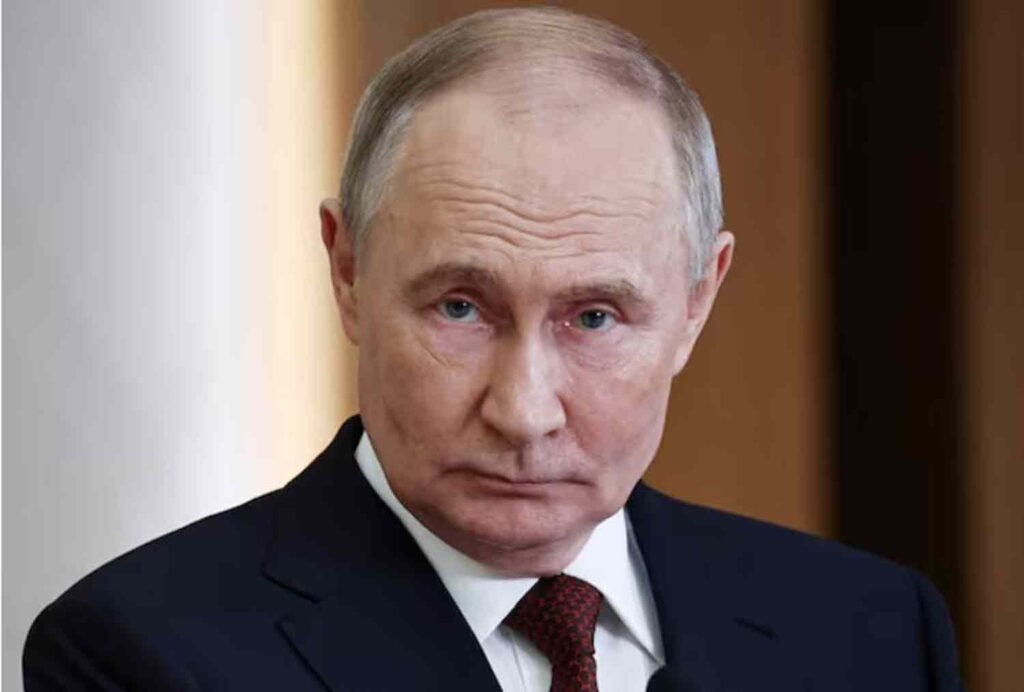
But India Is Not “Choosing Russia”
This distinction is essential.
India’s growing Russian oil purchases do not mean India has joined the Russian camp.
At the same time that Indian refiners were buying Russian crude, New Delhi continued deepening cooperation with Washington and other Western powers.
The Ministry of External Affairs’ 2026 schedule shows Jaishankar maintaining extensive engagement with the United States, France, the EU, Japan and the Quad while simultaneously maintaining high-level contacts with Russia.
That is the essence of India’s approach.
Cooperate with Washington without abandoning Moscow.
Cooperate with Moscow without becoming dependent on it.
This Is What India Calls Strategic Autonomy
India’s strategic autonomy is sometimes misunderstood as neutrality.
It is not.
India does not necessarily seek equal distance from every major power.
Instead, it seeks the freedom to make different choices on different issues.
For example:
India can cooperate with the US on the Indo-Pacific while buying Russian oil.
It can participate in the Quad while remaining a member of BRICS.
It can deepen defence cooperation with France while maintaining Russian-origin military systems.
It can engage Iran while expanding strategic ties with Israel and the Gulf.
That is not necessarily inconsistency.
It is a deliberate attempt to avoid strategic dependence.
A 2026 Carnegie analysis similarly argues that the second Trump administration has disrupted India’s external environment without fundamentally overturning the country’s long-standing strategy of diversification, hedging and calibrated partnerships.
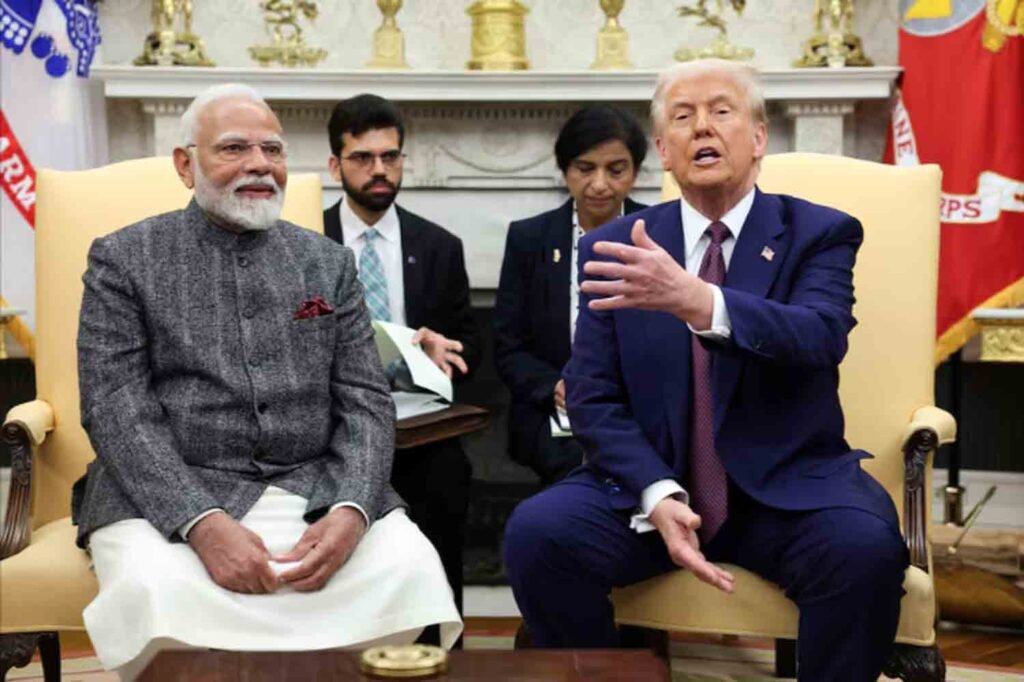
The United States Is India’s Partner—But Not India’s Patron
This is perhaps the most important distinction.
The India-US relationship has become one of India’s most important external partnerships.
But New Delhi does not want that relationship to become an alliance in which Washington determines India’s choices toward third countries.
That distinction becomes particularly important when the issue is Russia.
India sees Russia as an important defence and energy partner.
Washington sees Moscow primarily through the lens of the Ukraine war and strategic competition.
Those perspectives are fundamentally different.
India therefore has little interest in allowing US-Russia rivalry to determine Indian foreign policy.
Defence Makes India’s Russia Relationship Even Harder to Break
Energy is not the only reason India cannot simply abandon Moscow.
Defence is arguably more important.
Russia remains deeply embedded in India’s military ecosystem.
Indian forces operate large numbers of Russian-origin or Russian-designed systems, while Indo-Russian cooperation extends into missiles, nuclear submarines, air defence, aircraft and joint production.
The relationship has also produced programmes such as BrahMos, demonstrating that India’s partnership with Moscow is not limited to buying finished weapons.
This makes the Russian relationship much more difficult to replace than an ordinary commercial relationship.
India can diversify oil suppliers relatively quickly.
It cannot replace decades of defence infrastructure overnight.
The US Has Become Essential to India’s Future Defence
At the same time, India is moving steadily closer to the United States and Western defence suppliers.
American systems now occupy an important place in India’s military inventory.
India has also expanded defence and technology cooperation with France, Israel and other Western partners.
This creates a fascinating contradiction.
India wants to reduce dependence on Russia.
But it also does not want to become dependent on the United States.
The solution is diversification.
India’s Defence Policy Mirrors Its Foreign Policy
![Rafale Marine [Rafale M] fighter](https://defencetalks.com/wp-content/uploads/2025/05/Rafale-Marine-fighter.jpg)
The pattern is increasingly obvious.
Russia: legacy platforms, missiles, nuclear cooperation and established military-industrial links.
United States: advanced aircraft, maritime surveillance, helicopters, logistics, intelligence and emerging technologies.
France: Rafale, naval cooperation, aerospace and strategic technologies.
Israel: missiles, sensors, electronic warfare and air defence.
India: indigenous fighters, missiles, drones, satellites and increasingly domestic defence production.
The objective is not to choose one supplier.
It is to ensure that no supplier can exercise decisive leverage over India’s security policy.
Iran Is Another Test of Strategic Autonomy
The Iran crisis provides an even more complicated example.
India has significant interests in Iran, particularly around Chabahar Port, which is important to India’s connectivity strategy toward Afghanistan and Central Asia.
At the same time, India has dramatically expanded its strategic relationship with Israel and maintains close ties with the United States and Gulf Arab states.
The Iran war therefore puts India in an uncomfortable position.
New Delhi cannot afford to alienate Iran completely.
But it also cannot afford to jeopardise its relationships with Washington, Israel and the Gulf.
Chabahar Shows Why Iran Matters to India
Chabahar is not simply an Iranian port project.
For India, it provides an alternative connectivity route toward Afghanistan and Central Asia that does not depend entirely on Pakistan.
That gives the port strategic value.
India’s Parliament has continued to examine the country’s interests and commitments at Chabahar, demonstrating that the project remains an active foreign-policy concern.
Therefore, India’s relationship with Iran has a geopolitical logic independent of its relationship with the United States.
But Iran Is Becoming Harder for India to Manage
The current conflict has sharply reduced India’s room for manoeuvre.
Reuters reported this week that India’s trade with Iran has already fallen by more than 90% from its 2018–19 level and that new US sanctions and disruptions through the UAE are creating additional problems for Indian exporters.
That demonstrates the practical limits of strategic autonomy.
India may have diplomatic freedom.
But global financial systems, shipping routes, insurance markets and sanctions regimes can restrict the economic options available to it.
Strategic Autonomy Does Not Mean Economic Immunity
This is where the debate becomes more complicated.
A country can refuse to politically align with a major power and still suffer economic consequences from that power’s decisions.
India can say:
“Our foreign policy is independent.”
But if Washington controls access to important markets, financial channels and advanced technologies, US policy still affects India’s room for manoeuvre.
Similarly, dependence on Russian defence equipment creates another vulnerability.
And dependence on Gulf energy routes creates another.
Strategic autonomy therefore requires not only diplomatic independence but also economic resilience.
Venezuela Provides Another Example of Selective Engagement
The newspaper commentary also points to India’s approach toward Venezuela.
India has economic interests in Venezuelan oil, but New Delhi has historically been cautious about expanding that relationship when US sanctions created major risks.
The broader pattern is consistent:
India does not necessarily reject American pressure outright.
It calculates the cost of resistance.
Where the perceived national interest is sufficiently strong, it resists.
Where the economic or strategic cost is too high, it adjusts.
That is better described as calculated flexibility than an “on-off” foreign policy.
India’s Foreign Policy Is Increasingly Transactional
There is, however, an important criticism of this model.
Strategic autonomy works best when a country possesses enough economic and military weight to absorb pressure.
India is growing rapidly, but it is not yet powerful enough to ignore every major power.
Therefore, New Delhi often has to make compromises.
This produces the appearance of inconsistency.
One country may see India as a partner.
Another may see the same Indian decision as opportunistic.
Both interpretations can be partly correct.
The Modi Government’s Foreign Policy Is Built Around Options
The strongest feature of India’s current diplomacy is its attempt to maximise options.
India does not want:
Russia-only
or
US-only
or
China-only
or
Iran-only
relationships.
It wants a broad strategic portfolio.
That explains India’s continued participation in institutions that include countries with conflicting interests.
India is simultaneously involved in:
- BRICS;
- the Shanghai Cooperation Organisation;
- the Quad;
- G20 diplomacy;
- Indo-Pacific partnerships;
- and multiple bilateral strategic partnerships.
That would be impossible under a rigid alliance system.
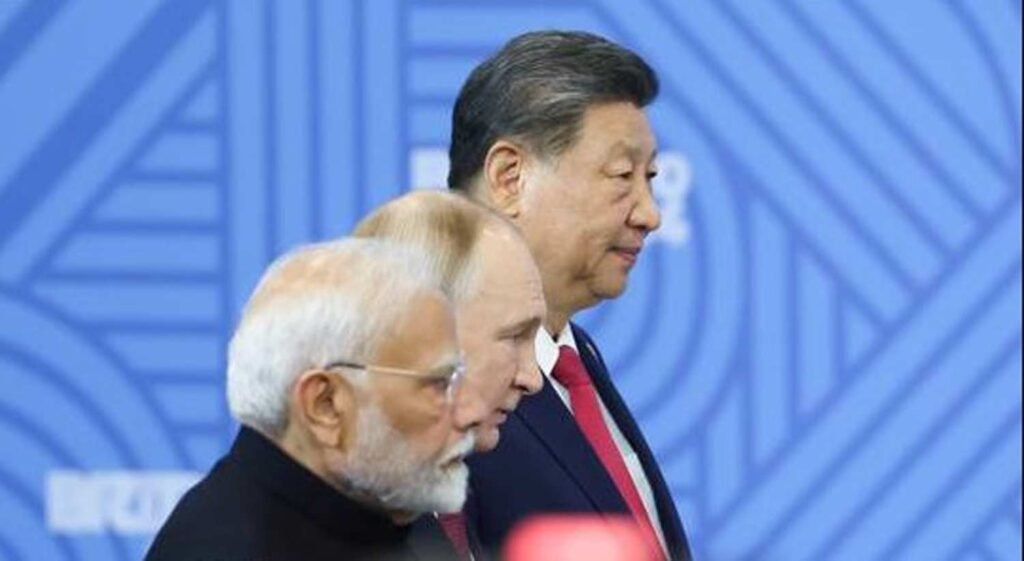
The China Factor Explains Much of India’s US Relationship
There is another factor often missing from discussions about India’s strategic autonomy:
China.
India’s growing relationship with the United States is not primarily about following Washington.
It is also about managing the rise of China.
The two countries share concerns over:
- the Indo-Pacific balance;
- maritime security;
- critical technologies;
- supply-chain resilience;
- and Chinese military power.
This gives the India-US relationship a structural foundation.
Even if Washington pressures India on Russia, New Delhi has strong reasons to preserve the broader strategic relationship.
But China Also Makes Russia Useful
Ironically, Russia is also important to India’s China strategy.
Moscow maintains its own relationship with Beijing.
India does not want Russia to become completely dependent on China.
Maintaining strong Indian-Russian relations gives New Delhi another channel into the Eurasian strategic balance.
Russia can also remain an important source of defence equipment and energy.
Thus:
India needs the US partly because of China.
But:
India also needs Russia partly because it does not want its Eurasian options dominated by China.
This is why India’s balancing strategy is so complicated.
The Real Meaning of “Multi-Alignment”
The term multi-alignment is more accurate than non-alignment for today’s India.
Non-alignment emerged during the Cold War, when India sought to remain outside the two major blocs.
The contemporary international system is different.
India actively participates in multiple strategic coalitions.
The objective is therefore not to remain outside every camp.
It is to avoid being locked permanently into one camp.
That is a significant difference.
India’s Biggest Challenge Is Maintaining Credibility
There is, however, a cost to this strategy.
If India constantly changes its position according to immediate circumstances, other countries may begin questioning its reliability.
Strategic autonomy therefore requires consistency at the level of principles even when policy changes at the tactical level.
India’s principles could include:
- sovereignty;
- territorial integrity;
- freedom of navigation;
- energy security;
- non-interference;
- opposition to unilateral coercion;
- and respect for international law.
If those principles are applied selectively, accusations of double standards become harder to dismiss.
The Iran War Is Exposing This Problem

The current West Asian crisis makes the dilemma particularly visible.
India has deep relationships with:
Israel + Iran + Gulf Arab states + United States + Russia.
Those countries do not share a common position on the regional conflict.
India therefore cannot satisfy all of them simultaneously.
Its diplomacy must prioritise its own interests.
That inevitably creates criticism from one side or another.
India’s Quiet Diplomacy Is Deliberate
New Delhi has generally preferred calibrated language on conflicts involving its major partners.
This is not necessarily weakness.
It is often a way of preserving diplomatic access.
If India publicly condemns one side too strongly, it may lose its ability to communicate with that side later.
For a country attempting to maintain relationships with competing powers, diplomatic ambiguity can be an asset.
But ambiguity also creates criticism.
The US-India Relationship Is Entering a More Transactional Phase
The Trump administration has made the relationship more explicitly transactional.
Trade, tariffs, energy and strategic cooperation are increasingly connected.
That makes India’s old formula harder to maintain.
During earlier periods, India could deepen strategic cooperation with Washington while maintaining substantial ties with Moscow without facing such direct economic pressure.
That room is shrinking.
Trump’s Tariff Policy Is Testing India’s Red Lines
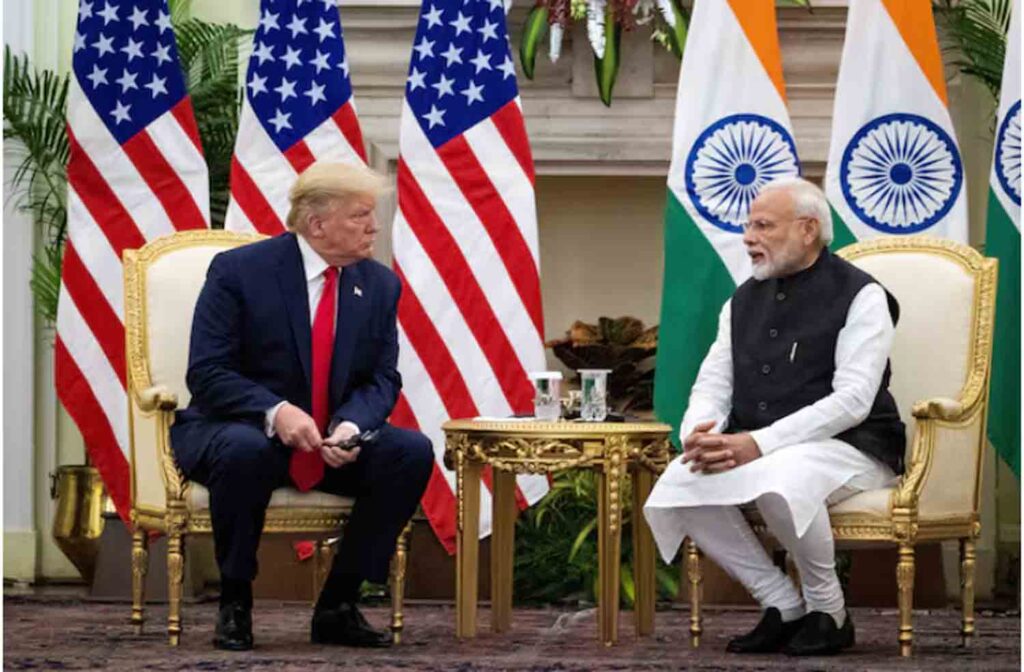
The proposed US sanctions framework targeting Russian energy consumers could become a major test.
If Washington ultimately imposes severe tariffs on Indian exports because of Russian oil purchases, New Delhi will face a difficult calculation.
It could:
reduce Russian purchases to protect access to the US market.
Or:
continue purchases and accept higher trade costs to preserve energy and strategic autonomy.
Either choice carries significant economic consequences.
India’s Recent Russia Diplomacy Sends a Message
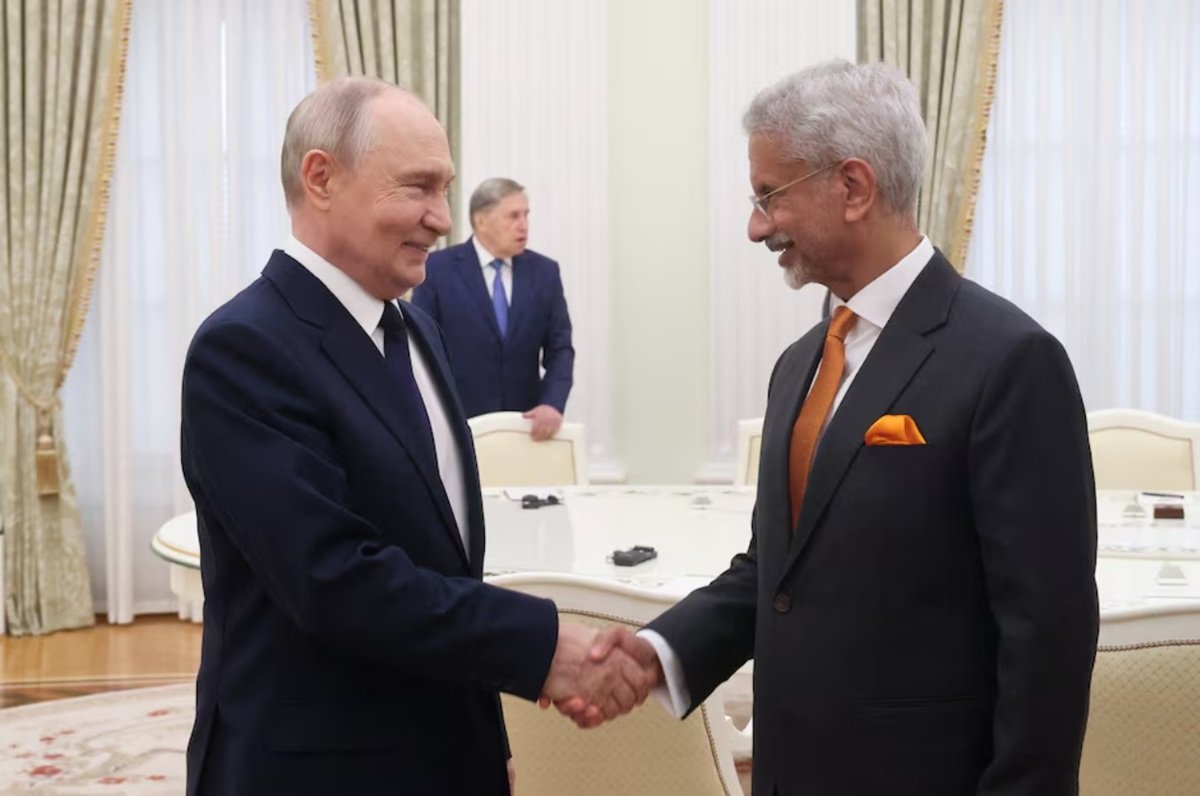
Jaishankar’s recent Moscow visit is significant in this context.
During his meeting with Putin, he highlighted growing India-Russia economic cooperation in areas including trade, energy, fertilisers and nuclear cooperation.
Putin, in turn, praised Modi’s personal attention to bilateral relations and emphasised expanding cooperation.
The timing is notable.
India is strengthening ties with Russia at precisely the moment Washington is increasing pressure over Russian energy.
That does not necessarily represent defiance.
It represents India’s attempt to demonstrate that its relationship with Moscow will not be dictated entirely by Washington.
But India Also Needs Washington
At the same time, New Delhi cannot afford a serious rupture with the United States.
The US is important for:
- investment;
- technology;
- trade;
- defence;
- higher education;
- the Indian diaspora;
- and India’s Indo-Pacific strategy.
India therefore has every reason to seek compromise with Washington where possible.
The likely outcome is not a dramatic choice between America and Russia.
It is continued negotiation.
India’s Strategic Autonomy Has Become More Expensive
This may be the most important conclusion.
Strategic autonomy sounds simple:
“India will do what is in India’s interest.”
But every independent choice has a cost.
Buying Russian oil may produce energy savings but invite US pressure.
Maintaining ties with Iran protects strategic access but creates sanctions exposure.
Deepening ties with America strengthens India’s position against China but may alarm Moscow.
Maintaining relations with Russia preserves defence and energy options but complicates India’s Western partnerships.
There is no cost-free alignment.
The Stronger India Becomes, the More Sustainable Autonomy Becomes
The long-term answer for India is not simply better diplomacy.
It is greater national capability.
Strategic autonomy ultimately depends on:
economic power + military power + technological capacity + energy security + domestic manufacturing + diversified trade.
The less dependent India becomes on any one external supplier or market, the greater its diplomatic freedom.
This explains India’s emphasis on:
- domestic defence production;
- semiconductor manufacturing;
- critical minerals;
- renewable energy;
- nuclear power;
- strategic reserves;
- and supply-chain diversification.
India Is Trying to Build Leverage, Not Just Partnerships
That distinction matters.
A weak state seeks protection.
A stronger state seeks partnerships.
A major power seeks leverage.
India increasingly wants relationships that give it options rather than obligations.
That is why it is simultaneously deepening ties with Washington and maintaining its relationship with Moscow.
What Could Go Wrong?
The strategy nevertheless has vulnerabilities.
1. Excessive dependence on Russian oil
This could expose India to US sanctions and tariffs.
2. Continued defence dependence on Russia
This creates supply-chain and technology risks.
3. Dependence on Western technology
This creates another form of external vulnerability.
4. Energy dependence on the Gulf
The Iran war has demonstrated the dangers of maritime chokepoints.
5. China’s military rise
India must spend more resources maintaining the regional balance.
6. Trade dependence on major markets
A US trade confrontation could affect Indian exporters and manufacturers.
Strategic autonomy therefore requires India to address its own structural vulnerabilities.
The Bigger Question: Can India Remain Autonomous in a Polarised World?
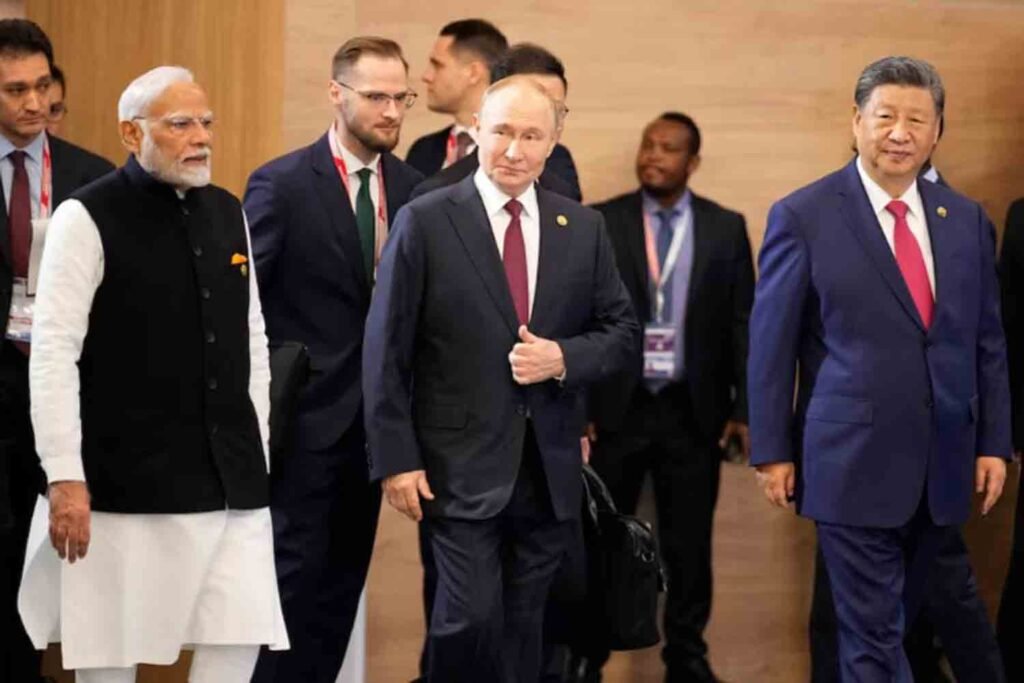
This is the real test.
The international system is becoming increasingly divided.
The United States is using sanctions and tariffs as instruments of geopolitical policy.
Russia is increasingly oriented toward China and other non-Western markets.
China is expanding its economic and military influence.
Europe is seeking greater strategic independence.
Middle Eastern countries are diversifying their external relationships.
India’s multi-alignment strategy therefore has more opportunities than before—but also greater risks.
India’s Foreign Policy Is Not “On-Off”—It Is Issue-Based
The Indian newspaper commentary is useful because it identifies a genuine phenomenon.
India sometimes appears to move sharply toward or away from a country depending on circumstances.
But the deeper pattern is more consistent.
India asks:
What does this relationship deliver to India?
If the answer is energy security, it buys oil.
If the answer is defence technology, it buys weapons.
If the answer is access to markets, it negotiates trade.
If the answer is strategic balancing against China, it strengthens ties with the United States and its Indo-Pacific partners.
If the answer is connectivity to Central Asia, it maintains relations with Iran.
That is not random.
It is interest-based diplomacy.
The Real Test Will Be Whether India Can Apply the Same Principle Consistently
The strongest version of strategic autonomy is not:
“India will never take sides.”
It is:
“India will make its own decisions regardless of who is applying pressure.”
That means India must be prepared to disagree with Washington when necessary.
But it also means India must be prepared to disagree with Moscow, Beijing, Tehran or any other partner when Indian interests demand it.
That is the harder standard.
Bottom Line: India Wants Partners, Not Patrons
The current debate over India’s foreign policy reveals a fundamental transformation.
India is no longer the relatively weak post-colonial state that needed to stay outside great-power blocs.
Nor is it yet powerful enough to ignore the consequences of great-power pressure.
It occupies an increasingly important middle position.
Its strategy is therefore to maximise partnerships while minimising dependence.
The recent surge in Russian oil imports, despite US pressure, demonstrates that New Delhi is willing to defend energy interests when it considers them vital.
The continuing expansion of India-US cooperation demonstrates that resisting Washington on one issue does not mean rejecting the broader relationship.
Jaishankar’s recent Moscow diplomacy similarly shows that India intends to preserve its Russian relationship even while deepening ties with the West.
And India’s continuing engagement with Iran, despite the enormous complications created by the current conflict and sanctions environment, demonstrates the value New Delhi places on strategic geography and connectivity.
So the more accurate description of Indian foreign policy is not “on-off diplomacy.”
It is strategic autonomy under pressure.
The problem is that strategic autonomy is becoming increasingly expensive.
India must now balance American tariffs and sanctions, Russian defence and energy ties, China’s rise, Iran’s geopolitical importance, Gulf energy security and its own ambitions to become a major global power.
The success of Modi’s foreign policy will ultimately depend on whether India can maintain that flexibility without allowing tactical compromises to turn into strategic dependence.
That is the real test of Indian diplomacy in 2026.