The meeting between Pakistan’s top military leadership and a high-level Kuwaiti defence delegation in Rawalpindi carries more weight than the routine language of an official press release might suggest.
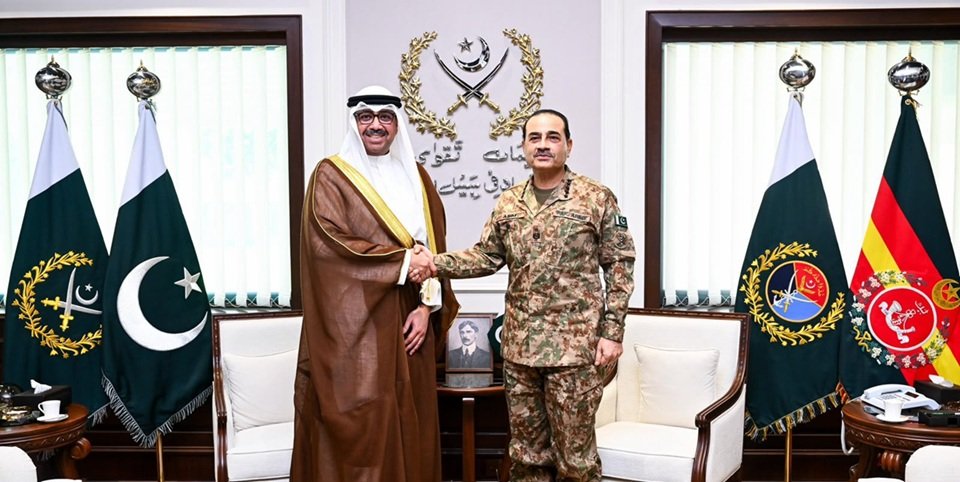
Kuwait’s Defence Minister Sheikh Abdullah Ali Abdullah Al-Saleem Al-Sabah, accompanied by Chief of General Staff Lieutenant General Khalid Darj Saad Al-Shriaan, met Field Marshal Syed Asim Munir, Pakistan’s Chief of Defence Forces and Chief of Army Staff, at General Headquarters.
According to Pakistan’s military media wing, the discussions covered regional security, bilateral defence cooperation and matters of mutual interest. Kuwait also praised the professionalism and operational capabilities of the Pakistan Armed Forces and their contribution to regional peace and stability.
On its face, this is another high-level defence engagement between two long-standing partners.
The timing tells a larger story.
The Gulf is going through one of its most uncertain security periods in decades. The war involving Iran, the disruption of maritime traffic, the vulnerability of fixed military bases and the emergence of the Makkah Joint Defence Agreement among Pakistan, Saudi Arabia and Türkiye are all forcing Gulf states to reconsider how they protect themselves.
Kuwait is not signing up to a new military bloc through this meeting.
But it is strengthening a relationship with a country that has just become part of a new regional defence arrangement and that also has unusual diplomatic access to both the Gulf and Iran.
That combination makes Pakistan increasingly useful to Kuwait.
Why the Kuwait-Pakistan meeting matters now

Kuwait has traditionally relied heavily on the broader American-led security architecture in the Gulf.
That relationship is not disappearing.
But the events of 2026 have exposed a vulnerability that Gulf governments can no longer ignore: fixed bases and traditional security arrangements are not necessarily enough to protect them from missiles, drones, maritime disruption and a wider regional conflict.
Iran’s attacks and the continuing instability around the Persian Gulf have changed the calculations.
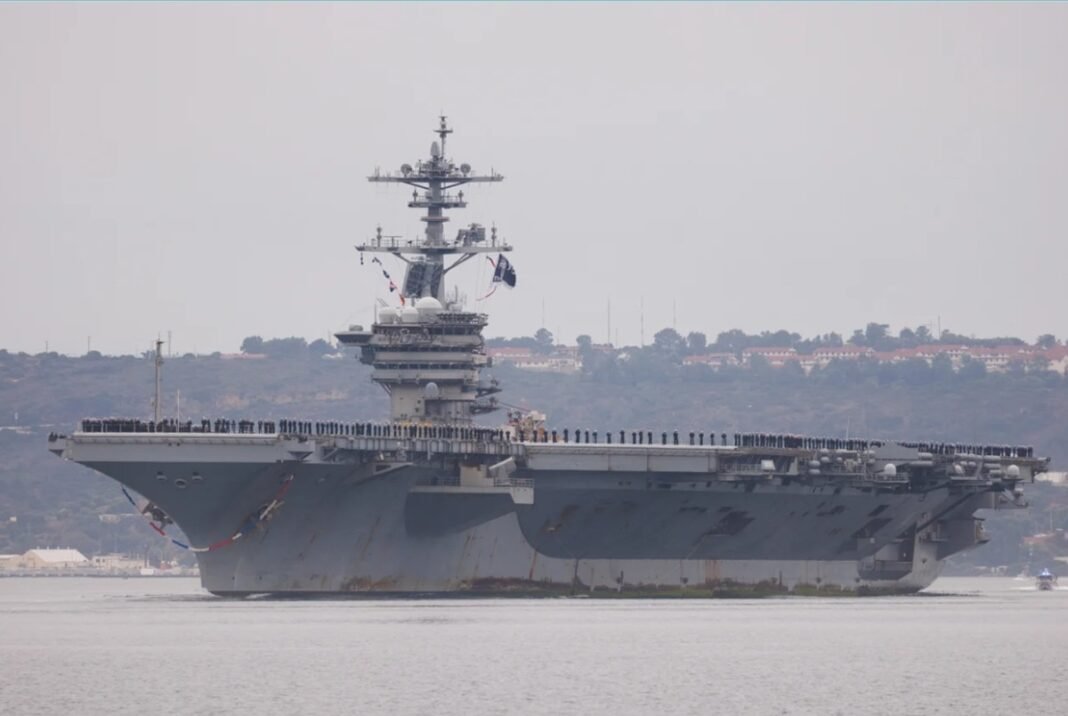
At the same time, the United States itself is reassessing the military footprint it maintains around the Gulf after months of conflict.
The Financial Times reported this week that Washington is reconsidering the future of its major Gulf bases after Iranian missile and drone attacks caused extensive damage, with U.S. planners examining more dispersed and potentially more mobile ways of maintaining regional power.
For Kuwait, which sits directly on the northern Gulf and close to Iraq and Iran, the implications are obvious.
The country needs strong relations with Washington.
But it also needs additional defence partnerships.
Pakistan is one of the countries that can offer precisely that.
Pakistan’s importance to Kuwait goes beyond military training

Pakistan has maintained defence relations with Gulf monarchies for decades.
Its armed forces have trained personnel from Arab countries, provided military assistance and maintained longstanding security links with Saudi Arabia and other Gulf states.
Kuwait has also historically benefited from Pakistani military expertise.
The relationship is therefore not being built from scratch.
What is changing is the strategic environment in which that relationship operates.
The two governments had already moved toward strengthening defence cooperation following Kuwait’s ratification of a 2023 defence cooperation agreement in July. Pakistan welcomed the move and said both sides wanted to expand security ties.
The latest military-level meeting appears to build on that momentum.
There is a practical logic to it.
Kuwait needs partners with experience in conventional warfare, air defence, counterterrorism, military training and crisis management.
Pakistan has all of those capabilities.
The Makkah Pact changes Pakistan’s regional position
The most important development since Pakistan and Kuwait last intensified their defence discussions is the Makkah Joint Defence Agreement.
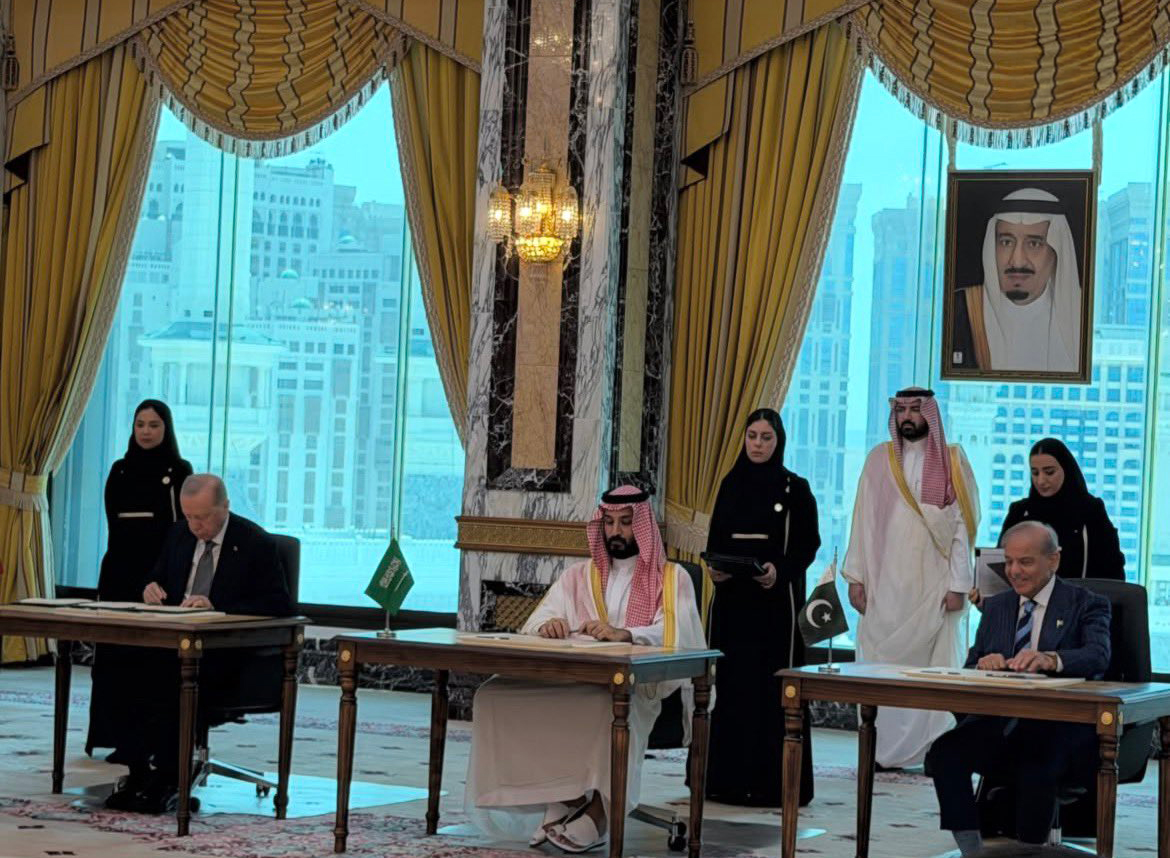
Saudi Arabia, Türkiye and Pakistan signed the agreement in Makkah on August 7.
The agreement says an armed attack against any one of the three countries will be regarded as an attack against all three and calls for greater defence cooperation and collective deterrence.
Pakistan has stressed that the pact is defensive and is not directed against any particular country.
That qualification matters.
The agreement should not be described as an Islamic version of NATO in the strict institutional sense. It does not currently possess NATO’s integrated command structure, permanent military bureaucracy or comparable collective-force mechanisms.
But its political significance is substantial.
Saudi Arabia has traditionally depended heavily on bilateral security relationships, particularly with the United States.
Türkiye is a major military power with a growing indigenous defence industry.
Pakistan brings a large military, extensive experience and nuclear deterrence.
The three countries have now created a formal framework for collective defence.
That is a new factor in Gulf calculations.
Kuwait is watching that new security architecture
Kuwait’s response to the Makkah agreement was notably positive.
The country congratulated Pakistan on the agreement with Saudi Arabia and Türkiye.
That does not mean Kuwait has decided to join it.
There is an important difference between supporting a new regional security arrangement and becoming a member.
Kuwait has its own delicate relationships with Iran, Saudi Arabia, Iraq and the United States.
Joining a formal collective-defence arrangement could carry obligations that Kuwait may not want to assume.
But closer defence cooperation with Pakistan is a much less politically costly step.
It allows Kuwait to strengthen its military relationship with a country that is increasingly connected to the Gulf’s emerging security architecture without immediately committing itself to a new alliance.
That may be precisely what Kuwait wants at this stage.
Pakistan occupies an unusual position between Iran and the Gulf
This is perhaps Islamabad’s greatest strategic asset at the moment.
Pakistan has strong relationships with Saudi Arabia and Türkiye.
It has now formalised those ties through the Makkah agreement.
But Pakistan also maintains diplomatic and geographic links with Iran.
In August, Field Marshal Asim Munir travelled to Tehran as Islamabad attempted to help de-escalate the U.S.-Israeli conflict with Iran. Pakistani officials subsequently said the discussions had made significant progress toward a peaceful settlement and reopening the Strait of Hormuz.
That gives Pakistan a rare position.
It can sit in a room with Saudi Arabia.
It can speak with Türkiye.
It can work with Iran.
And it remains a long-standing security partner of the United States and Gulf Arab states.
That does not make Pakistan a neutral mediator in every dispute.
But it gives Islamabad diplomatic channels that many other countries do not possess.
For Kuwait, this matters enormously.
The Gulf does not want another permanent war
The Gulf states have a complicated relationship with the current confrontation.
They want Iran’s military capabilities contained.
They want their territory protected.
They want freedom of navigation.
But they also understand the economic consequences of prolonged conflict.
Kuwait’s economy, like those of other Gulf states, depends on stable energy markets, shipping and international investment.
A prolonged confrontation around the Persian Gulf threatens all three.
That is why Kuwait has an interest in diplomacy even while strengthening its defence capabilities.
Pakistan’s dual role—security partner and diplomatic interlocutor—therefore becomes valuable.
The two functions are not contradictory.
In fact, they reinforce each other.
A country with credible military relationships can sometimes have more influence when it enters a diplomatic conversation.
The Strait of Hormuz has become central to Gulf security
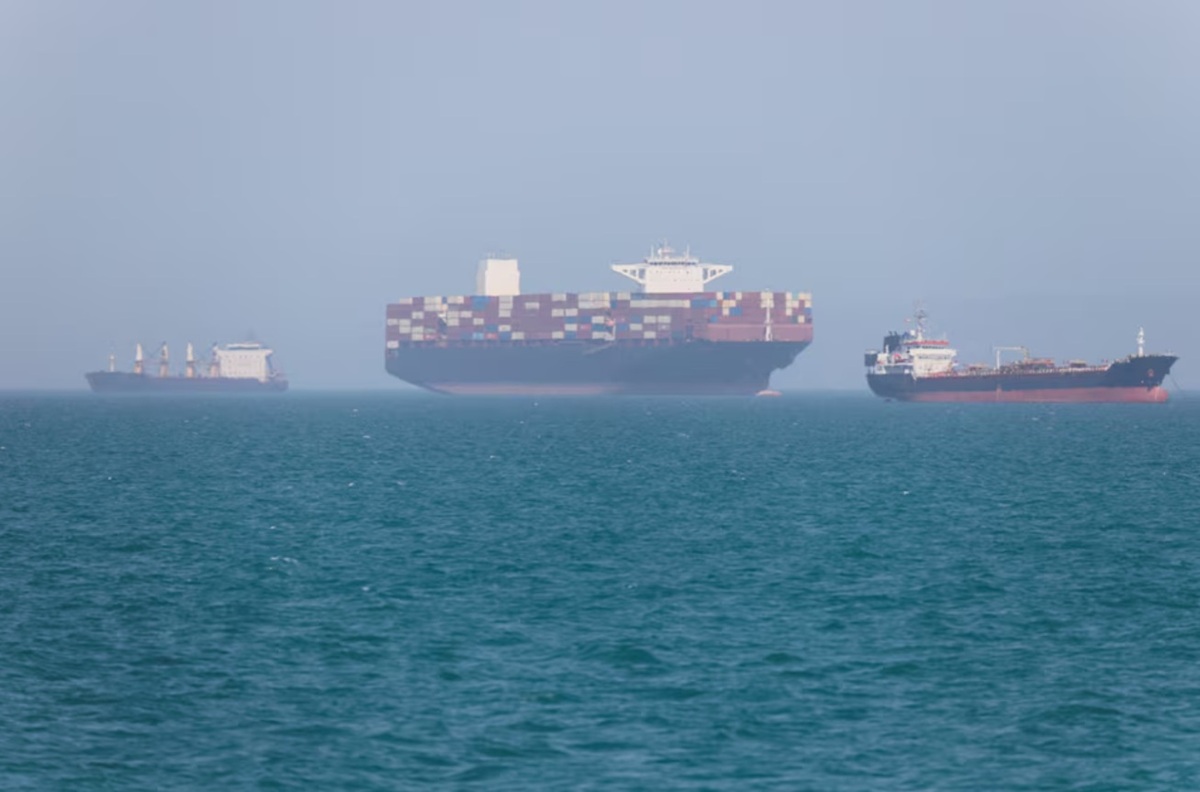
The strategic importance of the latest Pakistan-Kuwait engagement cannot be separated from the Strait of Hormuz.
The waterway carries a huge share of global oil and gas shipments.
When its security is threatened, the consequences extend far beyond Iran and the Gulf monarchies.
Pakistan has a direct economic interest in keeping the maritime route open.
Disruption affects energy prices, freight rates, insurance costs and the availability of imported fuel.
Pakistan has already been working to protect its trade and energy supplies as the Iran conflict disrupts shipping through the Persian Gulf.
Kuwait faces the same vulnerability from the other side.
That creates an area of shared interest that is more immediate than military alliance politics.
Both countries need maritime stability.
Both need secure energy routes.
Both need to avoid being dragged into a conflict that could damage their economies.
The new Gulf security equation is no longer simply Washington versus Tehran
For decades, much of the Gulf security debate revolved around the American military presence and the threat from Iran.
That framework is becoming less adequate.
The emerging picture is more complicated.
Saudi Arabia is strengthening its own strategic capabilities.
Türkiye is becoming an increasingly important defence supplier and military actor.
Pakistan is expanding its Gulf security role.
China remains a major economic partner of Saudi Arabia and other Gulf states.
Iran continues to retain significant missile and drone capabilities.
And the United States remains the most powerful external military actor despite growing questions about the long-term structure of its regional presence.
The result is not a clean replacement of one alliance system by another.
It is a more crowded security environment in which Gulf states have more options and more reasons to diversify.
Why Türkiye matters to the new equation
Türkiye’s role deserves particular attention.
Ankara has spent years developing a domestic defence industry capable of producing drones, missiles, naval platforms and electronic-warfare systems.
Saudi Arabia has become an important customer and partner for Turkish defence companies.
Pakistan has also developed increasingly close defence ties with Türkiye.
The Makkah agreement therefore connects three countries that can complement each other militarily.
Saudi Arabia has financial resources.
Türkiye has industrial and technological depth.
Pakistan has manpower, military experience and nuclear deterrence.
The arrangement’s long-term importance will depend on whether those capabilities are converted into practical cooperation rather than remaining primarily political.
That process will take time.
Joint exercises, intelligence sharing, training, defence production and interoperable systems would be much stronger indicators of an emerging alliance than diplomatic statements alone.
Kuwait could benefit without joining a formal bloc
This is where Kuwait’s position becomes interesting.
Kuwait has traditionally pursued a cautious foreign policy.
It has strong relations with Saudi Arabia and other Gulf states, but it also maintains diplomatic engagement with Iran.
It has close security ties with the United States.
At the same time, it has no obvious interest in becoming a frontline participant in a regional confrontation.
Closer defence cooperation with Pakistan gives Kuwait another layer of security without requiring an immediate strategic realignment.
Pakistan could provide training.
It could expand military education and professional exchanges.
There could be cooperation in counterterrorism and maritime security.
There may also be opportunities in defence equipment and maintenance.
And the two countries can coordinate on regional crisis management.
That is a relatively low-risk way for Kuwait to increase its strategic options.
The relationship could also become important for Pakistan
Islamabad has its own reasons for deepening ties with Kuwait.
Pakistan’s economy remains closely connected to the Gulf through energy supplies, trade, investment and its large expatriate workforce.
Kuwait is also an important source of investment and financial cooperation.
A stronger defence relationship can support broader bilateral ties.
Military cooperation often creates institutional relationships that extend beyond the armed forces.
Defence training creates long-term professional networks.
Defence procurement creates industrial relationships.
Security cooperation creates regular intelligence and policy contacts.
Those links can become particularly valuable during regional crises.
Pakistan is trying to become more than a security beneficiary
There is a subtle change in Islamabad’s regional role.
Pakistan has traditionally been viewed in the Gulf primarily as a country that provides security manpower and military expertise.
That role remains important.
But Islamabad increasingly wants to be seen as a country that can also shape regional security discussions.
The Makkah agreement is one example.
Pakistan’s mediation efforts between Iran and the United States are another.
Its growing defence relationship with Türkiye provides a third dimension.
This combination gives Islamabad more room to pursue what could be called a security-and-diplomacy strategy.
Pakistan does not have the economic weight of Saudi Arabia or the industrial capacity of Türkiye.
But it possesses something valuable: relationships with all three sides of several regional disputes.
The Iran dimension cannot be ignored
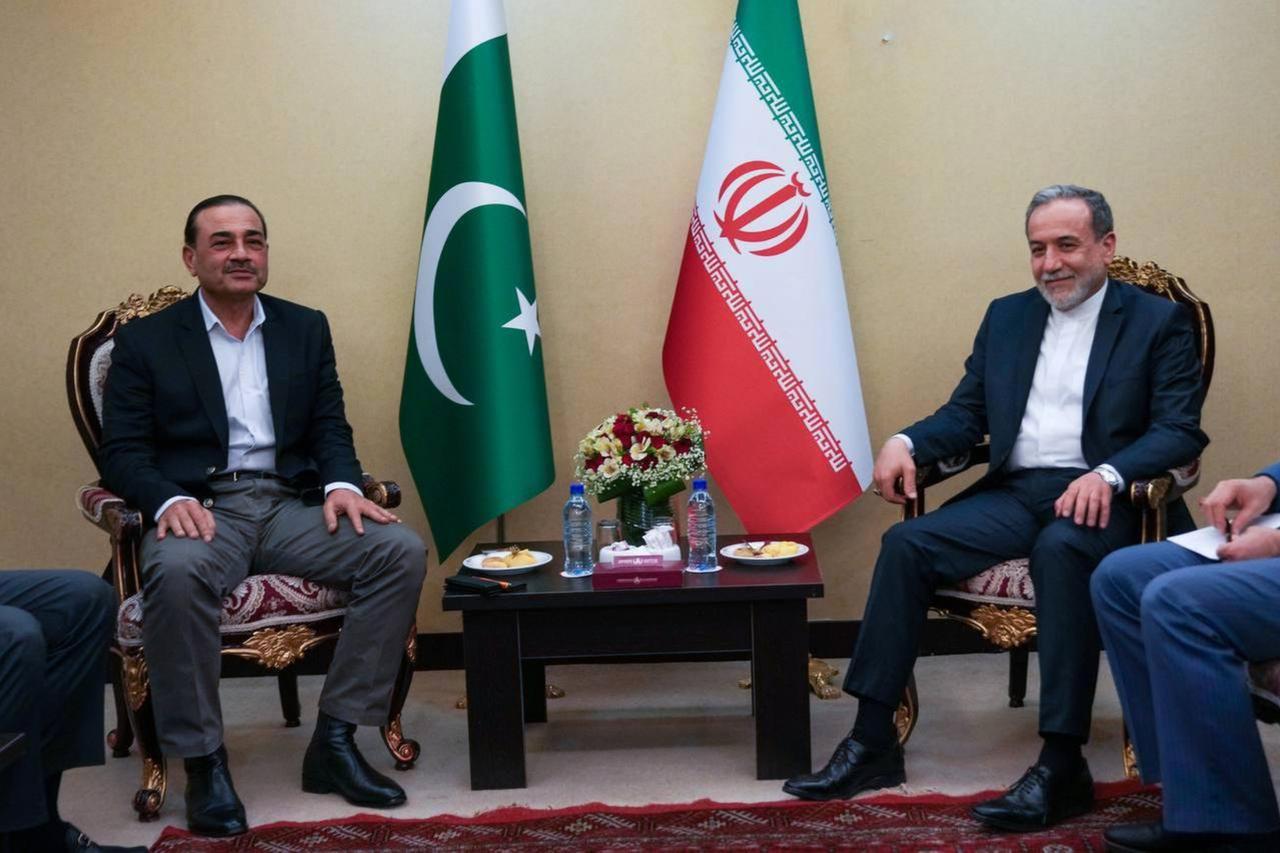
The Makkah agreement has inevitably attracted attention in Tehran.
Iranian officials have described the pact as evidence of changing regional perceptions of the United States, while also closely watching the security implications.
Pakistan therefore faces a delicate balancing act.
Its security partnership with Saudi Arabia and Türkiye has become stronger.
Its relationship with Iran remains strategically important.
Pakistan shares a long border with Iran and cannot afford sustained confrontation with Tehran.
This is precisely why Islamabad has repeatedly stressed the defensive character of the Makkah agreement and continued diplomatic engagement with Iran.
For Kuwait, that balancing capacity is also useful.
A Pakistani channel to Tehran can help reduce misunderstandings at a time when Gulf states have strong incentives to prevent escalation.
The United States is still central—but the Gulf is preparing for uncertainty
It would be wrong to conclude that the emergence of the Makkah pact or stronger Pakistan-Kuwait relations means the Gulf is abandoning Washington.
The United States remains the region’s most powerful external military actor.
American aircraft, naval forces, intelligence capabilities, missile defence and logistics infrastructure remain critical.
But the 2026 conflict has exposed the vulnerability of relying on a single security provider.
The damage to U.S. bases and the debate in Washington over how much infrastructure should be rebuilt have intensified discussion about a more dispersed military posture.
For Gulf governments, diversification is therefore becoming rational rather than ideological.
They can maintain the American security relationship while simultaneously strengthening ties with Türkiye, Pakistan and other partners.
That is not necessarily anti-American.
It is insurance.
The emerging trend: defence partnerships are becoming more flexible
The old model of regional security often involved a clear patron and client.
The new model is more fluid.
A Gulf state can buy aircraft from the United States, drones from Türkiye, maintain military ties with Pakistan, invest heavily in China and continue diplomatic engagement with Iran.
That is not incoherent.
It reflects the reality that no single power can address every security challenge.
Missile defence requires one set of partners.
Naval security requires another.
Defence production requires another.
Diplomacy requires yet another.
The Gulf states are increasingly assembling these relationships according to specific needs.
Pakistan fits naturally into that environment.
The Makkah agreement could eventually expand
The agreement’s current membership is limited to Saudi Arabia, Türkiye and Pakistan.
But its wider political effect may depend on whether other countries eventually participate in some form.
Bangladesh is already considering joining the pact, according to Reuters, although no accession decision has been made.
Kuwait’s latest defence engagement with Pakistan should not be interpreted as evidence that it is preparing to join.
Nevertheless, the fact that Gulf and Muslim-majority countries are discussing these arrangements indicates that a wider conversation about regional security architecture is underway.
If additional states eventually join or establish associated defence arrangements, the Makkah framework could develop into something considerably larger than the three-country agreement signed this month.
But that remains a possibility, not an established outcome.
What would a stronger Pakistan-Kuwait defence relationship look like?
The next stage is likely to be practical rather than rhetorical.
The most meaningful indicators will include:
- expanded military training;
- officer exchanges;
- joint exercises;
- maritime-security cooperation;
- counterterrorism cooperation;
- air-defence coordination;
- defence-industrial links;
- intelligence sharing;
- and institutional mechanisms for regular strategic dialogue.
If those areas develop, the relationship will have moved beyond symbolic diplomacy.
The latest meeting at GHQ provides the political foundation.
The next step is implementation.
A new Gulf security architecture is taking shape
The most significant aspect of the Kuwait delegation’s visit is therefore not what was said inside GHQ.
It is what the meeting represents in the wider regional context.
The Gulf is becoming less comfortable with the assumption that security can be guaranteed indefinitely through a single external power.
Saudi Arabia has moved toward collective defence with Pakistan and Türkiye.
Kuwait is strengthening defence cooperation with Pakistan.
Bangladesh is considering whether to join the Makkah framework.
Türkiye is expanding its defence-industrial role across the region.
China remains deeply embedded in the Gulf’s economic architecture.
Iran remains a major military factor.
And Washington is reconsidering how its forces and bases should be positioned after a prolonged confrontation.
These developments do not yet constitute a new unified Middle Eastern alliance system.
But they point toward a more distributed and multi-layered security order.
Pakistan’s role is becoming unusually important
Pakistan may benefit from this transformation more than many observers initially expected.
It is not a Gulf state.
It does not possess Saudi Arabia’s financial resources.
It does not have Türkiye’s defence-industrial scale.
But it sits at the intersection of South Asia, the Gulf and Iran.
It has long-standing military relationships with Arab states.
It now has a formal collective-defence agreement with Saudi Arabia and Türkiye.
And it is simultaneously attempting to mediate between Iran and the wider regional coalition.
That combination gives Islamabad diplomatic and military relevance beyond its immediate geography.
The Kuwait defence delegation’s visit is one more indication that Gulf states see value in that relationship.
What comes next?
For Kuwait, the priority will probably remain straightforward: strengthen national defence without becoming trapped in an escalating regional confrontation.
For Pakistan, the opportunity is broader: turn decades of military relationships with Gulf states into a more structured role in the region’s emerging security architecture.
For Saudi Arabia and Türkiye, the challenge will be proving that the Makkah agreement can become an effective security mechanism rather than simply a political declaration.
And for Washington, the emergence of these new arrangements should be read carefully.
The Gulf is not necessarily moving away from the United States.
It is preparing for a world in which it may not always be able to depend on Washington in exactly the same way.
That is perhaps the most important strategic shift underway.
The Kuwait-Pakistan meeting is part of a larger transition
The official language surrounding the Rawalpindi meeting is deliberately cautious: brotherly relations, regional stability, institutional ties and mutually beneficial defence cooperation.
Behind that diplomatic language lies a much harder reality.
The Gulf has just experienced a major military shock.
Iran remains capable of threatening regional security.
The United States is reconsidering the shape of its military footprint.
Saudi Arabia, Türkiye and Pakistan have created a new collective-defence framework.
Other countries are watching and considering their options.
In that environment, Kuwait has little reason to put all of its security reliance in one basket.
Pakistan has something useful to offer: military expertise, established Gulf relationships and, increasingly, a seat at the table where regional security arrangements are being designed.
The latest meeting between the Kuwaiti defence leadership and Field Marshal Asim Munir should therefore be viewed as more than another bilateral military engagement.
It is a small but revealing piece of a much larger transformation.
The Gulf is moving toward security diversification.
And Pakistan is positioning itself to be one of the countries that helps shape what comes next.