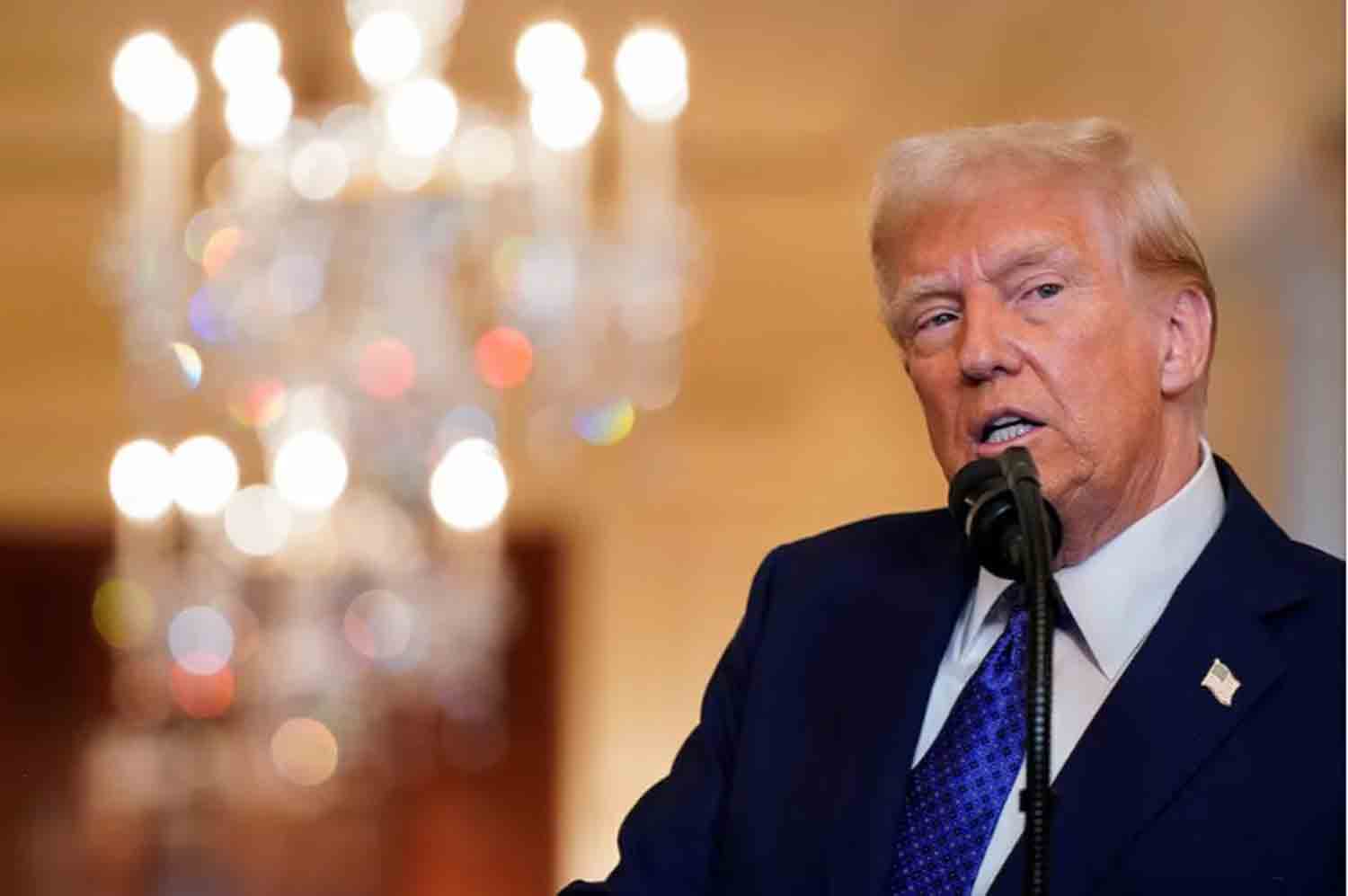
Six months ago, Donald Trump described his military campaign against Iran in terms that suggested a short operation.
It has turned into something else.
The war has not produced the decisive outcome Washington initially appeared to seek. Iran’s leadership and military infrastructure have suffered enormous damage, but Tehran has retained enough missile and drone capability to keep threatening the region. The Strait of Hormuz remains at the centre of the confrontation, the United States is now leaning heavily on economic pressure, and there is still no clear diplomatic settlement.
The consequences are spreading well beyond Iran.
Ukraine is short of air-defence interceptors. U.S. weapons stocks are under pressure. European governments are increasingly concerned about the possibility of a future Russian test of NATO. The American Navy is dealing with unusually long deployments. And Washington is being forced to think about a problem it had hoped to postpone: how to maintain credible military power in Europe and the Indo-Pacific while a major war continues in the Middle East.
That is the more consequential story of the Iran war.
It is no longer only a question of whether Trump can force Tehran to accept his terms.
It is whether the United States can sustain the strategic commitments that depend on the same military resources being consumed in the Middle East.
The war Trump expected to end quickly has entered its sixth month

The original American objectives were far broader than the current diplomatic demands.
The opening campaign was presented as an attempt to destroy Iran’s nuclear and military capabilities and force a fundamental change in Tehran’s behaviour. Six months later, the emphasis has increasingly shifted toward economic isolation, pressure on the Iranian regime and reopening the Strait of Hormuz.
Reuters described the conflict this week as having reached a costly stalemate. Iran remains under severe economic pressure, but its government has survived and retains the ability to threaten the region.
That matters because wars become difficult to end when the original objectives are no longer attainable at acceptable cost but abandoning them also carries a political price.
Washington has already spent enormous quantities of expensive weapons.
Iran has suffered immense destruction.
The Gulf has endured a prolonged security crisis.
And the global economy has absorbed another shock.
Yet neither side has achieved an outcome that can easily be called victory.
Washington has changed the battlefield rather than ended the war
The Trump administration’s latest strategy is increasingly economic.
The White House has moved toward what it describes as total economic isolation of Iran, while Washington continues to restrict Iranian oil exports and enforce pressure around the Strait of Hormuz.
The logic is straightforward: if military strikes cannot compel Tehran to surrender, economic pressure may eventually make continued resistance too costly.
But Iran has spent decades learning how to operate under sanctions.
It has alternative trading channels.
It has relationships with China and other major economies.
And it has demonstrated that it can impose costs on the United States and its partners without matching American military power weapon for weapon.
That asymmetry is one reason the conflict has become so difficult to close.
The price is appearing in America’s weapons stocks
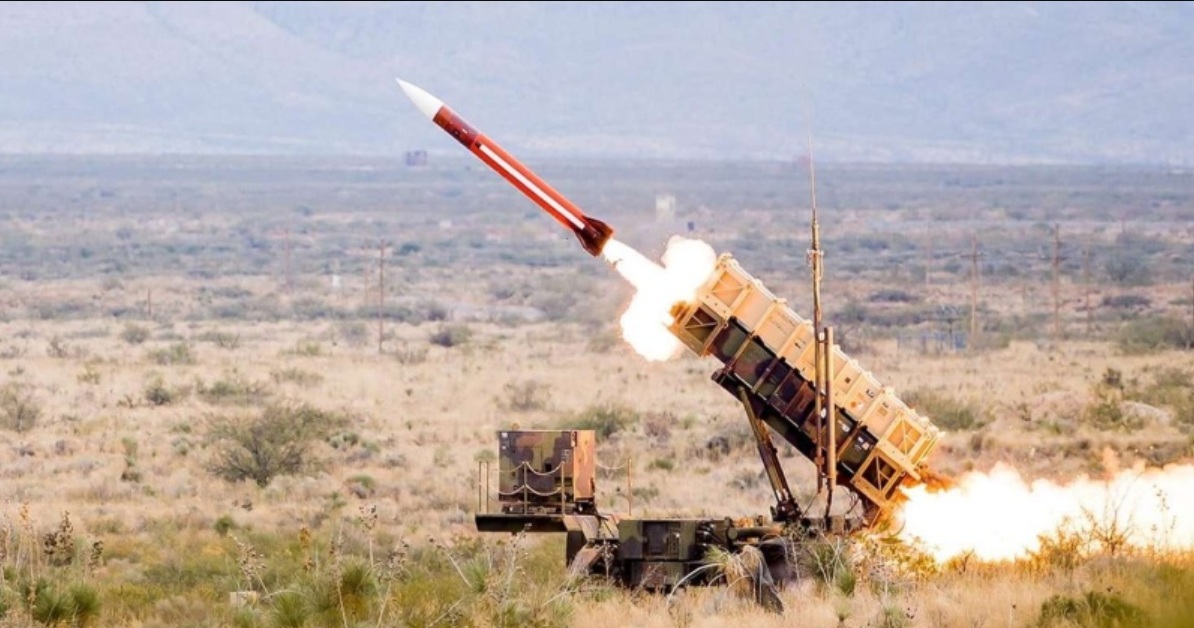
One of the clearest consequences is now visible in the U.S. military’s inventory.
The Pentagon has faced growing pressure to replenish munitions consumed during the Iran campaign. Earlier reporting indicated enormous use of cruise missiles and air-defence interceptors during the opening weeks of the war.
The problem has now reached Europe.
An Associated Press investigation published Thursday reported that U.S. Patriot missile stocks in Europe are at a “beyond critical” level, according to a U.S. defence official in Europe and a NATO official.
The shortage matters because Patriot is among the few systems capable of defending against Russia’s most advanced ballistic missiles.
The depletion has not been caused by Iran alone. The United States had already transferred large numbers of interceptors to Ukraine over several years.
But officials told AP that the Iran war became the tipping point because Middle Eastern demand rapidly consumed stocks that had been easier to plan around when supporting Ukraine.
That creates an uncomfortable strategic chain.
Iran fires missiles.
America intercepts them.
The United States replenishes the Middle East.
Europe and Ukraine compete for the same production capacity.
Russia watches the resulting gap.
The problem is no longer confined to the Persian Gulf.
Ukraine is feeling the shortage immediately
For Ukraine, this is not an abstract Pentagon accounting issue.
Kyiv is already struggling to defend its cities against increasingly intense Russian missile and drone attacks.
The shortage of Patriot interceptors is particularly serious because Ukraine says the system is essential for dealing with Russian ballistic missiles that other air-defence systems cannot reliably stop.
Recent reports indicate that Ukrainian air defences are allowing more Russian missiles through as interceptor supplies decline.
This creates an unpleasant irony for Washington.
The United States entered the Iran war partly to protect its own interests and allies from Iranian missiles.
But the resources being consumed in that fight are resources Ukraine also needs to survive Russia’s missile campaign.
The result is not necessarily that Washington has abandoned Ukraine.
It is more subtle.
The strategic cost of fighting Iran is being transferred, in part, to America’s other commitments.
Russia has noticed

That brings us to John Ratcliffe’s extraordinary trip to Moscow.
The CIA director’s unannounced visit this week would be notable under any circumstances.
It became much more significant because it occurred as the Ukraine peace process remains stalled, the Iran war enters its sixth month and U.S. intelligence agencies assess Russia’s calculations about American military capacity.
The Washington Post reported that a classified U.S. assessment concluded the Kremlin sees the United States as weakened by the Iran conflict.
The Wall Street Journal separately reported that Ratcliffe’s Moscow trip included a warning to Russia against attacking NATO territory.
Trump has played down the significance of the visit.
He said Thursday that Putin would not attack NATO territory and described his relationship with the Russian president as a source of reassurance.
But the fact that Washington felt the need to send its intelligence chief to Moscow at this particular moment deserves attention.
Ratcliffe’s visit was about more than Ukraine
The reported discussions apparently had several layers.
One was the war in Ukraine.
Another was Russia’s support for Iran.
And another was concern about Russian activity against NATO.
Reuters reported that Ratcliffe did raise concerns about possible Russian operations against NATO, although the issue may not have been the sole or even primary purpose of his visit. U.S. and European officials are also monitoring Russian covert activity intended to undermine NATO unity.
That makes the timing particularly revealing.
Washington is simultaneously trying to prevent Russia from exploiting the European security environment and trying to persuade Moscow to reduce its support for Iran.
The United States therefore needs Russia’s restraint in Europe while confronting Russia indirectly through support for Ukraine.
That is a complicated diplomatic position.
Moscow has little reason to rescue Washington from Iran
Russia’s incentives are obvious.
The Iran war consumes American missiles.
It pulls U.S. naval and air assets toward the Middle East.
It distracts Washington from Ukraine.
It creates pressure on European allies.
And it provides Moscow with an opportunity to demonstrate that American military power has limits.
There is therefore no obvious reason for Putin to make Trump’s Iran problem easier unless Russia receives something valuable in return.
That could potentially involve Ukraine, sanctions or broader relations with Washington.
But there is a problem.
Trump has repeatedly tried to persuade Putin to accept a settlement in Ukraine, with limited results.
The Kremlin has shown little willingness to make the concessions Washington wants.
So the idea of Russia suddenly becoming America’s partner in ending the Iran conflict should be treated cautiously.
Moscow can cooperate selectively without becoming an American ally.
Russia has already become part of the Iran equation
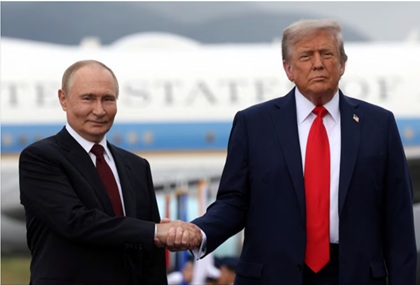
The relationship between Moscow and Tehran is not theoretical.
U.S. intelligence has previously assessed that Russia shared information with Iran about American military movements, including satellite imagery, according to reporting earlier this year.
That relationship gives Tehran another layer of strategic awareness.
Russia also has a strong incentive to prevent the United States from emerging from the Iran conflict with a clear victory.
A decisive American success would reinforce Washington’s deterrence credibility at precisely the moment Moscow is challenging the West in Europe.
For Putin, the Iran war is therefore not merely someone else’s conflict.
It is part of the wider contest over American power.
The energy shock has produced another unintended consequence
The Strait of Hormuz has created a second problem for Washington.
The Trump administration has used economic pressure against Russia as part of its effort to support Ukraine and weaken Moscow’s war economy.
But disruption to Middle Eastern oil exports has pushed energy prices higher.
That creates pressure on Washington to prevent the global oil market from tightening further.
And when Washington wants to stabilise oil supplies, Russian crude becomes harder to treat as simply an enemy commodity.
Reuters reported that the Iran conflict has complicated the administration’s pressure on Russia’s energy sector as Washington tries to contain the economic effects of the Hormuz disruption.
The contradiction is striking.
The United States wants to reduce Russia’s ability to finance the Ukraine war.
But a prolonged oil shock can make Russian energy more valuable to global buyers.
Every barrel that Russia can sell at a higher price generates more revenue for Moscow.
Iran’s attempt to use the Strait of Hormuz as leverage therefore has consequences far beyond Tehran.
China may be the biggest economic beneficiary
There is another country that occupies a crucial position in this equation.
China.
Beijing is one of Iran’s most important economic partners and a major buyer of energy.
If Washington wants to enforce a policy of total economic isolation against Iran, China is going to be one of the hardest countries to bring into the campaign.
The United States can threaten secondary sanctions.
But enforcing them against one of the world’s largest economies is much harder than sanctioning a small country.
China also has an interest in buying energy at favourable prices and maintaining access to Middle Eastern suppliers.
The Iran war therefore places Washington in a difficult position.
It wants China to help isolate Iran.
China has reasons to do the opposite.
The war has also demonstrated the limits of military superiority
There is a broader military lesson emerging from both Iran and Ukraine.
The United States and Russia possess enormous conventional military capabilities.
Yet both have encountered serious problems when facing opponents who rely heavily on cheaper, asymmetric technologies.
Ukraine has used drones to strike deep inside Russia.
Iran has relied on drones and missiles to impose costs on U.S. forces and regional partners.
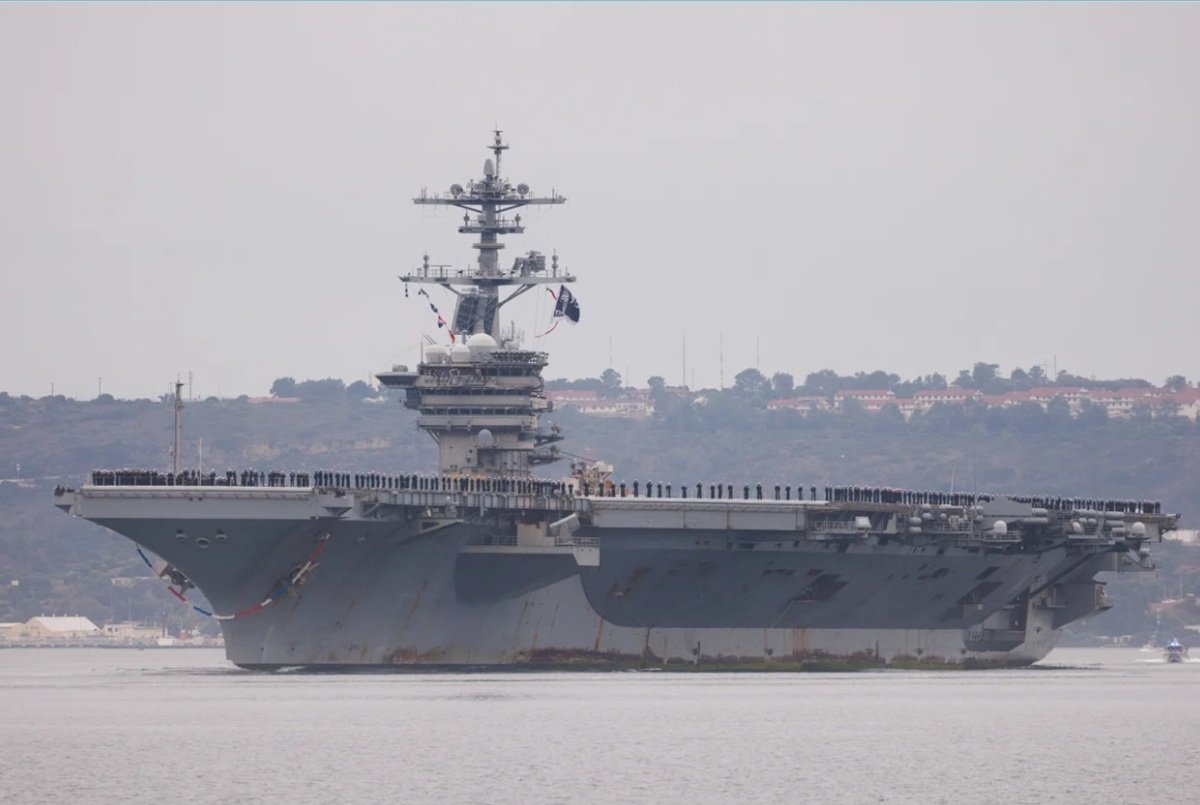
Neither technology is remotely equivalent to an American aircraft carrier or a Russian strategic missile force.
But that comparison misses the point.
The cheaper weapon does not need to match the expensive weapon.
It needs to create enough difficulty that the stronger side cannot use its superiority cheaply.
That is increasingly how modern warfare works.
Ukraine has inadvertently become one of the world’s leading drone powers
There is an important counterpoint to the argument that the Iran war has been entirely negative for Ukraine.
The conflict has accelerated global interest in Ukrainian military technology.
Ukraine has spent more than four years developing drone warfare under battlefield conditions.
Its experience in reconnaissance drones, long-range strike systems, electronic warfare and maritime unmanned systems is now valuable to other militaries.
Countries that once treated drones as supplementary weapons increasingly see them as central components of modern warfare.
Ukraine’s battlefield experience has consequently become a form of strategic capital.
The paradox is that Kyiv may emerge from the war with greater military-technological influence even as it struggles to obtain enough conventional air-defence ammunition to survive it.
The same lesson is appearing in Iran
Iran has demonstrated a different version of the same phenomenon.
Tehran cannot compete with the United States in conventional air power.
It therefore relies heavily on missiles, drones, dispersed capabilities and asymmetric pressure.
That does not make Iran militarily stronger than the United States.
It makes the cost of defeating Iran much higher than a simple comparison of aircraft and missiles would suggest.
The American campaign has destroyed enormous quantities of Iranian military infrastructure.
But destroying the infrastructure of a state and forcing that state to accept your political demands are two different tasks.
The six-month stalemate is evidence of that distinction.
Trump now faces the problem of what comes after military superiority
This may be the central difficulty for the White House.
Washington can continue striking Iran.
It can intensify sanctions.
It can maintain the blockade.
It can keep aircraft carriers and air-defence systems in the region.
But every additional month carries costs.
The military pays in ammunition and readiness.
The Treasury pays in emergency spending.
Allies pay through economic disruption.
Consumers pay through energy prices.
Ukraine pays through reduced access to scarce interceptors.
And American diplomats pay through the growing difficulty of managing multiple crises simultaneously.
The longer the war continues, the more the administration has to ask whether the cost of maintaining pressure is becoming greater than the benefit of continuing it.
Europe is beginning to see the problem differently
For European governments, the Iran war has introduced an uncomfortable question.
What happens if Russia decides to test NATO while America’s attention and missile inventories are heavily committed elsewhere?
There is no current evidence that Russia is preparing an imminent conventional attack on NATO.
The AP reporting explicitly notes that such an attack is not expected imminently.
But the shortage of Patriot interceptors is nevertheless strategically significant.
NATO’s credibility depends partly on its ability to defend its members against ballistic missile attacks.
If the United States has to ration scarce interceptors because of Middle Eastern demand, European governments have a strong incentive to accelerate their own air-defence and missile-production programmes.
The Iran war may therefore push Europe toward greater defence autonomy even without any deliberate American decision to reduce its role.
NATO is not collapsing — but the conversation is changing
This distinction matters.
The current evidence does not show that Russia is about to attack NATO.
Nor does it show that the alliance has lost its deterrent.
What it does show is a growing awareness of vulnerability.
European officials know that Russia has spent years developing missiles, drones and electronic-warfare capabilities.
They also know that the United States is consuming significant quantities of the very interceptors needed to defend Europe.
That is enough to change defence planning.
The result could be a faster European effort to produce air-defence missiles, expand stockpiles and reduce dependence on American inventories.
The irony is that an American war intended to reshape the Middle East may end up accelerating Europe’s military self-reliance.
The Indo-Pacific is facing a similar problem
The Middle East is not the only theatre competing for American resources.
The Pentagon’s long-term strategic priority remains China.
Yet the Iran war has already forced the Navy to maintain an unusually large Middle Eastern presence.
The USS Theodore Roosevelt is preparing for a deployment of at least seven months, with sailors reportedly being told to plan for eight, while other U.S. carriers have been operating in the region. That follows the extraordinarily long deployment of the USS Abraham Lincoln.
Every carrier committed to the Middle East is a carrier unavailable elsewhere.
That does not mean the United States has abandoned the Pacific.
It means the arithmetic has become harder.
China does not need to attack Taiwan to benefit from this.
It can simply observe how American forces are being distributed.
This is where the Iran war becomes a global strategic problem
Washington’s military resources are finite.
Its attention is finite.
Its industrial capacity is large but not unlimited.
Its allies are also finite in their ability to absorb repeated crises.
A prolonged war with Iran therefore changes the strategic environment even in places where no American or Iranian soldier is fighting.
In Europe, it affects missile inventories.
In Ukraine, it affects air defence.
In Asia, it affects carrier availability.
In global energy markets, it affects prices.
For Russia, it creates an opportunity.
For China, it creates bargaining leverage.
For America’s allies, it raises questions about how much they can depend on Washington.
That is why the six-month mark matters.
Trump and Putin are not in identical wars
The comparison between Trump and Putin is tempting.
Both leaders launched or escalated wars expecting political and military outcomes that have proved much harder to achieve.
Both now face the problem of ending a conflict without appearing to have lost.
But the similarities should not be exaggerated.
Putin committed Russia to a large-scale ground war against Ukraine and has accepted enormous casualties in pursuit of his objectives.
Trump has avoided a comparable ground occupation of Iran.
The American military’s casualties, while serious, are not remotely comparable to Russia’s losses in Ukraine.
The political systems are also fundamentally different.
Putin has far greater control over Russia’s domestic political environment.
Trump operates under elections, Congress, public opinion, markets and an alliance system that imposes constraints on his freedom of action.
The strategic dilemma is similar.
The political circumstances are not.
Afghanistan offers a warning, but Vietnam is not the right template
American history contains plenty of examples of wars that became harder to end than expected.
Vietnam demonstrated the danger of allowing military escalation to outrun political objectives.
Afghanistan demonstrated the difficulty of converting overwhelming military superiority into a sustainable political settlement.
Iran is different from both.
The United States is not occupying the country.
Iran is not a conventional insurgency.
And the conflict is taking place in an environment where missiles, drones, energy markets and nuclear concerns interact.
The historical lesson is therefore not that Iran will become another Vietnam or Afghanistan.
It is that military superiority does not automatically produce political leverage.
The most dangerous assumption would be that Iran is simply running out of options
Tehran is under enormous pressure.
Its economy is suffering.
Its military has been damaged.
Its leadership has been disrupted.
Its access to energy markets has been severely restricted.
But a state under pressure does not necessarily become more willing to surrender.
It can become more unpredictable.
Iran could seek to raise the cost of the blockade.
It could rely more heavily on asymmetric operations.
It could deepen economic ties with China and other non-Western partners.
It could attempt to make the conflict politically expensive for Washington.
Reuters has reported that Iranian officials remain confident they can endure the economic pressure even as inflation and public dissatisfaction rise.
That may or may not prove correct.
But Washington cannot base strategy simply on the assumption that economic pain automatically produces political capitulation.
Russia has its own reasons to keep the conflict going
Moscow can benefit from higher energy prices.
It can benefit from American military distraction.
It can benefit from Iranian pressure on U.S. forces.
And it can benefit diplomatically by presenting itself as an alternative partner to countries dissatisfied with Washington.
This does not mean Russia controls Iran.
It does not.
Tehran has its own interests and has repeatedly demonstrated that it is willing to disagree with Moscow.
But the two countries share a common strategic interest in limiting American influence.
That is enough for cooperation.
China has an even longer horizon
The Iran conflict may be temporary.
China’s strategic planning is not.
Beijing can afford to wait.
Every month of American military expenditure in the Middle East is another month in which China can observe U.S. weapons consumption, carrier movements, air-defence performance and logistics.
It can also watch America’s allies.
Which European governments increase defence spending?
Which Gulf states diversify their security partnerships?
Which Asian allies become nervous about American availability?
These observations have value even without any direct Chinese intervention.
Washington’s problem is therefore bigger than the Iran battlefield

The United States can still deploy enormous military power.
It remains the world’s most capable global military force.
Its industrial base is far larger than Iran’s.
Its alliances remain formidable.
But power has to be available at the right place and at the right time.
A Patriot interceptor fired over the Gulf cannot simultaneously defend Ukraine.
A carrier operating near the Arabian Sea cannot patrol the Western Pacific.
A missile factory producing replacements for Middle Eastern operations cannot instantly deliver those weapons to Europe.
That is the strategic arithmetic the Iran war has exposed.
The next few months will be about endurance
The opening months of the war were about destruction.
The next phase is increasingly about endurance.
Can Iran survive the economic pressure?
Can the United States sustain the cost?
Can Washington replenish its missile stocks quickly enough?
Can Ukraine receive enough air-defence weapons?
Can Europe close its own gaps?
Can the United States maintain a credible presence in Asia?
And can Trump find a political settlement that allows him to claim success without requiring Iran to accept terms it has so far rejected?
None of those questions has a simple answer.
Ratcliffe’s Moscow trip may be an early sign of that reality
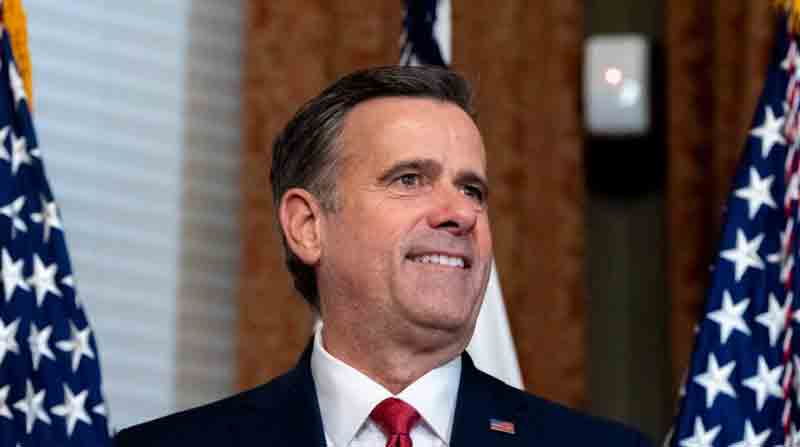
The CIA director’s trip is particularly revealing because it suggests Washington is once again dealing with several problems at once.
If the United States wants Russia to restrain itself in Europe, it needs a channel to Moscow.
If it wants Russia to reduce assistance to Iran, it needs to negotiate with Moscow.
If it wants to make progress on Ukraine, it needs Russia at the table.
And if it wants to reassure NATO, it needs to demonstrate that its attention has not been consumed entirely by Iran.
Ratcliffe’s visit does not mean a grand U.S.-Russia bargain is imminent.
There is no evidence of that.
It does, however, show that Washington cannot afford to treat the Middle East as a self-contained crisis.
Trump’s confidence may become a strategic liability if it outruns reality
The president continues to insist that the United States is in a strong position and that Putin will not attack NATO.
There may be good reasons for that confidence.
But intelligence agencies exist partly to challenge optimistic assumptions.
The Washington Post’s reporting that U.S. intelligence believes Moscow sees America as weakened by the Iran war should therefore not be dismissed simply because Trump publicly disagrees with the assessment.
The more important issue is whether the administration is receiving candid assessments of the costs and risks of the war.
That question has appeared before in American military history.
Leaders rarely lose wars because they lack information.
They lose them when political systems become unwilling to hear information that contradicts the preferred narrative.
There is no evidence yet that the Trump administration has reached that point.
But the longer the Iran war continues, the more important honest assessments will become.
The United States still has an exit — but it needs a political one
Military pressure can continue indefinitely.
That does not mean it can produce an indefinite military solution.
Eventually Washington will have to decide what outcome it can realistically accept.
A reopened Strait of Hormuz?
A verifiable limitation on Iran’s nuclear programme?
A reduction in missile production?
A broader regional security arrangement?
A ceasefire without a formal settlement?
The answer matters because every additional objective creates another reason for the war to continue.
The longer the list becomes, the harder the exit becomes.
The unintended winner may be the wider strategic competition
Iran has suffered enormously.
So has the region.
The United States has paid a huge financial and military price.
Ukraine is losing access to scarce air-defence ammunition.
Europe is reassessing its vulnerability.
Yet Russia and China have gained something neither could have easily created on their own:
a United States forced to divide its attention.
That does not mean Washington has lost the global competition.
Far from it.
But strategic competition is often decided at the margins.
A few more months of distraction.
A few more missile shortages.
A few more carrier deployments.
A few more doubts among allies.
Those small shifts accumulate.
The Iran war has become a test of American strategic endurance
That is ultimately the story at the six-month mark.
Trump began with the assumption that overwhelming military force could produce a quick result.
Iran has demonstrated that destroying military targets is easier than forcing a large, resilient state to accept a political settlement.
The United States is now trying economic pressure.
Russia is watching for opportunities.
China is calculating its options.
Ukraine is trying to survive with fewer air-defence interceptors.
Europe is worrying about its own vulnerability.
And America’s military planners are trying to keep enough ships, missiles and aircraft available for the next crisis.
The conflict has therefore escaped the boundaries of the Middle East.
Its effects are now embedded in the wider international security system.
That is why John Ratcliffe’s quiet trip to Moscow matters.
It is why Patriot shortages in Europe matter.
It is why Ukraine’s dwindling air defences matter.
It is why the movement of American aircraft carriers matters.
And it is why the Strait of Hormuz matters far beyond the price of oil.
The central question is no longer simply whether Donald Trump can defeat Iran.
It is whether the United States can end the Iran war without allowing the costs of winning one battlefield to weaken its position everywhere else.
Six months into the conflict, Washington has not yet answered that question.
And Russia, China, Europe and Ukraine are all watching closely.