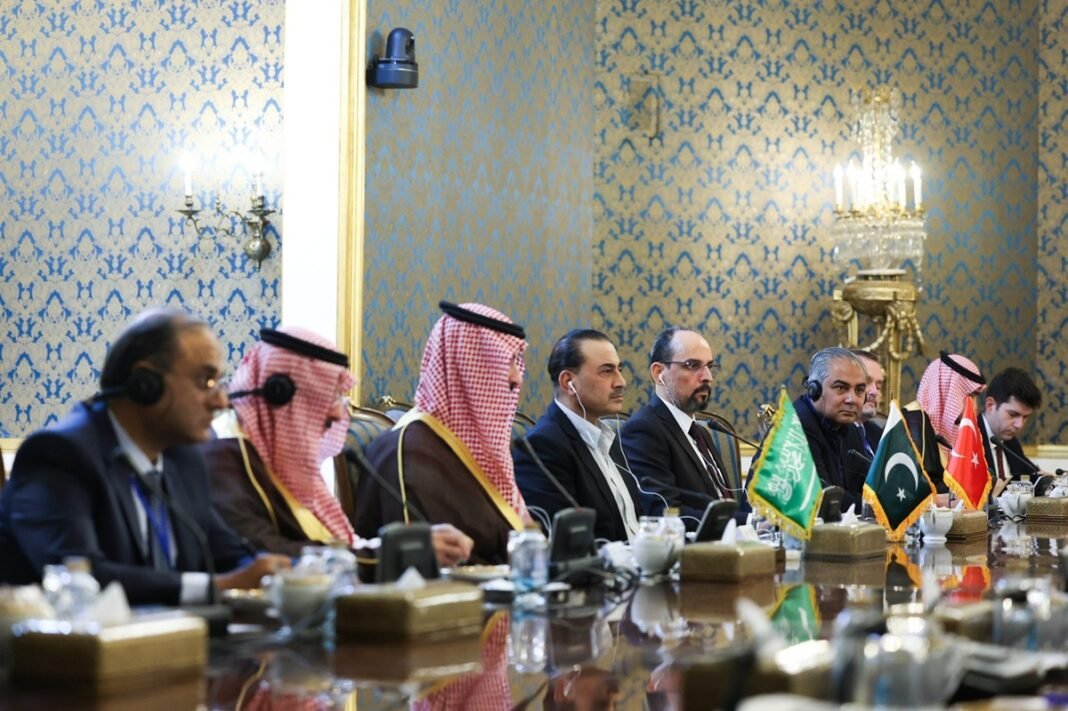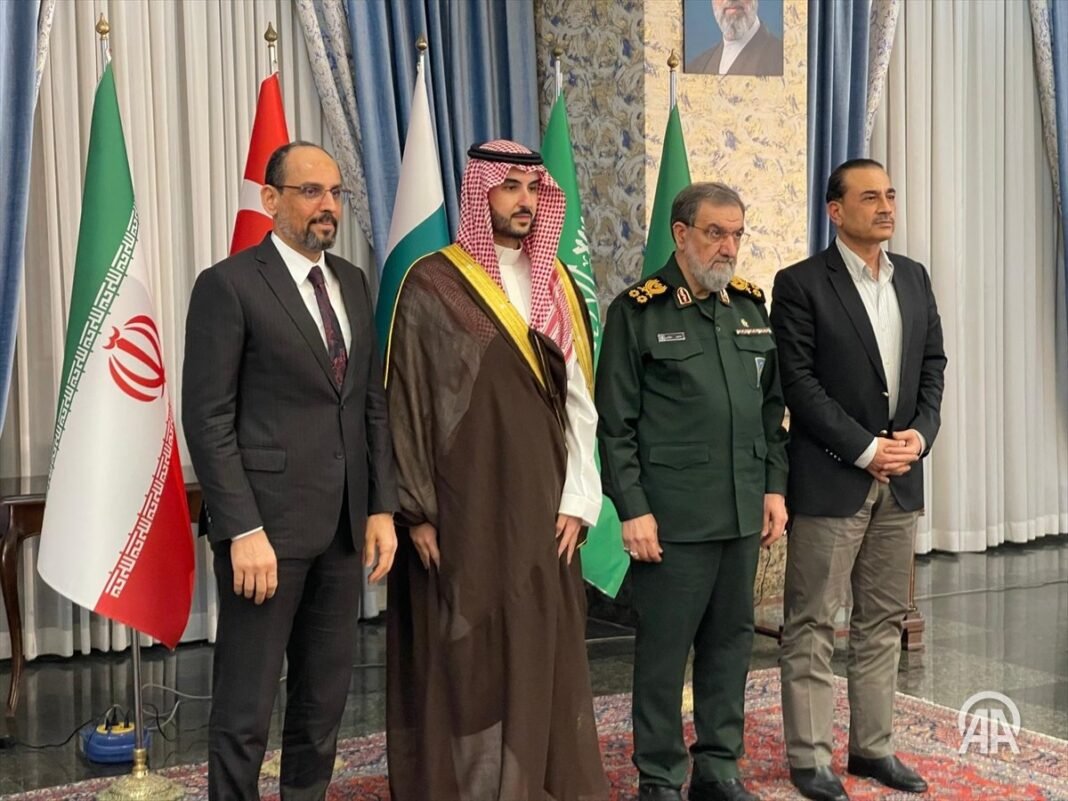
Saudi commentators say the Tehran meeting must produce tangible security commitments, while Faisal J. Abbas describes the visit as a last-ditch effort to prevent a wider regional war. Pakistan and Türkiye face the challenge of balancing deterrence with diplomacy.
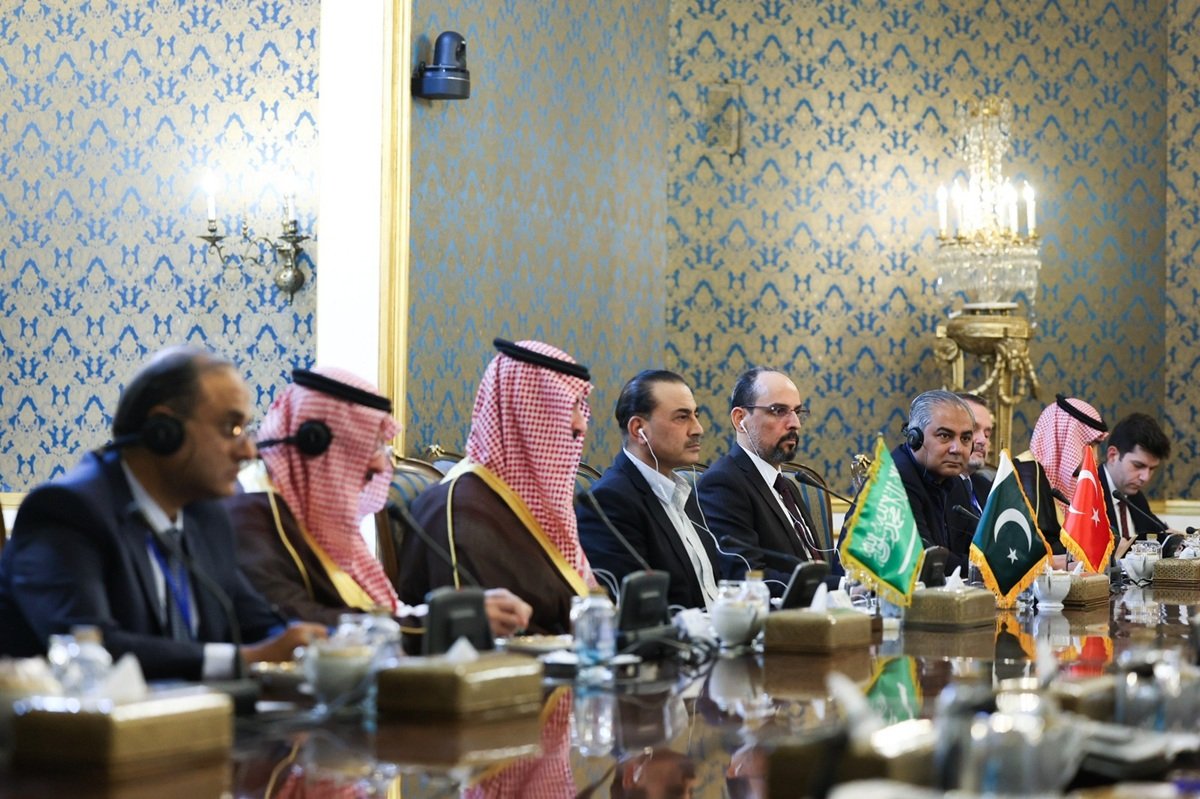
The high-level Tehran meeting involving Saudi Arabia, Pakistan, Türkiye and Iran has triggered a sharp debate across Saudi and Arab media, with commentators divided over whether the diplomatic initiative can reduce regional tensions or risks giving Tehran additional time without securing meaningful concessions.
The visit by Saudi Defence Minister Prince Khalid bin Salman, Pakistan’s Chief of Army Staff Field Marshal Asim Munir and Turkish intelligence chief Ibrahim Kalin on October 26 came amid escalating military tensions, Houthi attacks on Saudi Arabia and renewed concerns about a possible US military campaign against Iran.
Saudi commentators have largely framed the visit as an opportunity for Tehran to demonstrate whether it is prepared to translate diplomatic engagement into practical steps on regional security, maritime navigation and support for armed groups. Others have questioned whether mediation can succeed without stronger deterrence and a unified Gulf position.
The central issue emerging from the debate is whether the Makkah Joint Defence Agreement can function as both a collective-defence arrangement and a diplomatic channel capable of preventing a wider regional conflict.
Saudi Arabia’s Tehran initiative faces a test of credibility
In an official statement, Saudi Arabia said the visit was intended to de-escalate tensions, encourage dialogue and support mediation efforts led by Qatar and Pakistan. Riyadh also stressed the importance of opening negotiating channels to prevent renewed military escalation.
Reuters reported that the four countries agreed to continue discussions on regional peace and security. A senior Pakistani security official told Reuters that the talks included a possible regional non-aggression framework, US-Iran negotiations, Houthi attacks against Saudi Arabia and disruptions in the Strait of Hormuz.
Pakistan reportedly presented a potential compromise that could offer something to both Washington and Tehran. The same report said members of the Makkah pact and Qatar could potentially act as guarantors if an agreement were accepted. No such agreement or guarantee arrangement has been publicly confirmed.
The timing of the meeting is particularly significant because diplomatic contacts are taking place alongside continued military activity. On October 27, Reuters reported that the Saudi-led coalition in Yemen said it had intercepted and destroyed ballistic missiles and drones launched by the Iran-aligned Houthis towards two Saudi regions.
The continuing security threats have intensified the debate over what the Tehran talks can realistically achieve.
Faisal J. Abbas: A last-ditch attempt to bring Tehran closer to Makkah
In an opinion article published by Arab News on October 26, editor-in-chief Faisal J. Abbas described the visit as a last-ditch attempt to bring Tehran closer to Makkah and avert a potentially devastating escalation.
Abbas argued that the three visiting countries have different strategic interests but share a concern about the consequences of another major confrontation between Iran and the United States.
He pointed to the substantial gap between Washington’s demands concerning Iran’s nuclear programme and Tehran’s refusal to accept the restrictions sought by the Trump administration. In his assessment, the disagreement extends beyond nuclear negotiations and could have far-reaching consequences for regional security, energy markets and maritime trade.
The Arab News editor also emphasised that Saudi Arabia’s pursuit of diplomacy should not be interpreted as an abandonment of deterrence.
He argued that any sustainable regional arrangement must include concrete commitments to respect international law, end interference in Arab affairs, halt attacks and protect freedom of navigation.
The significance of Abbas’s argument is that it defines diplomacy as an opportunity to prevent a wider war, not as an alternative to addressing the underlying security disputes.
His assessment also places responsibility on Tehran to demonstrate that its participation in regional talks can produce changes in conduct rather than simply another round of diplomatic statements.
Abduljalil Alsaeid questions the value of mediation
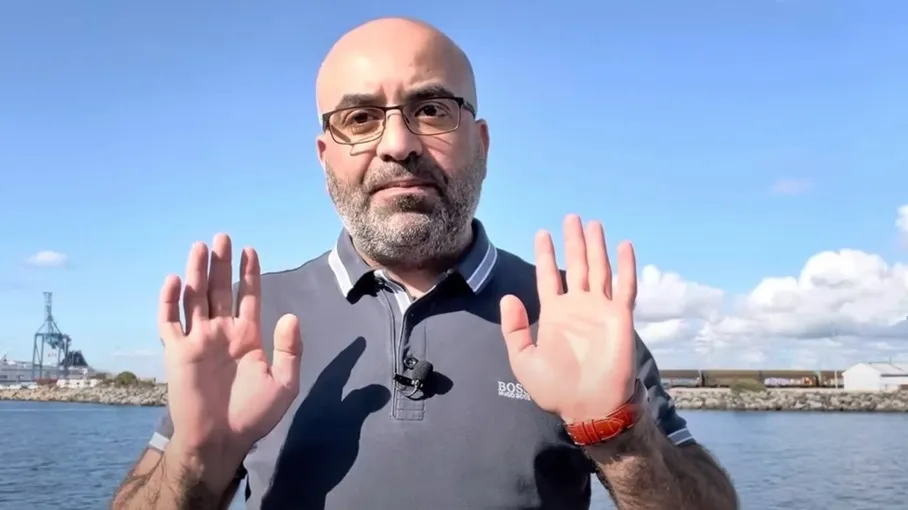
A much more critical assessment came from Abduljalil Alsaeid, director of the Gulf Scandinavian Center for Studies.
In comments circulated in Arab media, Alsaeid questioned whether Pakistan and Türkiye could deliver tangible security results for Saudi Arabia while simultaneously promoting diplomatic engagement with Iran.
He argued that the Tehran meeting risked allowing Iran and the Houthis to portray the diplomatic initiative as evidence that Saudi Arabia was seeking accommodation without obtaining corresponding concessions.
Alsaeid also questioned whether the visiting countries could translate their defence commitments into practical support if Saudi Arabia continued to face attacks.
His criticism reflects a wider concern among some Saudi commentators: that mediation could become ineffective if it is not accompanied by clear expectations, credible deterrence and measurable outcomes.
However, his strongest accusations—including claims that Pakistan and Türkiye are motivated by Gulf wealth and that the Tehran meeting had already failed—represent his political assessment, not independently established findings.
The practical question raised by Alsaeid remains relevant: what security commitments, if any, will emerge from the talks, and how will the parties assess compliance?
Hassan Al-Mustafa: Iran must turn its regional rhetoric into action
الباحث السياسي حسن المصطفى: على النظام الإيراني اتخاذ خطوة إلى الأمام بشأن الأمن الإقليمي.. وتحويل حديثها عن سياسة حسن الجوار إلى واقع على الأرض.. والمختص بشؤون إيران في العربية مسعود الفك: على طهران أن تكون واقعية حتى تجتاز المرحلة الدقيقة والحرجة التي تهدد مصيرها وتوقعات بمواصلتها مسلسل إضاعة الفرص
— العربية (@AlArabiya) October 27, 2026
Political researcher Hassan Al-Mustafa has argued that Iran must stop threatening maritime navigation in the Strait of Hormuz, refrain from interference in the affairs of regional states and respond constructively to Qatari-Pakistani mediation.
In comments included in the Arab media material, Al-Mustafa also suggested that economic pressure could influence the calculations of Iran’s leadership and strengthen pragmatic voices within the political system.
His assessment highlights a potential opening for diplomacy: Iranian decision-makers may have incentives to avoid further damage to the country’s economy and state institutions if the costs of continued confrontation increase.
However, the degree to which economic pressure will change Tehran’s strategic calculations remains uncertain.
The key question is whether Iran is prepared to discuss practical arrangements on maritime security, regional armed groups and the resumption of negotiations with Washington.
For the Makkah Alliance delegation, progress on these issues would provide a clearer measure of the meeting’s value than general expressions of goodwill.
Musaddiq Bour: The visit sends a deterrence message to Tehran
المحلل السياسي مصدق بور: زيارة وفد “حلف مكة” قد تنعكس نتائجها إيجابا على المفاوضات الأميركية الإيرانية.. وطهران تعتبر الاجتماع الرباعي التأسيسي مقدمة لإقامة نظام إقليمي مشترك بعيدا عن التدخلات الأجنبية.. ومذيعة العربية: المنطقة تمر بمرحلة خطرة ولا مجال للتأسيس وإجراءات بناء الثقة وعلى إيران سرعة التجاوب مع الجهود الإقليمية
— العربية (@AlArabiya) October 26, 2026
Political analyst Musaddiq Bour has interpreted the visit as a signal that Saudi Arabia, Pakistan and Türkiye are coordinating their positions at a critical moment in the regional crisis.
In his assessment, the meeting reduces Iran’s room for manoeuvre if Tehran considers further attacks against regional states while seeking to avoid a wider confrontation with the United States.
Bour also warned that attacks against regional oil infrastructure could prove strategically damaging for Iran by widening the conflict and increasing the number of states directly affected.
His argument reflects the dual purpose of the Makkah Alliance initiative: offering Iran a diplomatic channel while demonstrating that the three participating countries are coordinating on regional security.
Nevertheless, the precise deterrent effect of the meeting will depend on the alliance’s actual commitments, its ability to coordinate responses and whether Tehran believes that further attacks would trigger additional consequences.
The visit itself does not establish that Iran has accepted new restrictions or that the alliance has agreed on a specific response to future attacks.
Jasser Al-Jasser: Saudi Arabia is building a wider regional security network
الكاتب الصحفي جاسر الجاسر: إذا لم تحدث زيارة وفد “حلف مكة” فارقا إيجابيا في موقف طهران فلا حلول أخرى للصراع في المنطقة.. ولو أن مجتبى خامنئي في حالة جيدة لاستقبل هذا الوفد عالي القيمة.. والتصريحات الإيرانية غير مطمئنة.. والصحفي في شبكة العربية محمود المجالي: الزيارة شهدت تقديم معلومات استخباراتية عن دعم الحرس الثوري لمليشيات الحوثي.. و”حلف مكة” يقدم لإيران طوق نجاة وعليها استغلال الفرصة
— العربية (@AlArabiya) October 26, 2026
Saudi journalist and writer Jasser Al-Jasser has framed the Tehran visit within Saudi Arabia’s broader efforts to develop its economic, political and military relationships.
In his commentary, Al-Jasser argued that the Makkah Alliance delegation was sending a message that Saudi Arabia, Pakistan and Türkiye were acting as a coordinated group, and that seeking peace did not mean abandoning deterrence.
He also emphasised that the visit should be understood as an effort to secure regional stability rather than an unconditional concession to Iran.
Another important element of his argument concerns the wider international balance. Al-Jasser questioned whether Russia would benefit from allowing its relations with Gulf states to deteriorate because of its relationship with Iran.
These observations point to the broader diplomatic environment surrounding the Tehran talks. Regional governments must consider not only their bilateral relationships but also the implications of conflict for trade, investment, energy security and their relations with major powers.
The challenge for Saudi Arabia is to maintain the credibility of its defence partnerships while preserving diplomatic options that could prevent further attacks.
Mahmoud Al-Majali: The delegation offered Tehran a diplomatic opening
الصحافي في شبكة العربية محمود المجالي: زيارة وفد “حلف مكة” إلى طهران “خطوة استثنائية” تحمل رسائل ردع استراتيجية.. وتؤكد دور تركيا والسعودية وباكستان في حماية السيادة وترتيب الأمن الإقليمي https://t.co/wit5rbksze
— العربية (@AlArabiya) October 27, 2026
Al Arabiya journalist Mahmoud Al-Majali described the Tehran visit as an exceptional diplomatic step carrying both political and strategic messages.
According to the comments included in the Arab media material, Al-Majali said the delegation presented Tehran with an opportunity to become part of regional understandings while communicating that attacks against Gulf states would have broader implications for the Makkah Alliance members.
He also referred to intelligence information concerning alleged Iranian Revolutionary Guard support for Houthi forces. The specific details of the information he described have not been independently established in the material reviewed.
Al-Majali’s broader argument is that the meeting offers Iran a way to pursue de-escalation without being excluded from regional diplomatic arrangements.
The visit’s significance therefore lies in the combination of engagement and deterrence: Iran is being offered a diplomatic channel, but the success of that channel depends on whether regional security concerns are addressed.
Masoud Al-Fak: Tehran may believe it can absorb another US strike
الباحث السياسي حسن المصطفى: على إيران اتخاذ خطوة إلى الأمام بشأن الأمن الإقليمي.. وتحويل حديثها عن سياسة حسن الجوار إلى واقع على الأرض.. والمختص بشؤون إيران في العربية مسعود الفك: على إيران أن تكون واقعية حتى تجتاز المرحلة الدقيقة والحرجة التي تهدد مصير النظام.. وتوقعات بمواصلة طهران مسلسل إضاعة الفرص
— العربية (@AlArabiya) October 26, 2026
Masoud Al-Fak, an Al Arabiya specialist on Iranian affairs, argued that Iran’s leadership believes it can withstand a potential American military strike.
He also suggested that statements by Iranian security official Mohsen Rezaei indicate Tehran may not respond quickly or substantially to the delegation’s visit.
This interpretation points to a central difficulty facing mediators. If Iranian decision-makers believe that they can absorb further military and economic pressure, they may see limited incentive to make immediate concessions. Conversely, the prospect of a wider conflict could encourage Tehran to explore a negotiated arrangement.
Neither possibility should be treated as certain. Iran’s actual calculations cannot be established solely from public statements, and the outcome will depend on developments in the military, economic and diplomatic arenas.
The important question is whether the Makkah Alliance countries can identify a negotiating formula that addresses their security concerns while giving Iran a reason to pursue de-escalation.
The Houthi question remains central to Saudi security
One of the most contentious issues in the Arab commentary is the relationship between Iran and Yemen’s Houthi movement.
Saudi commentators argue that any meaningful regional security arrangement must address attacks against Saudi territory, including threats to airports, energy infrastructure and maritime routes.
The Houthis are widely described by international reporting as aligned with Iran, but the extent of Tehran’s control over specific operational decisions remains a matter that should be assessed through evidence rather than assumed.
The issue is particularly important because the Tehran meeting took place amid renewed Houthi military activity.
Reuters reported on October 26 that the Houthis claimed attacks against pumping stations on Saudi Arabia’s East-West pipeline and Riyadh airport. The report noted that Saudi authorities had not immediately confirmed those particular claims.
On October 27, Reuters separately reported that the Saudi-led coalition said it had intercepted and destroyed Houthi missiles and drones launched towards two Saudi regions.
These developments illustrate the challenge facing the mediators: diplomatic engagement with Tehran is taking place while the security situation remains volatile.
A durable arrangement would therefore need to address not only relations between Iran and the three visiting countries but also the threats facing Saudi Arabia and the wider Gulf.
Can the Makkah Alliance balance diplomacy and deterrence?
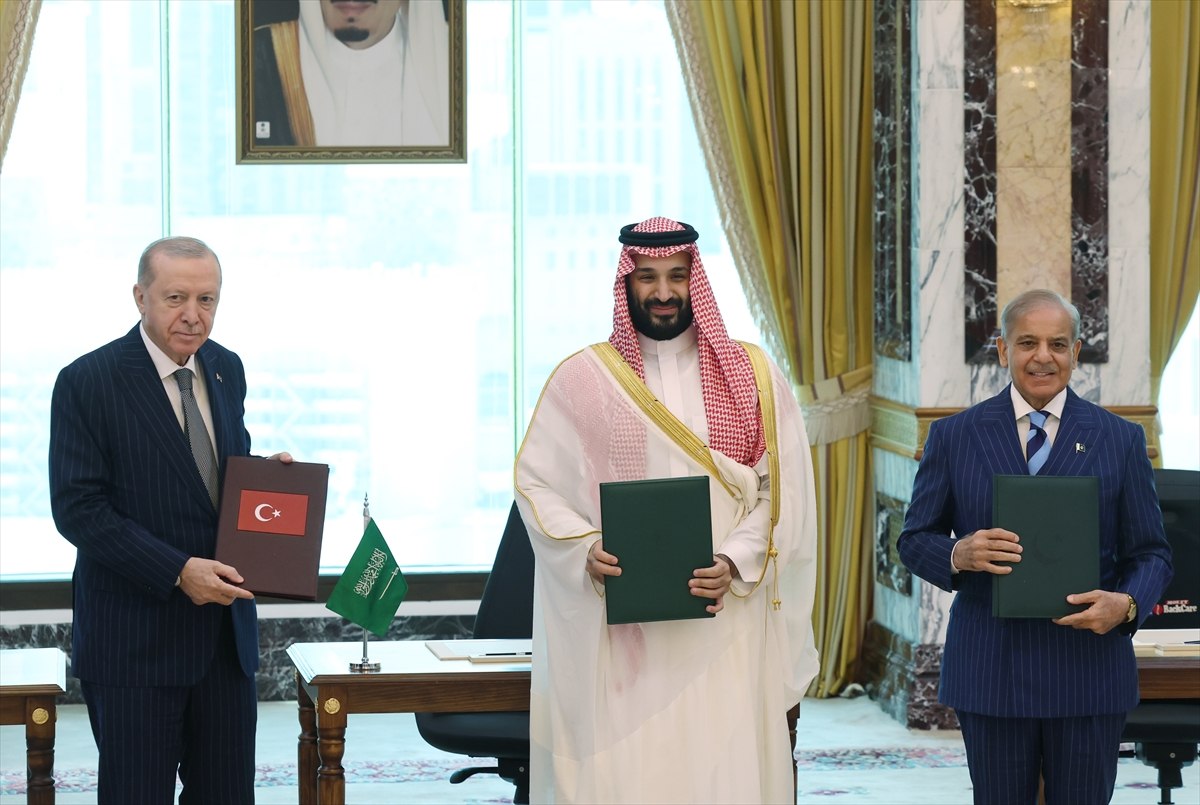
The debate surrounding the Tehran meeting reveals three distinct expectations.
First, Saudi Arabia wants to reduce the threat of further attacks and protect its territorial security, energy infrastructure and maritime interests.
Second, Pakistan and Türkiye are seeking to use their relationships with the participating states to keep diplomatic channels open and reduce the risk of a wider confrontation.
Third, Iran faces a choice between continuing its current approach to regional security and exploring an arrangement that could reduce the risk of additional military action against it.
These objectives overlap, but they are not identical.
Pakistan’s role is particularly sensitive because it combines a defence relationship with Saudi Arabia with diplomatic engagement involving Iran and the United States. Türkiye likewise has its own regional interests and security calculations.
The Makkah Alliance should not automatically be interpreted as a military bloc directed against Iran. Nor does diplomatic engagement mean that its members have abandoned their collective-defence commitments.
The decisive test will be whether the parties can agree on specific measures, establish a credible process for following up on commitments and reduce the risks of further attacks.
What happens after the Tehran meeting?
The immediate outcome remains limited. The four countries agreed to continue discussions on regional peace and security, but no publicly confirmed non-aggression agreement or comprehensive settlement emerged from the meeting.
Several developments will determine whether the initiative gains momentum:
- Follow-up diplomacy: Whether the parties announce another meeting or establish a formal mechanism for negotiations.
- Saudi security: Whether attacks involving missiles and drones decline and whether credible arrangements emerge to protect civilian and energy infrastructure.
- Maritime navigation: Whether the parties can reduce threats and disruptions affecting the Strait of Hormuz.
- US-Iran negotiations: Whether Pakistan and Qatar can help bridge the gap between Washington’s demands and Tehran’s conditions.
- Alliance coordination: Whether Saudi Arabia, Pakistan and Türkiye can maintain a common position while pursuing diplomacy.
Regional markets offered a limited indication of cautious optimism on October 27. Reuters reported that major Gulf stock markets rose in early trading following the Tehran meeting, including gains of 0.5% in Saudi Arabia and 1% in Qatar. However, market movements alone do not establish that investors expect a lasting settlement, particularly while military tensions remain high.
Conclusion: Tehran must turn diplomatic engagement into practical commitments
Senior officials from Iran, Pakistan, Türkiye and Saudi Arabia have begun a four-way meeting in Tehran, hosted by Iran’s Supreme National Security Council Secretary Mohsen Rezaei.
Participants include Pakistan’s Army Chief Asim Munir, Saudi Defense Minister Khalid bin Salman and Turkish Intelligence Chief Ibrahim Kalin.
— Clash Report (@clashreport) October 26, 2026
The Arab media debate surrounding the Tehran meeting reflects a fundamental tension in regional security policy. Some commentators see the visit as an essential opportunity to prevent another devastating confrontation, while others fear that diplomacy will achieve little without stronger deterrence and tangible changes in Iran’s regional conduct.
Faisal J. Abbas’s argument that the visit represents a last-ditch effort to avert war captures the urgency of the moment. The more critical assessments from Saudi commentators, meanwhile, underline the expectation that diplomatic engagement must produce measurable results.
For Pakistan and Türkiye, the challenge is to preserve their credibility as security partners while using their relationships to prevent further escalation. For Saudi Arabia, the priority is to ensure that dialogue does not come at the expense of its security. For Iran, the meeting offers an opportunity to demonstrate whether it is prepared to pursue regional understandings through practical commitments.
The Tehran talks have opened a diplomatic channel. Whether that channel becomes a meaningful instrument for regional stability will depend on what the participants do next.