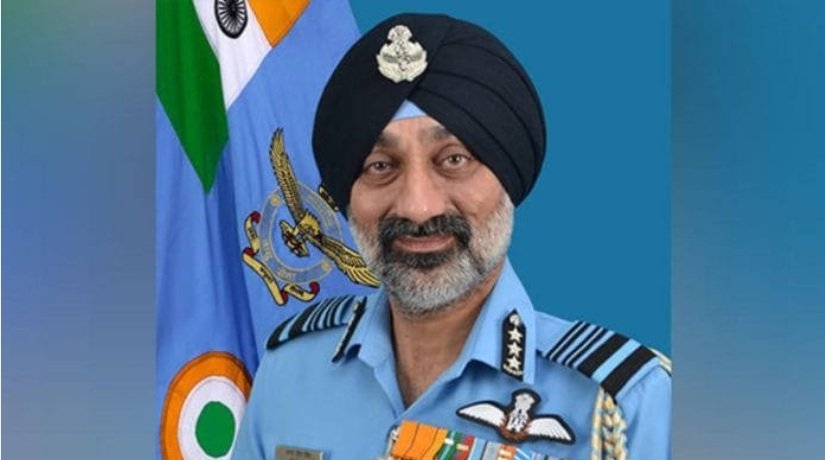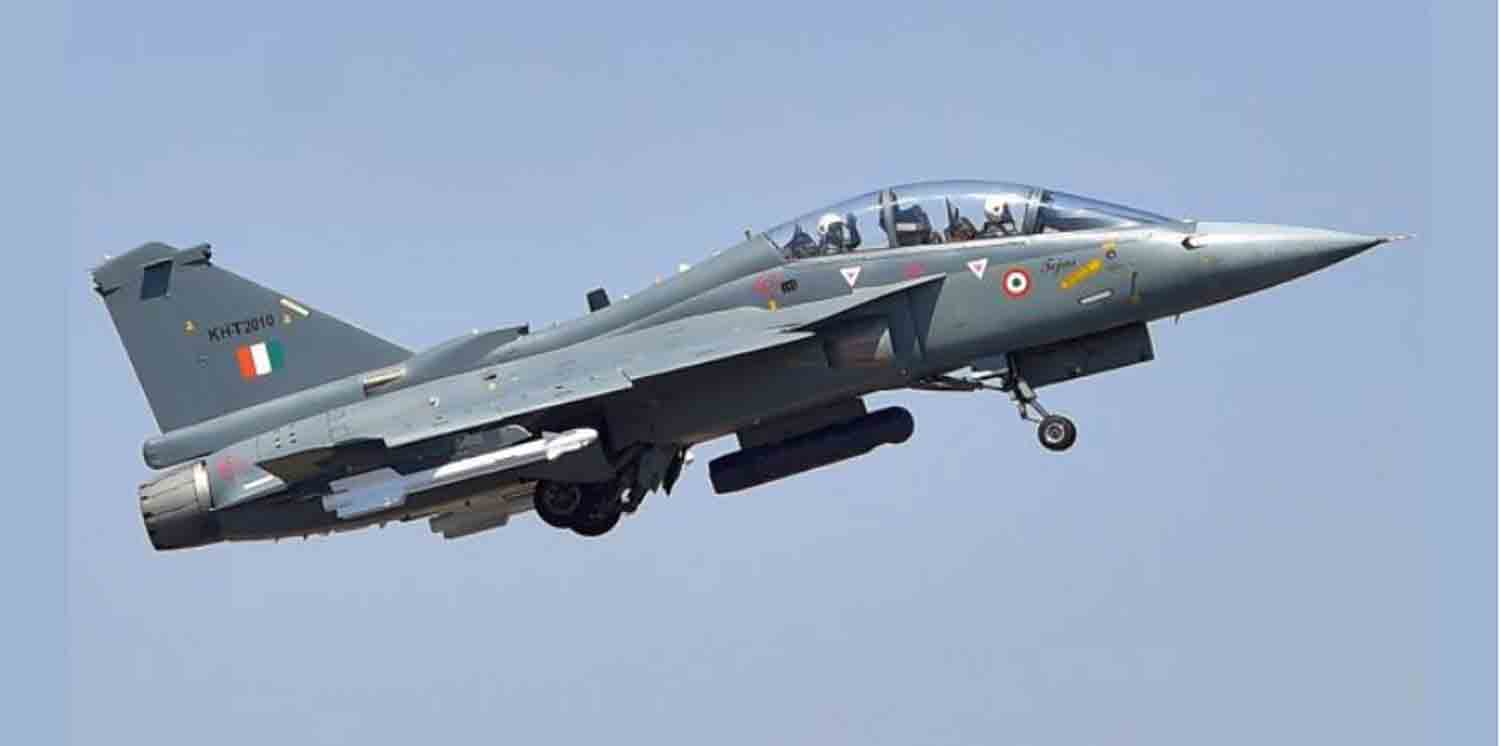
A former Indian Air Force vice chief has publicly questioned whether the Tejas Mk2 will still be operationally relevant by the mid-2030s, exposing a much bigger problem for India: the country is trying to modernise a shrinking fighter fleet while its indigenous programmes remain behind schedule and its foreign procurement is increasingly tied to technology-transfer disputes.
India’s Tejas programme has reached an uncomfortable point.
The country’s indigenous fighter aircraft was supposed to become one of the principal answers to the Indian Air Force’s chronic shortage of combat squadrons. Instead, continuing delays in the Tejas Mk1A programme have now prompted a former senior IAF commander to question whether the next-generation Tejas Mk2 will arrive early enough to remain relevant when it finally enters large-scale service.
Air Marshal Nagesh Kapoor, who retired as Vice Chief of the IAF less than two months ago, has criticised Hindustan Aeronautics Limited’s delays and questioned whether a 4.5-generation fighter arriving in large numbers in the mid-2030s would still provide the capability India needs. He also urged India to consider joining international sixth-generation programmes such as Europe’s Future Combat Air System (FCAS) or the Global Combat Air Programme (GCAP).
His remarks are significant because they come from inside India’s own air-force leadership rather than from an external critic.
And they expose a problem that goes well beyond Tejas.
India’s fighter shortage, production delays, dependence on foreign engines and unresolved technology-transfer issues are now converging at precisely the time when China and Pakistan are rapidly changing the regional air-power equation.
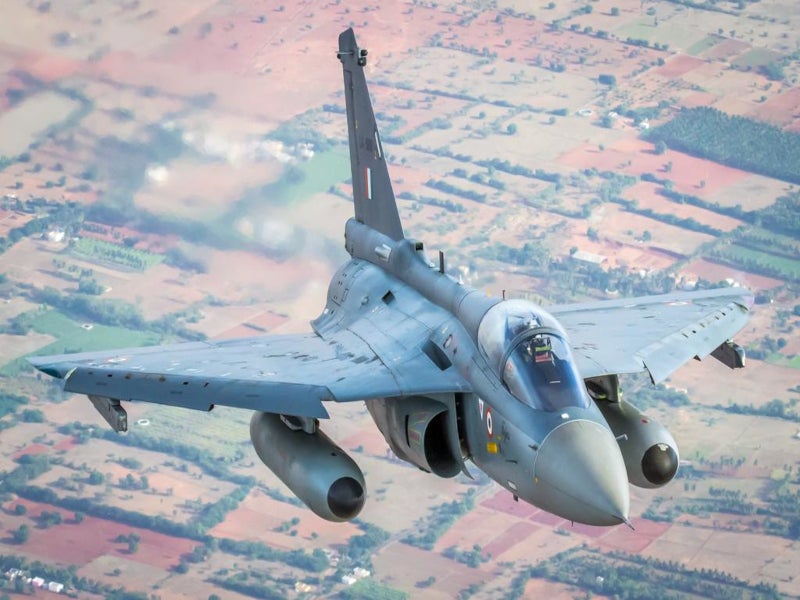
The Tejas Problem Is No Longer Just About Delays
The Indian media report carrying Kapoor’s remarks highlights the frustration inside the IAF.
According to the report, Kapoor questioned why an aircraft promised to the air force years ago continues to be delayed because of one problem after another.
That criticism reflects the central weakness of India’s indigenous fighter programme:
India has succeeded in designing and flying Tejas, but it has struggled to turn that achievement into a sufficiently large, predictable and timely production programme.
The difference is crucial.
A prototype demonstrates technological competence.
A few operational aircraft demonstrate that the design works.
But an air force requires squadrons.
It needs aircraft delivered on schedule, with engines, weapons, spares, maintenance infrastructure, trained crews and predictable upgrades.
That is where India’s Tejas challenge becomes a strategic problem.
Why Tejas Mk1A Matters So Much to India
The Tejas Mk1A is not simply another aircraft in India’s inventory.
It is intended to replace ageing fighters and provide the IAF with a modern lightweight multirole platform.
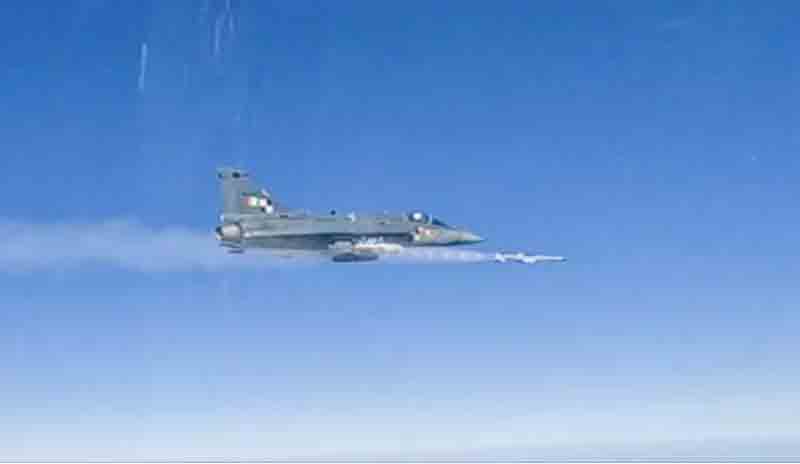
HAL describes Tejas as a 4.5-generation, all-weather multirole fighter capable of air combat, ground attack and maritime operations.
The Mk1A incorporates improvements over the original Mk1, including upgraded avionics, electronic warfare capabilities, radar and weapons integration.
The Indian government and HAL have orders covering 180 Tejas Mk1A aircraft.
That makes timely production central to India’s effort to rebuild its fighter force.
But the schedule has repeatedly slipped.
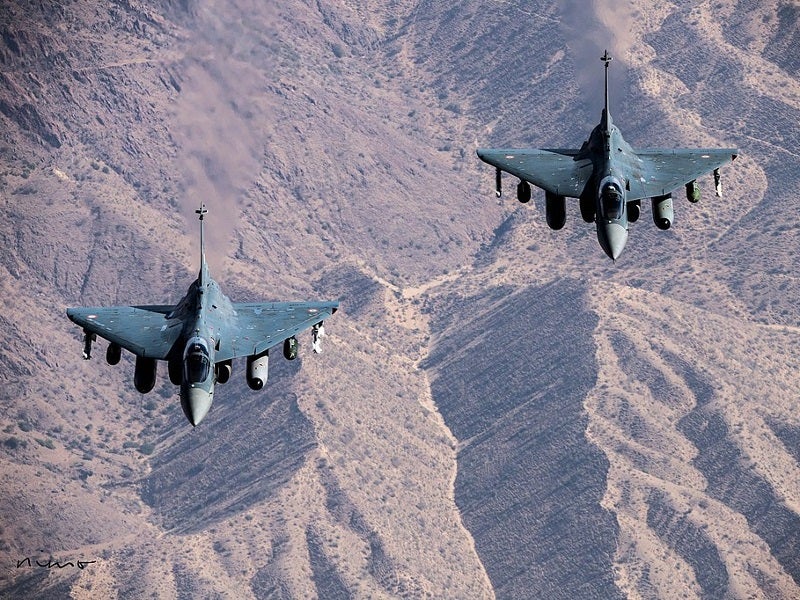
The Fighter Squadron Shortage Is the Bigger Story
India’s fighter shortage predates the current Tejas crisis.
The IAF’s authorised strength has traditionally been 42 fighter squadrons, but its actual strength has fallen substantially below that level.
Reuters reported in February 2026 that the number had fallen to 29 squadrons, while older aircraft—including MiG-21s and early variants of other fighters—were being retired or approaching retirement.
That creates a difficult arithmetic problem.
India is simultaneously:
- retiring older fighters;
- waiting for Tejas Mk1A;
- developing Tejas Mk2;
- developing the AMCA stealth fighter;
- negotiating for more Rafales; and
- confronting an expanding Chinese air force.
The timing gap between these programmes is becoming strategically important.
The F404 Engine Has Become a Major Bottleneck
One of the most visible problems has been the supply of GE Aerospace F404-IN20 engines for the Tejas Mk1A.
The engine is American-designed and manufactured by GE.
India has therefore faced a contradiction at the heart of its “Atmanirbhar Bharat” defence strategy:
the aircraft is indigenous, but a critical component required to produce it at scale remains dependent on a foreign supplier.
Reuters reported that engine deliveries had already been delayed because of supply-chain constraints affecting GE.
The consequences are significant.
HAL can manufacture aircraft structures and prepare airframes.
But without the engine, a completed airframe cannot become an operational fighter.
This is why engine availability has become one of the most closely watched indicators of the Tejas programme.
India Is Still Waiting for the Tejas Mk1A to Become a Squadron-Level Capability
The Indian Defence Ministry was reportedly expecting 18 to 24 Tejas Mk1A aircraft to be ready by the end of 2026, under the existing contracts for 180 aircraft.
But the fact that India’s defence establishment has had to repeatedly revise expectations illustrates the underlying problem.
The issue is not whether HAL can produce a Tejas.
It clearly can.
The issue is whether India can produce enough of them quickly enough.
That distinction could determine whether Tejas becomes the mass-produced backbone of India’s light-fighter fleet or remains a relatively small component of a much more heavily imported force.
Why Kapoor’s Tejas Mk2 Warning Matters
The most damaging part of the former IAF vice chief’s remarks is not his criticism of Mk1A.
It is his assessment of Tejas Mk2.
Kapoor reportedly told NDTV that if the Mk2 enters service in large numbers in the mid-2030s, it may no longer be operationally relevant as the principal answer to India’s fighter requirements.
That argument deserves serious consideration.
The issue is not that a 4.5-generation fighter suddenly becomes useless in 2035.
It does not.
Modern 4.5-generation aircraft can remain highly capable when equipped with advanced radar, electronic warfare, long-range missiles, data links, infrared search-and-track systems and networked sensors.
The problem is what they will be facing.
If China’s fifth-generation fleet continues to expand rapidly, India cannot assume that a late-arriving 4.5-generation platform will provide the same relative advantage it might have offered a decade earlier.
China Is Moving on a Completely Different Production Timeline
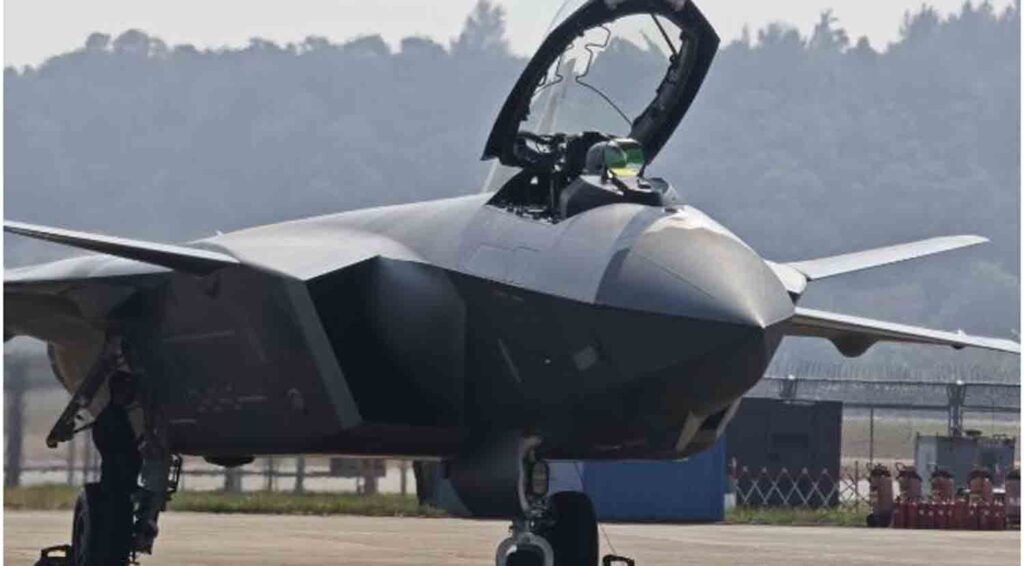
This is where India’s problem becomes regional rather than merely domestic.
Open-source assessments indicate that China’s J-20 stealth-fighter fleet has expanded dramatically.
Estimates published in 2026 put the number of J-20s produced or operational at around 500, although exact numbers remain difficult to independently verify because China does not publish a comprehensive fighter inventory.
More important than the exact number is the production trend.
China has demonstrated the ability to move from:
prototype → testing → production → large-scale deployment
far more rapidly than India has with its indigenous fighter programmes.
China is also developing additional advanced aircraft, including the J-35 family, while continuing to upgrade the J-20.
For India, therefore, the question is no longer simply whether Tejas is technologically competent.
It is whether India can produce enough capable fighters fast enough to prevent the gap from widening.
India Does Not Yet Have an Operational Fifth-Generation Fighter
India’s answer to China’s stealth-fighter expansion is the Advanced Medium Combat Aircraft (AMCA).
But AMCA remains a development programme.
That creates a potential timing gap.
China already operates fifth-generation aircraft.
India is still moving through development and design stages before its own fifth-generation fighter can become operational in meaningful numbers.
This is precisely why Kapoor has suggested that India consider participation in an international sixth-generation programme.
His argument is essentially that India cannot afford to wait for one indigenous programme after another while the technology cycle is accelerating.
Pakistan Changes the Calculation
India’s air-power problem cannot be assessed only through the China comparison.
Pakistan matters because the two countries share a long and contested border and have already experienced major air combat.
The May 2025 India-Pakistan conflict, which followed India’s Operation Sindoor strikes, provided an unusually important real-world test of modern air warfare.
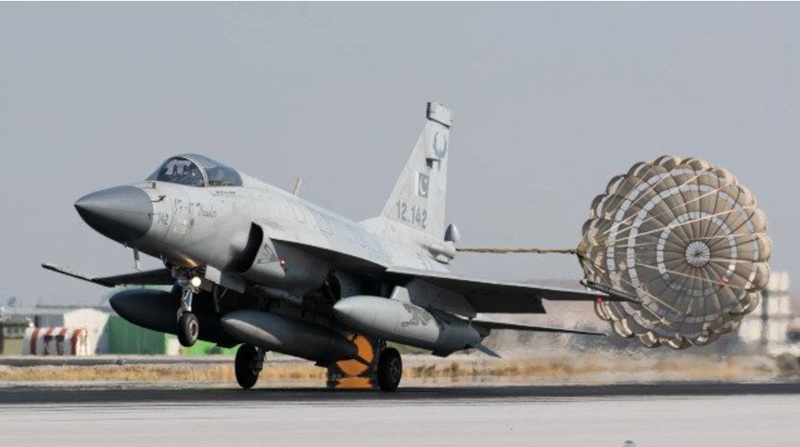
Reuters reported that U.S. officials assessed that Pakistani J-10 fighters had shot down at least two Indian military aircraft, including at least one Rafale, during the confrontation. Pakistan claimed a larger number of Indian aircraft destroyed, while India did not publicly acknowledge the specific losses claimed by Pakistan.
The precise loss figures remain politically contested.
But the strategic lesson is clearer:
modern air combat is increasingly determined by networks, sensors, electronic warfare, data links and long-range missiles—not simply by the generation label attached to the aircraft.
That is highly relevant to the Tejas debate.
The J-10C and JF-17 Show Pakistan’s Different Approach
Pakistan has followed a different path from India.
Rather than trying to develop every major fighter component domestically, Pakistan has built its fighter fleet around a combination of Chinese technology, domestic production and selective foreign systems.
The J-10C has become an important high-end component of the Pakistan Air Force.
The JF-17 Thunder, jointly developed with China and produced in Pakistan, provides a larger and potentially more affordable multirole fleet.
Pakistan’s JF-17 programme has also moved toward exports.
Reuters reported in January 2026 that Pakistan was pursuing new JF-17 export opportunities, including discussions with Bangladesh, highlighting how the aircraft has evolved from a bilateral Pakistan-China programme into an export-oriented defence product.
That gives Pakistan something India has struggled to achieve with Tejas:
a domestically assembled fighter programme linked to a mature foreign industrial partner and an export market.
This Is Not an Argument That JF-17 Is “Better” Than Tejas
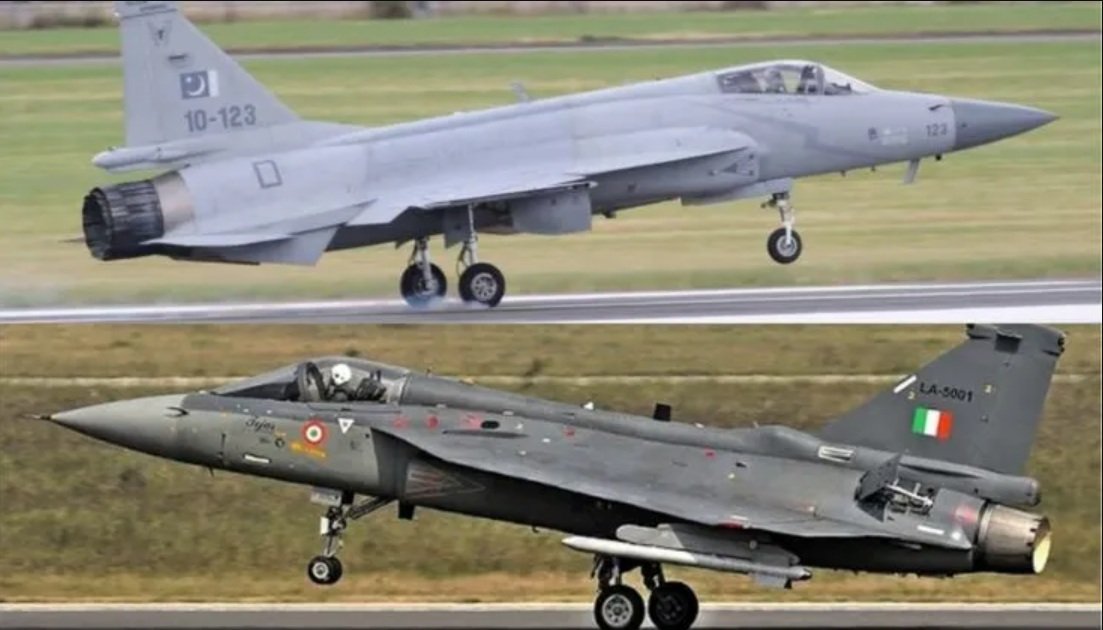
The comparison needs to be made carefully.
Tejas Mk1A and JF-17 variants are not identical aircraft, and their specifications, mission roles, sensors and weapons differ.
The important distinction is the industrial model.
Pakistan and China have created a production relationship in which Pakistan can manufacture substantial portions of the JF-17 while relying on Chinese technology and supply chains.
India has attempted to create a much greater degree of indigenous ownership.
India’s approach potentially offers greater long-term technological sovereignty.
But it also takes longer.
And war does not wait for an industrial base to mature.
That is the strategic dilemma.
Operation Sindoor Exposed the Importance of the Kill Chain
The 2025 India-Pakistan conflict also demonstrated that modern air combat cannot be reduced to “Rafale versus J-10” or “Tejas versus JF-17.”
Reuters’ post-conflict analysis highlighted the role of China’s PL-15 missile, Pakistan’s J-10 fleet and a broader Pakistani network involving sensors and data links.
That is the real lesson for India.
An aircraft’s effectiveness depends on the entire kill chain:
sensor → data link → command and control → targeting → missile → electronic warfare → battle-damage assessment.
A modern fighter that operates inside a superior network can outperform a theoretically more advanced aircraft operating with weaker situational awareness.
That means India’s Tejas problem is not solved simply by accelerating airframe production.
India must also accelerate:
- AESA radar;
- electronic warfare;
- airborne early-warning systems;
- secure data links;
- long-range air-to-air missiles;
- aerial refuelling;
- intelligence, surveillance and reconnaissance;
- pilot training; and
- integrated air-defence networks.
Then There Is the Rafale Problem
India’s Rafale fleet provides New Delhi with an important high-end capability.
But Rafale procurement has also exposed another aspect of India’s dependence on foreign technology.
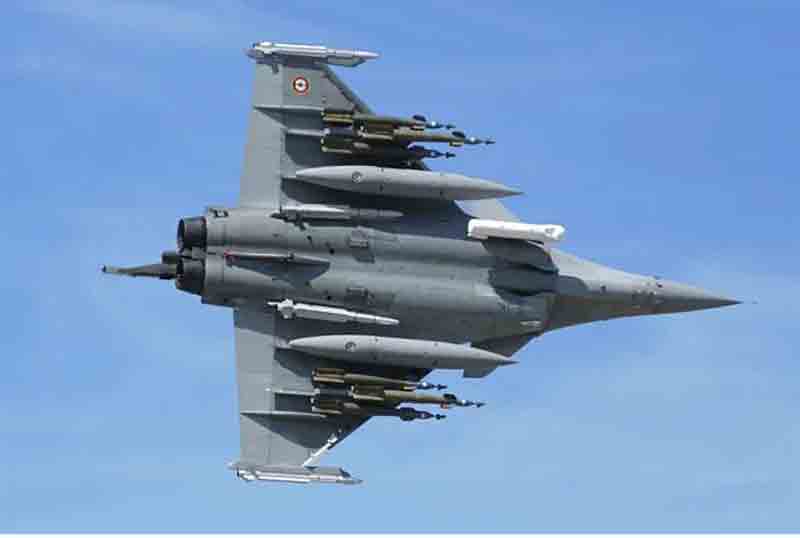
India is now seeking 114 additional Rafale fighters.
France recently submitted a technical and commercial proposal for the proposed programme, which would include significant local production.
The proposal is potentially worth around ₹3.25 lakh crore, according to Indian reporting.
But another issue has emerged in the negotiations:
software and technology access.
What Is the Rafale Source-Code Dispute?
Reports from Indian and defence media indicate that India has sought deeper access to Rafale software architecture and interface information to enable greater autonomy over future upgrades and integration of Indian weapons and systems.
France has reportedly resisted handing over full source-code access for sensitive systems.
The issue reportedly involves software associated with areas such as the Rafale’s radar and electronic-warfare architecture, as well as the interfaces needed to integrate Indian systems.
This needs to be described carefully.
There is no public evidence that France has abandoned the 114-aircraft proposal because of the dispute.
Indeed, France has submitted its technical and commercial proposal.
The issue is instead one of how much technological sovereignty India receives alongside the aircraft.
That distinction matters.
Why Source Code Matters to India
Modern combat aircraft are software-defined weapons systems.
Their capabilities increasingly depend on software controlling:
- radar;
- electronic warfare;
- sensor fusion;
- communications;
- weapons integration;
- mission computers;
- threat libraries; and
- data links.
If the original manufacturer retains exclusive control over critical software, the customer may require the manufacturer to approve or implement future modifications.
That can create a form of long-term dependency.
India therefore wants greater control over the ability to integrate its own weapons and electronic systems.
This is particularly important because India’s stated defence-industrial goal is not merely to assemble foreign weapons.
It wants to develop the ability to modify and upgrade them independently.
But France Has a Reason to Protect the Code
There is another side to the issue.
Source code is among the most sensitive intellectual property in a modern fighter.
It can reveal:
- algorithms;
- electronic-warfare techniques;
- radar-processing methods;
- system architecture;
- vulnerabilities;
- software logic; and
- information about how the aircraft responds to threats.
No major aerospace power is likely to hand over unrestricted access to the most sensitive parts of a combat aircraft’s software architecture without significant safeguards.
So the dispute is not simply about French unwillingness to cooperate.
It is a classic conflict between:
technology sovereignty for the customer
and
intellectual-property and security protection for the supplier.
The Rafale and Tejas Problems Are Actually Connected
At first glance, the two stories appear unrelated.
Tejas is India’s indigenous fighter.
Rafale is a French imported fighter.
But strategically they expose the same underlying problem:
India needs aircraft faster than its domestic industrial base can currently provide them, while foreign aircraft come with varying degrees of technological dependence.
That leaves India trapped between two imperfect options.
Option one: Indigenous development
Greater sovereignty, but slower development and production.
Option two: Foreign procurement
Faster access to mature capability, but continuing dependence on foreign technology, components, software and support.
India’s defence policy is trying to achieve both simultaneously.
That is extremely difficult.
The F404 Engine Is a Warning About “Atmanirbhar Bharat”
The Tejas engine problem has an important strategic lesson.
India can produce an indigenous fighter airframe but still remain dependent on a foreign engine.
This means technological sovereignty has to be measured at the system level, not at the level of the aircraft’s nationality.
If an aircraft cannot be produced because a foreign engine is unavailable, the production line is not fully sovereign.
India’s future AMCA programme therefore faces an enormous challenge in developing a domestic or jointly developed high-performance engine.
That may ultimately be more important than the airframe itself.
India Is Trying to Solve Too Many Gaps at Once
The IAF needs numbers now.
But India’s major indigenous programmes are aimed at the future.
The country is simultaneously pursuing:
Tejas Mk1A — immediate light-fighter replacement.
Tejas Mk2 — larger medium-weight fighter.
AMCA — fifth-generation stealth fighter.
Rafale MRFA — foreign fourth-generation-plus reinforcement.
Sixth-generation participation — potentially FCAS or GCAP.
This creates a difficult procurement pyramid.
The IAF needs aircraft today while the most advanced indigenous systems may not arrive until the 2030s.
That is why the Rafale programme remains attractive despite its cost and technology-transfer complications.
India’s Fighter Numbers Could Remain Under Pressure
The retirement of older aircraft is accelerating.
MiG-21 has already left the Indian inventory, while other legacy platforms are approaching retirement.
Reuters reported that the IAF’s fighter squadron strength had fallen to 29 in early 2026, against an authorised strength of 42.
That creates a potential numbers-versus-technology dilemma.
India can acquire a smaller number of extremely capable aircraft.
But an air force also needs sufficient aircraft to:
- defend multiple fronts;
- maintain reserve squadrons;
- conduct training;
- absorb maintenance downtime;
- sustain combat operations; and
- replace losses.
High-end technology cannot completely compensate for inadequate fleet size.
Why Kapoor Is Calling for FCAS or GCAP
Kapoor’s recommendation that India partner with a major international consortium for a sixth-generation programme reflects this dilemma.
Europe’s FCAS and the UK-Italy-Japan GCAP are pursuing next-generation combat-air systems involving not just a fighter aircraft but a network of crewed and uncrewed platforms, sensors, weapons and data systems.
The important point is that sixth-generation air combat is moving beyond the traditional concept of a fighter jet.
It is increasingly about a combat cloud.
The aircraft becomes one node in a much larger network.
For India, joining such a programme could provide access to technology and industrial expertise that would otherwise take decades to develop independently.
But it would also require India to accept a multinational development structure and compromise on some aspects of technological autonomy.
The Geography Makes India’s Problem More Difficult
India does not face a single-front air-power challenge.
It has to consider both:
China in the north and northeast
and
Pakistan in the west.
That geographic reality increases the importance of fleet size.
India cannot concentrate its entire fighter force in one theatre.
The IAF needs aircraft capable of operating across very different environments, supported by airbases, tankers, airborne early-warning aircraft and logistics infrastructure.
This is why a prolonged shortage of fighter squadrons is strategically more serious for India than the headline performance of any single aircraft.
China Is Winning the Production-Speed Contest
This may be the most important regional comparison.
China has demonstrated an ability to produce advanced combat aircraft at a scale that India has not yet matched.
Whether the J-20 fleet reaches 500, 700 or another figure by 2030 is less important than the underlying trend.
China has created a large industrial ecosystem capable of rapidly producing modern fighters.
India is still struggling to move Tejas from a delayed development programme into sustained high-volume production.
That gap in industrial capacity could become as important as the technological gap.
Pakistan Benefits From the Same Chinese Industrial Ecosystem
Pakistan’s advantage is different.
It does not need to reproduce China’s entire aerospace industry.
It can access Chinese aircraft, missiles, radars and other systems while maintaining local assembly and production capacity.
The result is a relatively rapid pathway from foreign design to operational capability.
The JF-17 programme demonstrates this model.
Pakistan has also expanded its J-10C fleet and developed increasingly integrated Chinese-origin weapons and sensors.
The 2025 conflict demonstrated that this combination should not be dismissed simply because the platforms are not Western-designed. Reuters reported that U.S. officials assessed Pakistani J-10s had successfully engaged Indian aircraft, including at least one Rafale.
Again, the lesson is not that Chinese aircraft are automatically superior.
The lesson is that network integration and weapons capability can change the outcome of a technologically sophisticated air battle.
India’s Rafale Answer Is Necessary but Expensive
The proposed 114 Rafales could significantly strengthen the IAF.
The French proposal reportedly includes local production of most of the aircraft under a government-to-government framework.
That could provide India with:
- more high-end fighters;
- additional AESA-equipped aircraft;
- greater stand-off strike capacity;
- more advanced electronic warfare;
- increased Meteor missile inventory; and
- greater operational flexibility.
But even if the deal is signed quickly, aircraft cannot be delivered overnight.
Production, infrastructure, training and support systems take years.
That means Rafale cannot completely solve India’s immediate fighter shortage.
Tejas Cannot Be Abandoned Either
Despite the criticism, there is a strong argument for continuing Tejas.
Abandoning the programme would sacrifice years of Indian aerospace development.
More importantly, India needs a domestic fighter-production ecosystem if it wants to reduce long-term dependence on foreign suppliers.
The problem is therefore not:
Tejas or foreign fighters.
The more realistic answer is:
Tejas + Rafale + AMCA + a stronger domestic industrial base.
India needs both numbers and technology.
The Real Tejas Question
The central question is not whether Tejas is a good aircraft.
It is whether India can produce it at the speed required by the IAF.
If HAL eventually reaches sustained high-rate production and resolves engine and supply-chain problems, Tejas could become an important component of India’s combat fleet.
If production remains slow, India will continue to face a fighter-number crisis even while spending heavily on next-generation programmes.
That is why Kapoor’s criticism has resonated.
He is effectively questioning the timeline, not simply the aircraft.
The 2030s Will Be a Different Air-War Environment
By the mid-2030s, air combat is likely to be shaped by:
- fifth-generation fighters;
- stealth;
- long-range air-to-air missiles;
- unmanned combat aircraft;
- loyal-wingman systems;
- artificial intelligence;
- electronic warfare;
- distributed sensors;
- satellite connectivity;
- autonomous targeting; and
- network-centric operations.
A 4.5-generation fighter can remain relevant in that environment.
But it will need to be part of a much larger network.
This is why Kapoor’s warning should not be interpreted as saying that Tejas will become “useless.”
The more accurate interpretation is:
India risks receiving yesterday’s solution too late to solve tomorrow’s problem.
What India Should Actually Do
The strategic answer is not to abandon indigenous development.
India needs to do the opposite—but with a different procurement philosophy.
First: Fix Tejas production
The Mk1A needs predictable engines, components and certification.
Second: Accelerate Mk2
But only if the programme can establish realistic milestones and production planning.
Third: Protect AMCA from endless delays
The fifth-generation programme is strategically more important than ever.
Fourth: Use Rafale to fill the near-term gap
Foreign procurement can provide capability while indigenous programmes mature.
Fifth: Build engine sovereignty
A fighter without a reliable engine supply chain is not a sovereign weapons system.
Sixth: Focus on the entire kill chain
Radar, missiles, electronic warfare, AEW&C, data links and ISR are as important as the fighter itself.
Seventh: Consider international sixth-generation partnerships
But India should negotiate for meaningful industrial participation and technology access rather than simply becoming an assembly partner.
What This Means for South Asia
India’s fighter shortage has consequences beyond India.
Pakistan will continue to modernise its air force.
China will continue expanding its fifth-generation fleet.
India will therefore face a more technologically dense air environment across both of its major security theatres.
That could produce an arms race in:
- long-range air-to-air missiles;
- electronic warfare;
- drones;
- airborne early-warning systems;
- stealth aircraft;
- counter-stealth sensors; and
- integrated air defence.
The result may be a region where networked air warfare becomes more important than simple aircraft counts.
The Rafale Source-Code Issue Has a Wider Lesson
The reported dispute with France also exposes a deeper problem in India’s defence modernisation.
Buying an advanced fighter does not automatically deliver technological independence.
A customer may own the aircraft but remain dependent on the manufacturer for:
- software updates;
- mission-system integration;
- certain repairs;
- upgrades;
- weapons integration; and
- access to proprietary technical information.
That does not make the Rafale a poor choice.
It means India must distinguish between owning a platform and owning the technology required to evolve that platform independently.
That distinction will become increasingly important as combat aircraft become more software-dependent.
India’s Real Air-Power Challenge Is Industrial
The Tejas debate ultimately leads to a larger conclusion.
India does not primarily suffer from a shortage of ambition.
It suffers from a shortage of speed and scale.
The country has demonstrated the ability to design fighters, develop missiles, build radars and produce complex aerospace components.
But turning those capabilities into mass production remains difficult.
China has demonstrated the opposite model: extremely rapid scaling of sophisticated aerospace programmes.
Pakistan has exploited China’s industrial ecosystem to build a relatively flexible fighter-production model.
India now has to close that production gap while simultaneously moving into stealth and sixth-generation technologies.
That is a formidable challenge.
The Bottom Line
The latest criticism from former IAF Vice Chief Air Marshal Nagesh Kapoor has opened a much larger debate about India’s fighter-modernisation strategy.
His warning that a 4.5-generation Tejas Mk2 may not remain sufficiently relevant if it enters service in large numbers only in the mid-2030s is not, by itself, proof that the aircraft will become obsolete.
But it highlights a genuine strategic problem.
India’s fighter fleet has fallen far below its authorised strength.
Tejas Mk1A deliveries have been delayed.
GE F404 engine supplies have complicated production.
Tejas Mk2 remains a future programme.
AMCA is still under development.
And India’s proposed 114-Rafale acquisition is itself confronting questions over cost, technology transfer and software access.
Meanwhile, China is rapidly expanding its fifth-generation fighter fleet, while Pakistan is operating an increasingly sophisticated Chinese-origin combat-air ecosystem.
The result is a difficult paradox for India:
New Delhi wants strategic autonomy, but it also needs combat aircraft quickly.
Indigenous development offers sovereignty but has repeatedly struggled with timelines.
Foreign procurement provides mature capability but creates dependence on external suppliers and technology owners.
India therefore cannot afford to choose one path exclusively.
It needs to produce Tejas faster, develop AMCA on schedule, acquire enough Rafales to bridge the immediate gap, strengthen its missile and electronic-warfare architecture, and secure far greater control over critical technologies such as engines and mission-system software.
The most important lesson from the Tejas controversy is therefore not that India’s indigenous fighter has failed.
It is that an aircraft programme is only as strong as the industrial system behind it.
For a country facing two major military theatres, the question is no longer simply whether India can design a 4.5-generation fighter.
The question is whether it can build enough modern fighters, fast enough, with enough technological independence to remain relevant when the regional air-power balance is being reshaped by China and Pakistan.
That is the real Tejas problem.