Wednesday, May 13, 2026
Home Blog Page 2

B-21 Raider Fast-Tracks Toward Deployment After Record Test Run

0
The B 21 Raider has shortened its testing timeline from 180 days down to 73 days, completed all test objectives with fewer than half the planned missions, and secured 11.8 billion dollars in funding.

The U.S. Air Force’s next-generation stealth bomber, the B-21 Raider, has completed a major developmental flight test campaign in just 73 days — less than half of the planned 180-day timeline, marking a significant milestone in modern military aviation.

The accelerated testing cycle signals that the aircraft entered flight testing with unusually mature software, systems integration, and mission architecture, potentially allowing the United States to field the bomber faster than expected.

Why the 73-Day Timeline Matters

Unlike typical flight test programs — which often face delays due to software issues and engineering rework — the B-21 campaign demonstrated:

  • High sortie efficiency
  • Minimal system instability
  • Reduced need for regression testing

Crucially, multiple test objectives were validated within single sorties, eliminating the need for repeated flights.

This suggests a high level of design maturity before first flight, a rare achievement in stealth aircraft development.

Digital Engineering: The Hidden Advantage

A major factor behind the rapid progress is the program’s heavy reliance on digital engineering and pre-flight testing.

  • Over 1,000 flight hours were conducted on surrogate aircraft before the B-21’s first flight
  • Software certification timelines were reduced by roughly 50%
  • More than $5 billion invested in digital infrastructure and model-based engineering

This approach allowed engineers to resolve complex integration challenges before physical flight testing began.

Integrated Testing Model Speeds Up Development

The B-21 program also introduced a new testing structure through its Combined Test Force (CTF).

Instead of separate testing phases, the CTF integrates:

  • U.S. Air Force test personnel
  • Northrop Grumman engineers
  • Mission system specialists
  • Logistics and maintenance teams

This allows simultaneous evaluation of:

  • Flight performance
  • Stealth characteristics
  • Mission systems
  • Sustainment procedures

The result is a compressed development cycle and faster transition to operational readiness.

Operational Edge: Range, Efficiency and Survivability

The B-21 Raider is designed for long-range, high-survivability missions in contested environments such as the Indo-Pacific.

Key Operational Advantages:

  • Lower fuel consumption than legacy bombers
  • Reduced reliance on vulnerable aerial refueling tankers
  • Ability to sustain high-tempo operations
  • Advanced stealth and electronic warfare integration

Recent successful aerial refueling tests with a KC-135 Stratotanker confirm the aircraft’s readiness for extended missions.

Strategic Role: Backbone of US Nuclear Deterrence

The B-21 is a central pillar of U.S. military modernization.

It will:

  • Replace aging B-1B and B-2 bombers
  • Form part of the nuclear triad modernization
  • Integrate advanced weapons systems, including:
    • AGM-181 Long Range Stand-Off missile
    • AGM-158 JASSM-ER
    • B61-12 and B61-13 nuclear bombs

The U.S. Air Force plans to procure at least 100 aircraft, with some studies suggesting up to 200 may be required for sustained operations.

Indo-Pacific Focus: Preparing for High-End Conflict

The B-21’s rapid progress is closely tied to evolving U.S. strategy in the Indo-Pacific.

In a potential conflict scenario involving China, the bomber’s capabilities are critical:

  • Penetrating advanced air defenses
  • Conducting deep-strike missions
  • Operating with reduced tanker support

Reduced fuel consumption and improved endurance are particularly important, as tanker aircraft are increasingly seen as vulnerable targets in contested environments.

Design Evolution: Beyond Traditional Stealth

Unlike earlier stealth bombers, the B-21 integrates multiple advanced features:

  • Software-managed emissions control
  • Sensor fusion and secure networking
  • Electronic warfare capabilities
  • Infrared signature reduction

This makes the aircraft not just stealthy — but digitally integrated into modern combat networks.

Conclusion: A New Benchmark in Stealth Bomber Development

The B-21 Raider’s accelerated test campaign marks a major milestone in military aviation.

The key takeaway:

The United States is fielding a next-generation bomber faster, more efficiently, and with fewer risks than previous programs.

As global competition intensifies, particularly in the Indo-Pacific, the B-21 is set to become a cornerstone of long-range strike capability and strategic deterrence.

Japan Fires Missiles Abroad for First Time Since WWII

0
Japan fires Type 88 anti-ship missile in Philippine exercise. A Type 88 launcher moves into position ahead of the maritime-strike drill south of Laoag in northwest Luzon in the Philippines.

Japan has taken a historic step in its post-World War II military posture by conducting its first overseas missile firing since 1945, signaling a fundamental shift in Indo-Pacific security dynamics.

During Balikatan 2026, the Japan Ground Self-Defense Force (JGSDF) launched Type 88 anti-ship missiles from northern Philippines into the Luzon Strait, a key chokepoint between the South China Sea and the Pacific Ocean.

The missiles struck and sank the decommissioned Philippine Navy vessel BRP Quezon, demonstrating precision strike capability in a highly strategic battlespace.

More Than a Drill: A New Warfighting Concept Emerges

The launch was not just a tactical exercise — it revealed the emergence of a distributed, multinational coastal defense network.

The exercise integrated:

  • Japanese Type 88 missile batteries
  • U.S. HIMARS rocket systems
  • U.S. Marine Corps NMESIS anti-ship platforms
  • Philippine coastal missile systems

Together, these systems form a layered anti-access/area-denial (A2/AD) architecture designed to restrict hostile naval movement through critical maritime corridors.

Why the Luzon Strait Matters

The Luzon Strait is one of the most important maritime chokepoints in the world.

  • It connects the South China Sea to the western Pacific
  • It lies close to Taiwan — a major geopolitical flashpoint
  • It serves as a key route for Chinese naval breakout operations

Control over this corridor is essential in any future Indo-Pacific conflict.

By deploying missiles in northern Luzon, allied forces demonstrated the ability to:

➡️ Monitor and control naval movement
➡️ Deny access to adversary fleets
➡️ Project power deep into contested waters

Type 88 Missile: Technical Overview

The Japanese Type 88 (SSM-1) is a land-based anti-ship cruise missile designed for coastal defense.

Key Capabilities:

  • Range: ~150–200 km
  • Warhead: ~225 kg high explosive
  • Guidance: Inertial + terminal active radar homing
  • Flight Profile: Sea-skimming for reduced detection
  • Launch Platform: Mobile 8×8 truck-based system

The missile uses:

  • A solid booster for launch
  • A turbojet engine for sustained flight

This combination allows it to strike targets with high accuracy and reduced interception windows.

From Homeland Defense to Expeditionary Warfare

Historically, Japan’s missile doctrine focused on defending its home islands.

Balikatan 2026 marks a clear shift:

➡️ From territorial defense
➡️ To forward-deployed expeditionary operations

This evolution aligns closely with the U.S. Marine Corps’ Expeditionary Advanced Base Operations (EABO) concept, which emphasizes:

  • Distributed forces
  • Mobile missile systems
  • Rapid deployment across islands

Japan is now actively integrating into this doctrine, signaling deeper operational coordination with allies.

Legal and Strategic Foundations of the Shift

Japan’s deployment to the Philippines was enabled by a Reciprocal Access Agreement (RAA) signed in 2025.

This agreement allows:

  • Easier troop deployment
  • Shared logistics and basing
  • Expanded joint operations

Under Prime Minister Sanae Takaichi, Japan has accelerated:

  • Defense spending increases
  • Long-range strike capabilities
  • Relaxation of arms export restrictions

China’s Reaction: Rising Strategic Concern

China has strongly criticized the missile launch, viewing it as part of a broader effort to contain its naval power.

Beijing’s concerns focus on:

  • Growing missile networks along the First Island Chain
  • Increasing US–Japan–Philippines coordination
  • Potential restrictions on naval access to the Pacific

The exercise highlights a key strategic reality:

The Indo-Pacific is moving toward layered deterrence through distributed missile networks

Toward a Multinational Coastal Missile Network

Balikatan 2026 demonstrated the emergence of a coordinated missile network across allied nations.

Key components include:

  • Japanese coastal missile systems
  • Philippine BrahMos batteries
  • U.S. HIMARS and NMESIS platforms
  • Distributed reconnaissance and targeting systems

This network is designed to:

➡️ Complicate adversary naval operations
➡️ Increase survivability through dispersion
➡️ Enable rapid, coordinated strikes

Conclusion: A Strategic Turning Point in the Indo-Pacific

Japan’s missile launch from the Philippines represents more than a symbolic milestone — it marks a fundamental shift in regional military strategy.

The key takeaway:

👉 Japan is no longer preparing only to defend — it is preparing to fight forward alongside allies.

As distributed missile networks expand across the Indo-Pacific, the region is entering a new era of:

  • Multi-domain deterrence
  • Rapid-response warfare
  • Increased great-power competition

The implications will shape the future of security across the First Island Chain — and beyond.

Pakistan’s J-35 Deal Could Redefine Airpower in South Asia

2
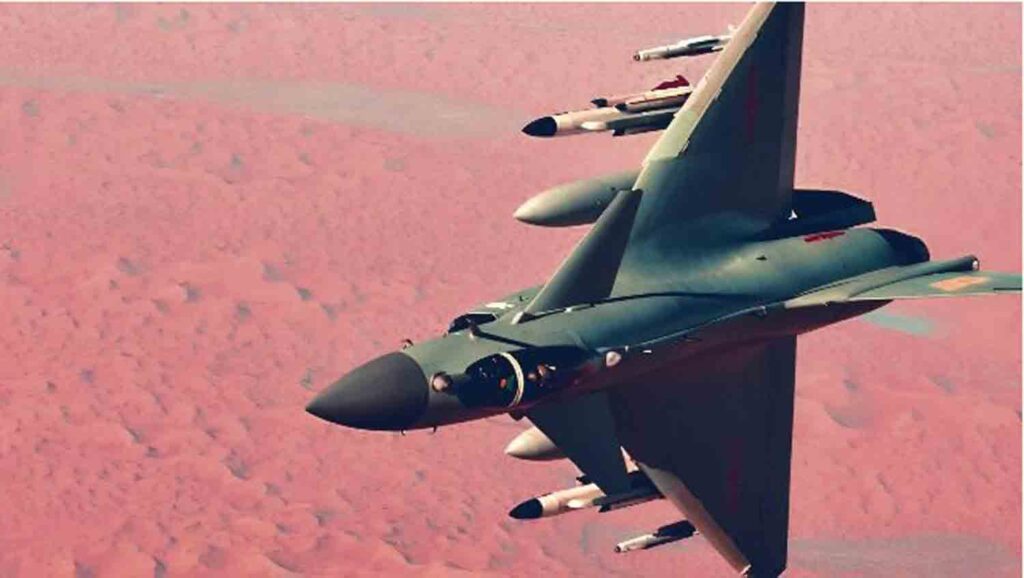
A J-35 stealth fighter jet bearing the number "0001" taxis out of a hangar in a CCTV News program. Pakistan is likely the 1st importer of this varient.

A year after a major India–Pakistan air confrontation, the Pakistan Air Force (PAF) has unveiled an ambitious modernization roadmap that could significantly reshape South Asia’s airpower balance.

At the center of this shift is Pakistan’s confirmation of an initial agreement to acquire the Chinese J-35 fifth-generation stealth fighter, alongside additional J-10C fighters and major upgrades to the JF-17 fleet.

The announcement marks Pakistan’s most decisive step yet toward stealth-enabled, next-generation air warfare.

What Is the J-35 and Why It Matters

J-35AE fighter jet

The J-35 (also associated with the FC-31 program) is China’s emerging fifth-generation stealth fighter designed for:

  • Low radar observability
  • Advanced sensor fusion
  • Network-centric operations
  • Multi-role strike capability

If inducted, the J-35 would give Pakistan:

➡️ Its first operational stealth platform
➡️ A qualitative leap over 4.5-generation fighters
➡️ Enhanced survivability in contested airspace

Analysts widely assess that even a limited number of J-35s could significantly shift operational dynamics in the region.

PAF Modernization: Beyond Just One Aircraft

The J-35 acquisition is part of a broader modernization effort that includes:

  • Additional Chengdu J-10C multirole fighters
  • Upgraded JF-17 Thunder variants
  • Development of long-range precision weapons (LRPW)
  • Exploration of hypersonic technologies

This layered approach reflects a strategy focused on:

  • Multi-domain integration
  • Network-centric warfare
  • Long-range strike capability

Rather than relying on a single platform, Pakistan is building a comprehensive air combat ecosystem.

Missile Integration: Extending Reach and Lethality

The modernization push is closely tied to Pakistan’s expanding missile capabilities:

  • Fatah-4 cruise missile (~750 km range)
  • Fatah-2 upgraded system (~400 km range)
  • Babur-3 submarine-launched cruise missile (120 km)

These systems enable:

  • Deep strike capability
  • Maritime deterrence
  • Integration with future air platforms

Together, they form a multi-layered strike architecture.

India vs Pakistan: The Airpower Equation Shifts

India currently holds a numerical advantage with its fleet of:

  • Rafale fighters
  • Su-30MKI aircraft
  • Other 4.5-generation platforms

However, India has yet to operationalize a fifth-generation fighter.

What Changes if Pakistan Gets J-35:

  • India’s numerical advantage becomes less decisive
  • Air defence becomes more complex due to stealth threats
  • Detection requires greater reliance on airborne systems

Even a few squadrons of stealth fighters could:

  • Force India to commit more aircraft for defensive roles
  • Reduce offensive flexibility
  • Increase operational costs

China Factor: Deepening Strategic Integration

The J-35 deal highlights the deepening China–Pakistan defence partnership.

Beijing has reportedly offered:

  • J-35 stealth fighters
  • KJ-500 airborne early warning aircraft
  • HQ-19 missile defence systems

This reflects:

  • Technology transfer and interoperability
  • Strategic alignment against regional threats
  • Expansion of joint defence capabilities

Regional Implications: Toward an Arms Race?

Rosoboronexport presents Su-57E at DSA 2026

The introduction of stealth fighters into South Asia could trigger:

  • Accelerated Indian investment in AMCA stealth fighter program
  • Possible procurement of Su-57 or other advanced platforms
  • Increased focus on air defence and electronic warfare systems

Analysts warn this could lead to a more intense regional arms competition, particularly as both sides pursue technological superiority.

Balancing Act: Risks and Constraints

Despite its advantages, Pakistan’s strategy carries risks:

  • Dependence on Chinese technology
  • Potential geopolitical pressure from the U.S.
  • Limited production and sustainment capacity

At the same time, Pakistan continues to:

  • Upgrade its F-16 fleet (extended to 2040)
  • Maintain a mixed Western–Chinese inventory

This reflects a balancing strategy rather than full alignment.

Conclusion: A Turning Point in South Asian Airpower

The PAF’s move toward acquiring the J-35 is more than a procurement decision — it is a strategic shift toward fifth-generation warfare.

The key takeaway:

Airpower in South Asia is moving from quantity to quality

With stealth, network integration, and precision strike capabilities becoming central, the region is entering a new phase of military competition.

While the balance of power is not overturned overnight, one thing is clear:

The introduction of stealth fighters will redefine how future conflicts in South Asia are fought — and deterred.

FATAH-3 vs BrahMos: Pakistan Challenges India’s Missile Edge

0
Pakistan unveiled the FATAH-3 supersonic cruise missile

Pakistan’s public unveiling of the FATAH-3 supersonic cruise missile marks a significant turning point in South Asia’s evolving military balance, introducing a new layer of high-speed precision strike capability into an already tense regional environment.

Displayed by the Army Rocket Force Command (ARFC), the missile’s reveal was not just a technical announcement — it was a strategic signal aimed at India, regional observers, and global defence stakeholders.

The move reflects Islamabad’s transition toward survivable, high-speed conventional deterrence, designed to operate below the nuclear threshold.

What Is FATAH-3? Key Technical Capabilities

The FATAH-3 is widely assessed as a localized derivative of China’s HD-1 supersonic cruise missile, optimized for rapid-response precision strikes.

Core Specifications (Estimated):

  • Speed: Mach 2.5 to Mach 4
  • Range: ~250–300 km class
  • Warhead: ~250 kg
  • Weight: 1.2–1.5 tonnes
  • Flight Profile: Terrain-hugging / sea-skimming
  • Propulsion: Solid booster + ramjet engine

The missile’s high speed and low-altitude trajectory significantly compress enemy reaction time, making interception more difficult for conventional air defence systems.

Doctrinal Shift: From Rockets to Precision Strike Ecosystem

The introduction of FATAH-3 represents a clear break from Pakistan’s earlier focus on guided rocket artillery.

Previously:

  • FATAH-I: 140–150 km guided rockets
  • FATAH-II: 290–400 km extended-range system
  • FATAH-IV: ~750 km subsonic cruise missile

Now, FATAH-3 introduces:

➡️ Supersonic speed
➡️ Rapid-response strike capability
➡️ High survivability via mobility

This signals Pakistan’s evolution toward a layered precision-strike ecosystem, integrating multiple missile types across ranges and roles.

China Factor: HD-1 Lineage and Strategic Integration

Chinese HD-1 Anti-ship/Land-attack Cruise missile

The FATAH-3 is closely linked to China’s HD-1 missile family, developed for:

  • Land-attack missions
  • Anti-ship operations
  • Multi-domain deployment

This connection highlights:

  • Deepening China–Pakistan defence cooperation
  • Technology transfer and interoperability
  • Expansion into air-launched and naval variants in the future

It also reinforces China’s role in shaping Pakistan’s next-generation strike capabilities.

Challenging India’s BrahMos Dominance

Brahmos missile

For nearly two decades, India’s BrahMos supersonic cruise missile — derived from Russia’s P-800 Oniks — has provided a clear advantage in high-speed strike capability.

Pakistan lacked an equivalent system — until now.

What Changes with FATAH-3:

  • Reduces India’s qualitative advantage
  • Complicates Indian air defence planning
  • Forces recalibration of interception timelines

Supersonic missiles flying at low altitude:

  • Reduce radar detection windows
  • Limit engagement time
  • Increase الدفاع complexity

The result is a narrowing of the strike capability gap in South Asia.
Survivability and Mobility: A Key Advantage

One of FATAH-3’s most important features is its road-mobile deployment via transporter-erector-launchers (TELs).
This enables:

  • Rapid repositioning
  • Concealment across operational depth
  • Survivability against preemptive strikes

In modern warfare, survivability is as critical as firepower — and FATAH-3 is designed with that principle at its core.

Strategic Role: Deterrence Below Nuclear Threshold

Pakistan’s broader objective appears to be building a flexible conventional deterrence framework.

The missile supports:

  • Precision strikes on high-value targets
  • Escalation management below nuclear thresholds
  • Countering India’s “Cold Start” doctrine

By enabling rapid, accurate retaliation, Pakistan increases ambiguity and risk for adversary planners.

Regional Implications: A More Complex Battlefield

The emergence of FATAH-3 will likely trigger regional responses:

  • India may expand BrahMos deployments
  • Increased focus on missile defence systems (S-400, indigenous)
  • Acceleration of hypersonic weapons programs

At sea, the missile could also:

  • Threaten naval assets in the Arabian Sea
  • Expand Pakistan’s maritime strike capability

Limitations and Open Questions

Despite its impact, FATAH-3 does not fundamentally alter the strategic balance.

Key limitations include:

  • Limited range compared to strategic systems
  • Continued reliance on Chinese technology
  • Questions over large-scale production capability

India still retains:

  • Larger defence industrial base
  • Greater missile inventory
  • Broader deployment flexibility

Conclusion: End of Uncontested Supersonic Dominance

The unveiling of FATAH-3 marks a critical moment in South Asian military evolution.

It does not overturn the balance of power — but it does change the equation.

👉 The key takeaway:

The era of uncontested Indian dominance in supersonic cruise missile warfare is ending.

South Asia is now entering a phase of:

  • Mutual vulnerability
  • Faster escalation cycles
  • Higher operational complexity

And in this new environment, speed, survivability, and precision — not numbers — will define deterrence.

US Shifts Iran Strategy from Nuclear Threat to Global Control

0
U.S. Secretary of State Marco Rubio speaks about the Iran war in the White House Press Briefing Room in Washington, DC.

A 58-minute White House briefing by Marco Rubio has provided the clearest window yet into how the Trump administration is redefining its strategy toward Iran.

While some analysts focused on President Donald Trump’s later decision to pause “Project Freedom,” the briefing itself revealed something far more significant:

The conflict is no longer being framed as a limited crisis — but as part of a broader, long-term strategic struggle.

From Nuclear Threat to Global Order

One of the most important shifts in Rubio’s remarks was the reframing of the conflict’s core objective.

Instead of focusing primarily on stopping Iran’s nuclear program, Rubio emphasized:

  • Defending global economic stability
  • Preventing Iran from controlling maritime routes
  • Maintaining freedom of navigation

At the center of this shift is the Strait of Hormuz, a critical artery for global trade.

Rubio warned:

“We cannot live in a world where a country can decide it owns an international shipping lane.”

This marks a transition from a nuclear-focused crisis → to a systemic geopolitical confrontation.

Redefining Escalation as “Defense”

Another key takeaway is how the administration is redefining escalation.

Rubio repeatedly described current and potential actions as “defensive”, including:

  • Naval blockades
  • Sinking Iranian vessels
  • Escorting commercial ships
  • Sanctions and economic pressure
  • Possible retaliatory strikes

This rhetorical shift is significant.

When escalation is framed as defense, the threshold for further action becomes lower, making continued expansion more politically and strategically acceptable.

Preventive War Logic Returns

Perhaps the most revealing moment came when Rubio outlined the administration’s deepest concern about Iran acquiring nuclear weapons.

He stated that a nuclear-armed Iran would effectively limit U.S. options, implying that action must be taken before that point is reached.

This reflects classic preventive war logic:

➡️ Act now to prevent a future threat
➡️ Accept escalation as necessary
➡️ Justify preemptive measures

Historically, this doctrine has been associated with some of the most consequential and risky conflicts in modern history.

Economic Warfare Takes Center Stage

Rubio also made clear that economic pressure is now a central pillar of U.S. strategy.

  • Sanctions are being used as a primary tool of coercion
  • Maritime restrictions are shaping global trade flows
  • Energy markets are directly affected

This indicates a shift toward full-spectrum economic warfare, where financial and trade systems become part of the battlefield.

Legal Signals of a Longer Conflict

Equally important was Rubio’s stance on the War Powers Act, which he described as “100% unconstitutional.”

This is not just a legal argument — it is a strategic signal.

It suggests the administration is:

  • Preparing for sustained military engagement
  • Reducing institutional constraints on escalation
  • Building a long-term operational framework

A Government Preparing for Prolonged Conflict

Taken together, the briefing reveals a clear pattern:

  • Expanding objectives
  • Lower barriers to escalation
  • Integration of economic warfare
  • Legal positioning for sustained operations

This is not the language of a short, limited campaign.

It is the language of a government preparing for a prolonged geopolitical confrontation.

Conclusion: Beyond Crisis — Toward a Long War

While tactical pauses — such as halting naval missions — may create the appearance of de-escalation, the broader strategy suggests otherwise.

The United States is no longer approaching Iran as a short-term crisis to manage.

Instead, it is framing the conflict as:

  • A struggle over global order
  • A contest over economic control
  • A long-term strategic challenge

The key takeaway:

This is no longer just about Iran — it is about the rules of the global system itself.

Xi’s Military Purge Deepens as Two Ex-Defense Chiefs Jailed for Life

0
Xi’s Military Purge Deepens as Two Ex-Defense Chiefs Li Shangfu and Wei Fenghe Jailed for Life

In a dramatic escalation of its sweeping military crackdown, China has sentenced two former defense ministers — Wei Fenghe and Li Shangfu — to death with a two-year reprieve for corruption, a punishment that will be commuted to life imprisonment without parole.

The ruling, delivered by a military court, marks one of the most high-profile actions in President Xi Jinping’s ongoing purge of the People’s Liberation Army (PLA).

From Power to Prison: Fall of China’s Defence Leadership

Wei Fenghe, who served as China’s defense minister from 2018 to 2023, and his successor Li Shangfu — who held the post for less than a year — were both convicted of bribery following investigations launched in 2023.

Their rapid downfall highlights:

  • Deep-rooted corruption within senior military ranks
  • The scale of Xi’s anti-graft campaign
  • The vulnerability of even top-level officials

The verdict signals that no rank within the PLA is immune from scrutiny.

Xi’s Expanding Crackdown Across the PLA

Xi Jinping’s campaign has extended far beyond individual cases.

  • More than 100 officers have reportedly been purged since 2022
  • At least 36 generals and lieutenant generals officially removed
  • Dozens more are missing or under investigation

The purge has also reached the very top of the military hierarchy, including the removal of senior leadership figures overseeing operational command.

A Military Under Transformation — and Pressure

The crackdown is part of Xi’s broader strategy to:

  • Eliminate corruption within the PLA
  • Reinforce political loyalty to the Communist Party
  • Accelerate military modernization

State media has framed the purge as essential to:

➡️ “Remove toxic influences”
➡️ Strengthen combat capability
➡️ Ensure absolute loyalty to Xi’s leadership

Concerns Over Military Readiness

However, analysts warn that the scale of the purge may come with risks.

According to assessments:

  • Over 50% of top PLA leadership positions have been affected
  • Frequent leadership changes may disrupt command continuity
  • Operational readiness could be impacted in the short term

The removal of experienced commanders raises questions about the PLA’s ability to conduct complex, high-intensity operations.

Power Consolidation or Structural Reform?

The purge reflects a dual objective:

1. Anti-Corruption Drive

Xi has long emphasized the need to clean up corruption within the military, which he views as a threat to effectiveness and legitimacy.

2. Political Control

At the same time, the campaign reinforces Xi’s personal control over the armed forces — a critical pillar of power in China’s political system.

This dual nature makes the purge both a reform initiative and a consolidation of authority.

Strategic Implications for China’s Military Future

The ongoing restructuring of the PLA comes at a time of increasing geopolitical competition, particularly in:

  • The South China Sea
  • Taiwan Strait
  • Indo-Pacific region

While the purge may strengthen long-term discipline and loyalty, it could also:

  • Slow decision-making processes
  • Create internal uncertainty
  • Impact operational confidence

Conclusion: A Stronger Military — or a Risky Transition?

China’s sentencing of two former defense ministers underscores the intensity of Xi Jinping’s campaign to reshape the PLA.

The key question now is whether this sweeping purge will:

✔️ Create a more disciplined and capable military
❌ Or weaken readiness during a critical period of global competition

As China pushes forward with modernization, the balance between control and capability will define the future of its armed forces.

Inside the Air War: New Details from Pakistan Air Force Chief

0
Pakistan air force chief Zaheer Ahmad Babar Sidhu revealed the details of air war against India

In a significant and rare disclosure, Pakistan Air Force Chief Air Chief Marshal Zaheer Ahmed Babar has revealed previously undisclosed technical details of the high-stakes air war between India and Pakistan fought exactly one year ago.

The revelations provide new insight into how modern air warfare unfolded during the conflict — offering a deeper understanding of tactics, technology, and decision-making on both sides.

A Turning Point in South Asian Air Warfare

The air battle — widely considered one of the most complex engagements in recent regional history — marked a shift from traditional dogfighting to network-centric, beyond-visual-range (BVR) combat.

According to the newly revealed details:

  • Engagements were coordinated across multiple domains
  • Real-time data sharing played a decisive role
  • Airborne command systems enabled rapid response

The battle demonstrated that modern air superiority depends less on individual aircraft and more on integrated combat systems.

Inside the Battle: Technology, Coordination and Speed

JF-17 Thunder im this picture, Pakistan and Qatar nearing a defence pact

The PAF Chief highlighted several key operational factors that shaped the outcome:

1. Network-Centric Warfare

Pakistan leveraged integrated systems linking:

  • Fighter aircraft
  • Airborne Early Warning & Control (AEW&C) platforms
  • Ground-based radar systems

This allowed for real-time battlespace awareness and faster decision-making.

2. Beyond-Visual-Range (BVR) Dominance

The battle was largely fought beyond visual range, where:

  • Radar tracking replaced visual contact
  • Missiles were guided using advanced targeting systems
  • Engagement decisions were made within seconds

This marked a clear departure from traditional close-range dogfights.

3. Multi-Layered Air Defence

The PAF reportedly employed a layered defence strategy:

  • Early detection through airborne sensors
  • Rapid interception by fighter jets
  • Electronic warfare measures to disrupt adversary systems

This created a denial environment for opposing aircraft.

Command and Control: The Decisive Edge

A major takeaway from the briefing was the importance of airborne command platforms.

Systems such as AEW&C aircraft acted as:

  • Central coordination hubs
  • Real-time intelligence providers
  • Decision-making nodes in combat

This allowed Pakistan to compress the sensor-to-shooter cycle, gaining a critical edge in timing and coordination.

Lessons for Modern Air Warfare

The newly revealed details reinforce several broader trends:

➡️ Air combat is now data-driven, not platform-driven
➡️ Speed of information is as important as firepower
➡️ Integration across systems defines battlefield success

These lessons extend beyond South Asia, reflecting global shifts in military doctrine.

Strategic Implications for India–Pakistan Balance

The disclosure also has implications for regional security dynamics:

  • Highlights Pakistan’s focus on technology-driven force multiplication
  • Underscores the importance of airborne surveillance and coordination systems
  • Signals an evolving competition in electronic and network warfare capabilities

As both countries continue to modernize their air forces, such insights may shape future military planning.

Conclusion: A Glimpse Into the Future of Air Combat

The PAF Chief’s revelations offer a rare and valuable window into one of the most closely watched air battles in recent history.

The key takeaway is clear:

Modern air warfare is no longer about who has more aircraft — it is about who controls the information, speed, and coordination of the battlefield.

Can China Deliver Iran? Why Analysts Say No

0
Iranian President Masoud Peshkeshian shakes hands with Chinese President Xi Jinping during a meeting in Beijing.

China has emerged as a central player in the ongoing U.S.-Iran crisis, as diplomatic efforts accelerate ahead of President Donald Trump’s upcoming visit to Beijing.

The recent visit of Iranian Foreign Minister Abbas Araghchi to China — just days before Trump’s expected arrival — has sharpened a critical question:

Can Beijing use its influence to pressure Iran into a deal?

With a fragile ceasefire in place and tensions in the Strait of Hormuz continuing to disrupt global energy markets, Washington is increasingly looking to China as a potential diplomatic lever.

Iran’s Foreign Minister Abbas Araghchi (L) shakes hand with his Chinese counterpart, Wang Yi, in Beijing, China, May 5, 2026.

Why the U.S. Wants China to Act

From Washington’s perspective, China appears uniquely positioned to influence Tehran.

  • It buys the majority of Iran’s oil exports
  • It provides a financial lifeline under sanctions
  • It maintains strong diplomatic channels with Iranian leadership

U.S. officials have openly urged Beijing to step in, with calls for China to pressure Iran to reopen Hormuz and move toward a ceasefire.

The upcoming Trump–Xi meeting is now expected to focus heavily on the Iran crisis — elevating China’s role from observer to potential broker.

The Reality: China’s Leverage Has Limits

Despite these expectations, analysts remain skeptical that China will — or even can — push Iran into making major concessions.

The assumption that economic leverage equals political control does not hold up under scrutiny.

1. Iran’s Strategic Independence

Iran has consistently resisted external pressure, even from close partners.

  • Its nuclear and regional policies are seen as existential
  • It has endured decades of sanctions without capitulating
  • It prioritizes sovereignty over economic dependence

This means Beijing’s influence, while real, is not decisive.

2. China Needs Iran Too

The relationship between China and Iran is deeply mutual.

  • China depends on Iranian oil, especially amid global supply uncertainty
  • Tehran provides discounted energy critical to China’s economy
  • Cutting or pressuring Iran risks economic and strategic costs

In effect: China is not just a power over Iran — it is a partner with Iran

3. Strategic Rivalry with the U.S.

China is unlikely to act in ways that directly serve U.S. geopolitical goals without clear incentives.

  • Beijing has resisted U.S. sanctions on Chinese firms buying Iranian oil
  • It frames the conflict as a result of U.S. policy decisions
  • It seeks to position itself as a neutral mediator, not an enforcer

For China, forcing Iran into compliance would mean taking Washington’s side in a strategic rivalry — a move it has little interest in making.

China’s Real Strategy: Balance, Not Pressure

China’s approach is best understood as careful strategic balancing:

  • Maintain economic ties with Iran
  • Engage diplomatically with the U.S.
  • Advocate for ceasefire and stability

Chinese Foreign Minister Wang Yi has emphasized Beijing’s willingness to support peace talks — but without coercion.

This reflects a broader goal: positioning China as a global diplomatic power without overcommitting to either side.

Vessels in the Strait of Hormuz near Bandar Abbas, Iran

Economic Stakes: Why Stability Matters to Beijing

While China may benefit strategically from U.S. distraction, prolonged conflict carries real risks:

  • Rising energy costs
  • Pressure on strategic oil reserves
  • Threats to global trade and exports

As the world’s second-largest economy, China has a strong interest in restoring stability — but on its own terms.

Can China Deliver a Deal?

China can play an important role in the diplomatic process — but expectations should remain realistic.

Beijing can:

  • Facilitate dialogue
  • Encourage de-escalation
  • Provide economic incentives

❌ But it cannot:

  • Force Iran into concessions
  • Guarantee a breakthrough
  • Fully align with U.S. strategy

Conclusion: A Power Broker — But Not a Decisive One

China’s role in the Iran crisis reflects a shifting global order, where influence is more complex and less absolute.

While Beijing holds significant economic leverage, it lacks both the intent and ability to compel Iran into submission.

The bottom line:

China can help manage the crisis — but it cannot resolve it alone.

The outcome will depend not just on Beijing’s diplomacy, but on whether Washington and Tehran are willing to compromise — something no external power can impose.

How Erieye Gave Pakistan an Edge in Air Warfare

0
Saab 2000 Erieye AEW&C aircraft from the 3rd Squadron of the Pakistan Air Force

The evolving military competition between India and Pakistan is increasingly defined not by the number of fighter jets, but by network-centric warfare capabilities, where airborne command and control systems determine battlefield outcomes.

During Operation Bunyan-um-Marsoos (May 2025), the Pakistan Air Force (PAF) demonstrated that modern air superiority depends on integrated sensor networks and real-time battlespace awareness, rather than purely kinetic platforms.

At the center of this transformation was the Saab 2000 Erieye Airborne Early Warning and Control (AEW&C) aircraft.

Erieye: The “Eyes and Brain” of Pakistan Air Force

While platforms like the JF-17 and J-10C executed visible combat operations, the Erieye functioned as the central command node, enabling:

  • Real-time situational awareness
  • Beyond-visual-range (BVR) engagement coordination
  • Integrated air defence management
  • Multi-domain battlefield synchronisation

Rather than acting as a simple surveillance platform, Erieye evolved into a full airborne command architecture, linking fighters, missiles, drones, and electronic warfare systems into a unified network.

Network-Centric Warfare: Pakistan’s Strategic Edge

Pakistan’s doctrine emphasizes force multiplication over numerical superiority.

Facing a larger adversary, the PAF has invested in:

  • Sensor fusion
  • Secure tactical data links
  • Integrated command-and-control systems

This allows Pakistan to:

➡️ Compress sensor-to-shooter timelines
➡️ Reduce decision-making delays
➡️ Enhance coordination in contested airspace

The result is a cohesive combat system, where individual platforms operate as interconnected nodes rather than isolated units.

Technical Edge: What Makes Erieye So Effective

Schematic representation of the systems installed on the Saab 2000 Erieye aircraft

The Saab 2000 Erieye combines advanced radar and mission systems:

Key Capabilities:

  • S-band AESA radar with ~300° coverage
  • Detection range up to 350 km for fighter-sized targets
  • Ability to track hundreds of targets simultaneously
  • Electronic support measures (ESM) for threat detection
  • Secure data links for real-time coordination

Powered by Rolls-Royce AE 2100 engines, the aircraft can:

  • Cruise above 650 km/h
  • Remain airborne for 7+ hours

This allows sustained surveillance and continuous battlespace management.

Battlefield Role in Bunyan-um-Marsoos

During the operation, Erieye reportedly enabled:

  • Monitoring of Indian air activity in real time
  • Early detection of missile launches
  • Rapid fighter vectoring for interception
  • Coordination of multi-platform strike packages

This capability significantly reduced reaction times, especially against:

  • Low-altitude threats
  • Cruise missiles
  • Electronic warfare environments

The aircraft also acted as an airborne command post, deconflicting friendly assets and ensuring coordinated operations in congested airspace.

From Swift Retort to Bunyan-um-Marsoos: Doctrinal Evolution

Pakistan’s use of AEW&C platforms is not new.

  • Operation Swift Retort (2019) demonstrated early integration
  • Bunyan-um-Marsoos (2025) showed full doctrinal maturity

Over time, Erieye has transitioned from:

➡️ Surveillance asset
➡️ To central command system

This reflects a broader shift toward information dominance in modern warfare.

Survivability and Strategic Importance

High-value assets like AEW&C aircraft are prime targets in modern warfare.

During the conflict:

  • One Erieye aircraft was damaged at PAF Base Bholari
  • It was rapidly repaired and returned to service

This highlighted:

  • The vulnerability of command platforms
  • Pakistan’s prioritization of operational continuity
  • The strategic importance of AEW&C survivability

Why AEW&C Defines Modern Air Superiority

Modern air warfare is shifting toward:

  • Information dominance over platform dominance
  • Network integration over standalone capability
  • Speed of decision-making over sheer firepower

AEW&C platforms like Erieye enable:

  • Faster targeting cycles
  • Better threat identification
  • Reduced risk of fratricide
  • Enhanced survivability

Strategic Impact: Balancing Regional Airpower

Pakistan’s Erieye fleet provides a critical strategic equalizer in South Asia.

Despite India’s numerical advantage, Pakistan can:

  • Maintain persistent airspace awareness
  • Coordinate multi-domain operations
  • Sustain deterrence credibility

This highlights a key trend:

Smaller forces can offset larger adversaries through technology and integration.

Conclusion: The Invisible Backbone of Modern Warfare

The Saab 2000 Erieye has emerged as one of the most decisive yet underappreciated assets in Pakistan’s military arsenal.

While fighter jets dominate headlines, it is airborne command systems that increasingly determine victory in modern conflicts.

Operation Bunyan-um-Marsoos demonstrated a clear reality:

Air superiority today is not just about aircraft — it’s about who controls the information battlespace.

US–Iran Deal Still Distant: 14-Point Plan Faces Deadlock as War Strategy Comes Under Question

0
The IRGC has released new maps outlining the zones it claims to control in the Strait of Hormuz

Despite growing speculation, a breakthrough in negotiations between the United States and Iran remains uncertain, with both sides still divided over key issues in a proposed 14-point framework.

The latest version of the plan has been revised by Tehran and sent back to Washington, while U.S. officials are expected to respond with further modifications.

Although some positions have converged, significant gaps remain, making any immediate agreement unlikely.

Trump Raises Stakes: Deal or Escalation

President Donald Trump has intensified pressure on Iran, signaling a stark choice:

  • Accept the deal framework
  • Or face renewed and intensified military action

Trump suggested that if Iran agrees, the blockade could ease and the Strait of Hormuz would reopen to all shipping.

However, he also warned that failure to reach an agreement could lead to more severe bombing than previous phases of the conflict.

A War Without Strategic Clarity?

The emerging negotiations have sparked deeper questions about the overall strategy behind the war.

Initially framed as an effort to:

  • Dismantle Iran’s nuclear program
  • Weaken its missile capabilities
  • Pressure the regime

The likely outcome now appears far more limited.

Even if a deal is reached, Iran could:

  • Retain parts of its nuclear infrastructure
  • Maintain missile capabilities
  • Continue regional influence

This raises a critical question:
Has the war achieved its original objectives — or merely reshaped them?

The Hormuz Factor: A New Strategic Reality

Vessels in the Strait of Hormuz near Bandar Abbas, Iran

One of the most significant outcomes of the conflict has been the renewed centrality of the Strait of Hormuz.

The waterway has become:

  • A primary pressure point in negotiations
  • A symbol of Iran’s strategic leverage
  • A major risk to global energy markets

Rather than diminishing Iran’s influence, the crisis has arguably reinforced its leverage over global trade flows.

Iran After the War: More Resilient, More Complex

Another unintended consequence of the conflict is the transformation of Iran’s internal dynamics.

According to the analysis:

  • The regime has become more radicalized
  • Decision-making has become more decentralized
  • Strategic positions remain largely unchanged

This suggests that military pressure has not fundamentally altered Tehran’s long-term outlook.

The Real Choice: Capitulation or Stabilization

At the heart of the current deadlock lies a fundamental strategic dilemma:

Should the U.S. aim for total Iranian capitulation?
Or pursue a manageable, stabilizing agreement?

The two goals are not compatible.

  • Capitulation is highly unlikely
  • Stabilization requires compromise

Analysts argue that a realistic path forward could include:

  • Lifting the blockade in exchange for freedom of navigation
  • Long-term negotiations involving regional stakeholders
  • Verifiable limits on nuclear enrichment over 10–15 years

Such a deal would be imperfect — but potentially effective in preventing escalation.

A Narrow Path Forward

The current situation reflects a broader policy challenge:

  • Balancing military pressure with diplomatic engagement
  • Managing expectations without clear end goals
  • Avoiding prolonged conflict without decisive victory

Without a clear strategic shift, the risk is a cycle of escalation, deterrence, and stalled diplomacy.

Conclusion: A Decision Washington Cannot Avoid

The future of the crisis now depends less on Tehran — and more on Washington.

The key decision is clear:

  • Continue pursuing an unlikely total victory
  • Or accept a limited but stabilizing agreement

Until that choice is made, the conflict risks remaining locked in a prolonged and unstable equilibrium, with rising costs for the region and the global economy.

One-Page Deal: US and Iran Near Breakthrough

0
Vessels in the Strait of Hormuz near Bandar Abbas, Iran

The United States and Iran are edging closer to a potential diplomatic breakthrough, with both sides reportedly working toward a one-page Memorandum of Understanding (MOU) aimed at ending the ongoing crisis in the Strait of Hormuz.

According to reports, Washington expects a formal Iranian response within 48 hours, marking what could be the most significant progress in negotiations since the conflict began.

President Donald Trump has already signaled confidence in the talks by pausing the U.S. naval mission “Project Freedom,” a move widely seen as a gesture to facilitate diplomacy.

What the Proposed MOU Could Include

The emerging framework is designed as a rapid de-escalation mechanism, focusing on immediate stabilization rather than a comprehensive long-term agreement.

Key Provisions Under Discussion:

  • Nuclear Freeze:
    Iran agrees to a temporary moratorium on nuclear enrichment activities
  • Sanctions Relief:
    The U.S. lifts key sanctions and releases billions in frozen Iranian funds
  • Hormuz De-escalation:
    Both sides ease restrictions on shipping and restore safe transit through the strait

This structure reflects a “stop-the-bleeding” approach — prioritizing stability before addressing deeper strategic issues.

Why a One-Page Deal Matters

Unlike complex multi-year agreements, the proposed MOU is intentionally short and flexible.

Its purpose is to:

  • Quickly reduce tensions
  • Restore global shipping flows
  • Create space for broader negotiations

This minimalist approach suggests both sides recognize the urgency of the situation — particularly the economic impact of the Hormuz disruption.

Project Freedom Pause Signals Strategic Shift

The suspension of Project Freedom marks a significant policy adjustment.

The mission, launched to escort commercial vessels through Hormuz, faced major challenges:

  • Limited participation from global shipping companies
  • Continued Iranian attacks on vessels
  • Rising operational risks

Its pause indicates a shift from military enforcement to diplomatic resolution.

Iran’s Position: Firm but Open to Agreement

Iran has maintained a strong negotiating stance, insisting on:

  • A “fair and comprehensive agreement”
  • Recognition of its sovereignty
  • Balanced concessions from both sides

Tehran’s strategy appears focused on leveraging its control over Hormuz while remaining open to negotiations that ease economic pressure.

Global Stakes: Energy Markets Watching Closely

The urgency behind the MOU is driven by its global implications:

  • Nearly 20% of world oil supply flows through Hormuz
  • Disruptions have triggered price volatility
  • Asian and European economies face supply risks

Even news of the potential deal has already impacted markets, with oil prices reacting to signs of de-escalation.

Challenges Ahead: Can a Short Deal Hold?

Despite optimism, several risks remain:

  • Deep mistrust between Washington and Tehran
  • Disagreements over implementation timelines
  • Potential spoilers from regional actors

A one-page MOU may stabilize the situation temporarily — but it does not resolve underlying strategic tensions.

Conclusion: A Tactical Deal, Not a Strategic Solution

The proposed US–Iran MOU represents a critical moment:

✔️ A chance to reopen Hormuz
✔️ A pathway to reduce immediate tensions
✔️ A window for broader diplomacy

But it also highlights a key reality:

This is a tactical pause in conflict — not a permanent solution.

The success of the agreement will depend on whether both sides can move beyond short-term fixes toward a sustainable framework for stability.

China Steps Into Iran Crisis Ahead of Trump Visit

0
Iran’s Foreign Minister Abbas Araghchi (L) shakes hand with his Chinese counterpart, Wang Yi, in Beijing, China, May 5, 2026.

Iran is strengthening diplomatic engagement with China as tensions in the Strait of Hormuz continue to threaten global energy flows and push the region toward further escalation.

Iranian Foreign Minister Abbas Araghchi met his Chinese counterpart Wang Yi in Beijing — their first face-to-face talks since the outbreak of the US-Israeli war with Iran.

The meeting comes just days before President Donald Trump is set to visit China, placing Beijing at the center of a rapidly evolving geopolitical crisis.

China’s Dual Role: Economic Lifeline and Diplomatic Broker

China has emerged as a critical player in the Iran crisis, balancing two key roles:

  • Economic lifeline: Beijing remains Iran’s largest oil customer, providing crucial revenue amid sanctions
  • Diplomatic mediator: China is quietly engaging both Tehran and Washington in efforts to de-escalate tensions

U.S. officials have increasingly called on China to use its influence over Iran to reopen the Strait of Hormuz.

U.S. Treasury Secretary Scott Bessent urged Beijing to “step up with diplomacy,” while Secretary of State Marco Rubio accused Iran of attempting to “hold hostage the global economy.”

Beijing Pushes for Ceasefire, Backs Iran’s Nuclear Rights

During the meeting, China emphasized the urgency of de-escalation.

Wang Yi called for:

  • A comprehensive ceasefire without delay
  • Restoration of safe navigation in Hormuz
  • Avoidance of further escalation

At the same time, China reaffirmed its position on Iran’s nuclear program:

  • Opposing nuclear weapons development
  • Supporting Iran’s right to peaceful nuclear energy

This balanced stance reflects Beijing’s broader strategy — prevent conflict escalation while protecting its strategic ties with Tehran.

Hormuz Crisis: Global Stakes Rising

The stakes surrounding Hormuz are immense:

  • Nearly 20% of global oil supply flows through the strait
  • Disruptions are impacting global markets
  • Shipping risks and insurance costs are rising

China, as the world’s largest energy importer, has a direct interest in ensuring the waterway remains open.

US Pressure on China Increasing

Washington is not only urging China to act diplomatically — it is also increasing economic pressure.

The U.S. has targeted:

  • Chinese “teapot” refineries
  • Entities purchasing sanctioned Iranian oil

In response, Beijing has instructed its refiners not to comply with U.S. sanctions, highlighting growing tensions between the two global powers.

Iran Signals Stronger Strategic Alignment with China

Following the talks, Araghchi described China as a “sincere friend” and said bilateral cooperation would be “stronger than ever.”

Tehran also reiterated its negotiating position:

  • Will only accept a fair and comprehensive agreement
  • Rejects pressure-based diplomacy
  • Maintains firm stance on sovereignty

This signals a deepening Iran-China partnership at a time when both face increasing U.S. pressure.

Trump Visit: A Diplomatic Flashpoint

The timing of the meeting is critical.

President Trump’s upcoming visit to China could:

  • Shape the next phase of US-China relations
  • Influence negotiations with Iran
  • Determine whether diplomacy or escalation prevails

Beijing now finds itself in a pivotal position — balancing its ties with Tehran while managing pressure from Washington.

Conclusion: China at the Center of a Global Power Play

The Iran-China talks underscore a broader reality:

The crisis is no longer just about Iran and the United States —
it is now a global strategic contest involving major powers.

China’s next moves could determine:

  • Whether Hormuz reopens
  • Whether tensions de-escalate
  • Or whether the crisis expands into a wider geopolitical confrontation

Israel, US Prepare New Iran Strike as Hormuz Crisis Deepens and Ceasefire Wobbles

0
Trump meets with Israeli Prime Minister Benjamin Netanyahu at his Mar-a-Lago estate, to discuss Iran issue.

Israel is coordinating closely with the United States on contingency plans for renewed military action against Iran, as tensions in the Strait of Hormuz threaten to unravel a fragile ceasefire.

According to sources, discussions include preparations for a short but intense strike campaign, potentially targeting:

  • Iranian energy infrastructure
  • Senior regime and IRGC leadership
  • Strategic economic assets

Most of these plans were reportedly ready before the ceasefire earlier this year, suggesting a rapid return to conflict remains a viable option.

A Limited Strike Strategy — Not Full-Scale War

The proposed approach reflects a calibrated strategy:

  • Deliver a short-duration campaign
  • Increase pressure on Tehran
  • Force concessions in negotiations

However, the final decision rests with President Donald Trump, who is balancing frustration over stalled talks with reluctance to enter a prolonged war.

Israel, meanwhile, has remained skeptical about diplomatic progress and has accelerated its preparations following renewed Iranian missile activity in the Gulf.

Netanyahu Tightens Control as Escalation Looms

Israeli Prime Minister Benjamin Netanyahu has been holding closed-door security consultations, signaling the seriousness of the situation.

  • Discussions are taking place in restricted forums
  • Ministers have been instructed to avoid public statements
  • Military options are being reviewed quietly

This controlled approach reflects both operational readiness and political sensitivity.

Why Iran Targeted the UAE

The United Arab Emirates has emerged as a key target in the latest escalation.

1. Energy Leverage

The UAE has maintained oil exports despite disruptions in Hormuz through its Fujairah pipeline — a strategic bypass route.

Iran’s targeting of:

  • Fujairah infrastructure
  • UAE-linked tankers

suggests a deliberate attempt to expand pressure beyond Hormuz itself and disrupt global energy flows.

2. Strategic Signaling

Iran’s Revolutionary Guard published a map indicating a broader “control area” that includes regions outside Hormuz, such as Fujairah.

This move coincided with the U.S. launch of Project Freedom, signaling Tehran’s intent to:

➡️ Challenge US-led maritime operations
➡️ Expand the conflict’s geographic scope
➡️ Demonstrate capability to disrupt regional energy routes

3. Israel-UAE Alignment

The war has brought Israel and the UAE closer strategically.

  • Reports suggest Israel has provided missile defense support
  • Israeli presence in an Arab country marks a significant shift
  • UAE appears to be recalibrating regional alliances

Iran has responded with strong warnings, signaling it could escalate further if Abu Dhabi aligns more closely with Israel.

Project Freedom: Reopening Hormuz Under Fire

The United States has launched Project Freedom, a naval initiative aimed at:

  • Escorting commercial vessels
  • Restoring shipping flows
  • Securing maritime التجارة routes

Countries like South Korea are now considering joining the effort, reflecting the global stakes involved.

Asian economies, heavily dependent on Gulf energy supplies, are particularly vulnerable to disruptions.

Global Economic Fallout: Asia in the Crosshairs

The blockade is already impacting global markets:

  • Oil prices have surged following recent attacks
  • Shipping disruptions are affecting supply chains
  • Asia-Pacific economies face severe exposure

According to international assessments, the conflict could:

  • Cost the region hundreds of billions of dollars
  • Push millions into poverty
  • Disrupt global manufacturing networks

Given that Asia accounts for over half of global manufacturing, the ripple effects could be worldwide.

Conclusion: A Conflict Expanding Beyond Control

The Iran crisis is no longer confined to bilateral tensions.

It now involves:

  • US-Israel military coordination
  • Gulf states under direct threat
  • Global energy markets under stress

The key risk is escalation beyond initial intentions.

A limited strike campaign may aim to pressure Iran —
but the evolving dynamics suggest it could instead trigger a wider regional confrontation.

The Iran Nuclear Myth: Is War Creating the Threat It Claims to Stop?

0
The World Health Organization (WHO) is preparing for a nuclear catastrophe, a potential “worst-case scenario” for the Middle East, if the ongoing conflict between Iran, Israel, and the United States escalates further.

One of the most widely cited justifications for the current conflict with Iran — the claim that Tehran was on the verge of acquiring a nuclear weapon — is increasingly being questioned.

A closer examination reveals a critical distinction:
Iran’s nuclear program may be advanced, but it does not necessarily indicate an active decision to build a bomb.

For years, intelligence assessments have consistently maintained that the decisive factor is political intent, not technical capability.

Yet in public discourse, this nuance has been blurred.

The argument that “Iran could build a bomb” has gradually been reframed into “Iran is about to build a bomb” — a subtle shift that transforms possibility into urgency.

From Justification to Strategic Narrative

This reframing has played a central role in shaping policy.

By emphasizing nuclear urgency, policymakers have:

  • Simplified a complex strategic issue
  • Built public support for military action
  • Avoided deeper debate about long-term objectives

According to the analysis, the nuclear issue has functioned less as the core driver and more as a convenient rationale for broader strategic goals, including pressure on the Iranian regime itself.

Military Action vs Nuclear Reality

The effectiveness of military action in halting nuclear programs remains highly contested.

While strikes can:

  • Delay nuclear progress
  • Damage infrastructure
  • Disrupt operations

They cannot:

  • Eliminate scientific knowledge
  • Erase technical expertise
  • Guarantee long-term compliance

This raises a fundamental question:
Can military force truly solve the nuclear challenge?

The Strategic Paradox: War May Accelerate Nuclear Decisions

Ironically, the current approach may produce the opposite of its intended outcome.

By increasing pressure on the Iranian regime, the conflict may:

  • Heighten threat perception in Tehran
  • Strengthen arguments for nuclear deterrence
  • Accelerate decision-making toward weaponization

As the analysis notes, what was once a conditional option — “if necessary” — could evolve into a strategic imperative.

This creates a dangerous paradox:

➡️ War justified by nuclear fears
➡️ War increases likelihood of nuclear pursuit

A Deeper Issue: Misreading Iran’s Strategic Behavior

Beyond the nuclear question, the article highlights a broader problem in U.S. policy — a fundamental misunderstanding of Iran.

Key miscalculations include:

  • Overestimating the impact of military pressure
  • Underestimating Iran’s resilience
  • Misjudging internal political dynamics

For example, targeting senior leadership may:

  • Strengthen internal unity
  • Reinforce regime narratives
  • Reduce likelihood of compromise

Similarly, economic pressure has not produced capitulation — instead, it has often entrenched hardline positions.

Negotiation Gap: Expectations vs Reality

U.S. expectations have often assumed that sustained pressure would force rapid concessions.

However, Iran’s negotiating strategy is built on:

  • Patience
  • Strategic endurance
  • Willingness to absorb pressure

This mismatch between expectations and reality has contributed to a widening strategic gap.

Policy Challenges: A Narrow Decision-Making Framework

The analysis also points to structural issues in policymaking:

  • Heavy reliance on limited perspectives
  • Underutilization of long-term regional expertise
  • Reinforcement of existing assumptions

This creates a feedback loop:

Flawed analysis → flawed policy → deeper strategic entanglement

No Clear Endgame

Perhaps the most significant concern is the absence of a clearly defined strategic objective.

Current actions appear to aim at:

  • Weakening Iran
  • Forcing negotiations
  • Demonstrating force

But without a coherent long-term strategy, these goals risk becoming:

  • Contradictory
  • Unsustainable
  • Potentially counterproductive

Conclusion: A Conflict Without Strategic Clarity

The debate over Iran’s nuclear ambitions reveals a deeper issue:

The challenge is not just Iran’s capabilities — it is how those capabilities are interpreted and acted upon.

Without:

  • A credible diplomatic framework
  • A realistic understanding of Iran
  • A clearly defined strategic objective

The current trajectory risks:

  • Prolonged conflict
  • Increased nuclear risk
  • Greater regional instability

Ultimately, the key question is no longer whether Iran could pursue nuclear weapons —
but whether current policies are pushing it toward that decision.

US-Iran Clash in Hormuz Signals Ceasefire Breakdown

0
U.S. Navy guided-missile destroyers are currently operating in the Arabian Gulf after transiting the Strait of Hormuz in support of Project Freedom against Iran.

The fragile ceasefire between the United States and Iran is showing signs of collapse after fresh naval clashes in the Strait of Hormuz, one of the world’s most critical maritime routes.

According to U.S. Central Command, American forces destroyed multiple Iranian boats after Tehran launched cruise missiles, drones, and fast-attack craft toward U.S. Navy vessels and commercial shipping.

President Donald Trump confirmed the confrontation, stating that several Iranian “fast boats” were neutralized, with no major damage reported aside from a South Korean vessel being affected.

US Pushes Shipping Through Hormuz Despite Rising Risks

In a significant shift, Washington has begun actively escorting commercial vessels through the strait under a new initiative to restore shipping flows.

  • Two U.S. warships recently transited the strait
  • U.S.-flagged merchant vessels followed under naval guidance
  • The effort aims to counter disruptions caused by Iranian actions

The move reflects growing urgency within the White House to reopen global trade routes, even at the risk of direct confrontation.

Blockade Strategy Under Strain

The renewed push into Hormuz signals a key strategic shift:
the U.S. no longer appears willing to rely solely on economic blockade to pressure Iran.

Initial assumptions that sanctions and maritime restrictions would force Tehran into negotiations are now being questioned.

  • The blockade has failed to deliver quick results
  • Iran continues to challenge U.S. presence
  • Shipping disruptions persist

This suggests the blockade may have been miscalculated both in timing and effectiveness.

Friction is Driving Escalation

Recent events highlight a dangerous dynamic:

➡️ Increased U.S. presence in Hormuz
➡️ Iranian resistance and retaliation
➡️ Rising risk of direct confrontation

Military analysts warn that continued efforts to force shipping through the strait under current conditions could inevitably lead to escalation.

As one assessment notes:
“Friction leads to escalation.”

Iran’s Strategy: Control, Not Capitulation

Iran’s actions suggest a clear strategic posture:

  • Maintain leverage over Hormuz
  • Resist economic coercion
  • Signal readiness for escalation

Tehran appears to view confrontation as preferable to surrender, reinforcing the limits of economic pressure alone.

Operational Reality: A Long and Risky Process

Even under favorable conditions, securing safe maritime transit through Hormuz could:

  • Take weeks or months
  • Require sustained naval presence
  • Face continuous disruption attempts by Iran

This makes the current U.S. approach a tactical solution, not a strategic one.

Energy Markets at Risk

The stakes extend far beyond the battlefield.

  • Nearly 20% of global oil supply passes through Hormuz
  • Any sustained disruption could trigger major energy shocks
  • Insurance costs and shipping delays are already rising

A prolonged confrontation could escalate into a global economic crisis.

A Strategic Gap: Tactics Without a Clear Endgame

The unfolding situation reveals a deeper issue in U.S. policy:

  • The blockade was introduced late in the escalation cycle
  • It lacks integration into a broader strategy
  • It fails to address Iran’s structural advantages

Critically, analysts argue that targeting symptoms — such as shipping disruptions — does not resolve the core strategic challenge.

Conclusion: Escalation Becoming the Default Path

The Hormuz clashes suggest that both the U.S. and Iran are moving along an escalatory trajectory, whether intentionally or not.

  • Diplomatic options remain uncertain
  • Military friction is increasing
  • Strategic clarity is lacking

The result is a dangerous reality:

Escalation is no longer a possibility — it is becoming the default path.

US Escorts Ships Through Strait of Hormuz as Iran Threatens Attack — Escalation Risk Grows

0
U.S. Marines aboard USS New Orleans (LPD 18) stand watch in the Arabian Sea during naval blockade operations against Iran. U.S. Central Command (CENTCOM) forces have launched Project Freedom, May 4, to restore freedom of navigation for commercial shipping through the Strait of Hormuz.

The United States has begun actively escorting commercial shipping through the Strait of Hormuz, marking a major escalation in the ongoing standoff with Iran.

According to U.S. Central Command (CENTCOM), two US-flagged merchant vessels successfully transited the strait, supported by American military forces.

The move follows President Donald Trump’s directive to ensure safe passage through one of the world’s most critical energy corridors.

This is no longer a blockade.
This is active enforcement.

Operation in Motion

CENTCOM confirmed that American forces are now directly assisting commercial shipping, deploying:

  • Guided-missile destroyers
  • 100+ aircraft (land and sea-based)
  • Approximately 15,000 troops

The mission effectively operationalizes earlier plans to counter Iran’s attempts to control maritime traffic through Hormuz.

Iran Draws a Red Line

Iran has responded with direct and explicit warnings.

A senior Iranian military official stated:

Any foreign military force entering or approaching the strait will be attacked

Iranian state media also claimed:

  • US ships were prevented from entering
  • A US vessel was struck (denied by CENTCOM)

These conflicting narratives highlight a rapidly intensifying information and military standoff.

A Collision Course Emerging

Today’s developments point to a dangerous pattern:

Friction is no longer contained—it is compounding

Each new move increases the likelihood of a direct encounter.

If the United States continues escort operations under current conditions, analysts warn:

A confrontation is not a question of “if”—but “when”

Strategy Shift in Washington

There are growing signs that Washington is no longer willing to wait for economic pressure alone to force Iranian concessions.

Earlier assumptions—that sanctions and blockade pressure would work quickly—are now being reconsidered.

Two possibilities are emerging:

Urgency Driven Shift

  • Recognition that timelines were unrealistic
  • Need to act before strategic conditions worsen

Controlled Provocation

  • Forcing Iran into a response
  • Creating justification for further military action

Either path increases escalation risk

A Long Operation Ahead

Even under favorable conditions, securing shipping through Hormuz is not a quick fix.

  • The operation could take weeks
  • Iran is likely to actively disrupt routes
  • Sustained military presence will be required

This is not a short-term maneuver—it is a prolonged engagement

Tactical Success vs Strategic Reality

The US escort mission may achieve limited tactical gains:

✔ Ships can pass
✔ Routes can reopen

But it does not solve the core issue:

Iran’s structural leverage over Hormuz

Iran controls geography, proximity, and asymmetric capabilities—all of which remain intact.

Global Stakes — Beyond the Battlefield

The Strait of Hormuz carries roughly 25% of global seaborne oil, making it one of the most sensitive chokepoints in the world.

Any instability affects:

  • Oil prices
  • Global inflation
  • Supply chains

Even limited disruptions ripple across global markets within days.

Escalation Becomes Self-Reinforcing

The most concerning trend is this:

Escalation is becoming automatic

  • US increases presence → Iran responds
  • Iran escalates → US reinforces

This cycle:

  • Reduces space for diplomacy
  • Increases risk of miscalculation
  • Makes de-escalation harder over time

No Political Solution in Sight

Without a negotiated agreement:

  • Military actions will continue
  • Risks will accumulate
  • Outcomes will become harder to control

Current efforts may manage symptoms—but they do not address the root conflict between Washington and Tehran.

Bottom Line

The United States has moved from pressure to enforcement.
Iran has moved from warning to deterrence.

And the Strait of Hormuz is now the frontline.

  • Ships are moving
  • Forces are deployed
  • Red lines are drawn

The trajectory is clear: escalation is accelerating

Quick Take

  • US escorts ships through Hormuz
  • Iran warns of direct attacks
  • 15,000 troops deployed
  • Shipping resumes under military protection
  • Escalation risk sharply rising

Iran Claims Control of Strait of Hormuz as US Launches Project Freedom to Secure Shipping

0
The IRGC has released new maps outlining the zones it claims to control in the Strait of Hormuz

The Islamic Revolutionary Guard Corps has released new operational maps claiming control over key sections of the Strait of Hormuz—but events on the water are moving even faster.

Iran now claims its navy has actively blocked “enemy destroyers” from entering the strait, marking a dangerous escalation from rhetoric to operational action.

At the same time, the United States is launching a counter-mission.

The Strait is no longer just contested—it is actively being enforced by both sides.

Iran Claims Naval Interception

According to Iran’s state news agency IRNA, the Iranian navy issued a “firm and rapid warning” that prevented U.S. and Israeli destroyers from entering Hormuz.

The statement frames the move as:

  • a defensive action
  • enforcement of Iranian control
  • a warning against foreign military presence

While U.S. officials have not confirmed the claim, the message from Tehran is clear:

Iran is prepared to physically enforce its red lines

US Moves to Restore Control

In response, the U.S. Central Command is moving ahead with Project Freedom, a large-scale operation aimed at securing maritime traffic.

CENTCOM commander Brad Cooper confirmed:

“Our support for this defensive mission is essential to regional security and the global economy.”

Deployment Includes:

  • Guided-missile destroyers
  • 100+ aircraft
  • Unmanned systems
  • ~15,000 troops

The mission: restore freedom of navigation while maintaining pressure on Iran


Iran’s “Control Box” Strategy

The IRGC’s newly released maps outline a defined control zone across Hormuz:

  • West boundary: Qeshm Island → UAE coast near Umm Al Quwain
  • East boundary: Mobarak Mountain → Fujairah

This effectively creates:
A claimed Iranian-controlled corridor across the Strait

Iranian commanders have warned:

  • All ships must coordinate with Iranian forces
  • Unauthorized transit risks interception
  • Foreign military entry will be targeted

Parallel Shipping Systems Emerging

The situation has forced a major shift in maritime operations.

According to maritime advisories:

A new U.S.-backed corridor is now active

  • Ships routed south toward Oman
  • Avoiding traditional lanes

This creates two overlapping systems:

  • Iranian control expectations
  • U.S.-secured navigation routes

Commercial shipping is now navigating between competing authorities

Global Trade Under Pressure

The Strait of Hormuz carries nearly 25% of global seaborne oil.

Any disruption immediately impacts:

  • Oil prices
  • Shipping insurance costs
  • Global supply chains

With both sides asserting control, uncertainty—not just disruption—is now the biggest risk.

Diplomacy Continues in the Background

Despite military escalation, diplomatic channels remain open.

Iran has:

  • engaged Oman on safe passage protocols
  • received U.S. responses via intermediaries

However, Tehran continues to accuse Washington of making:
“excessive and unreasonable demands”

Result: talks continue—but without progress

A High-Risk Standoff

This is no longer just a political dispute—it is a live operational standoff.

Iran’s Position:

  • Control the Strait
  • Force coordination
  • Deter foreign military presence

US Position:

  • Maintain freedom of navigation
  • Protect global trade
  • Counter Iranian pressure

Both strategies cannot coexist without friction

Global Stakes Rising Fast

The consequences extend far beyond the Gulf:

  • Oil markets tightening
  • Shipping routes disrupted
  • Insurance and freight costs rising

Even without direct conflict, the economic impact is already spreading.

Bottom Line

The Strait of Hormuz is shifting from a transit route into a contested control zone.

  • Iran is enforcing authority
  • The US is pushing back
  • Shipping is caught in between

And with both sides escalating, the risk is no longer hypothetical—it is operational

Quick Take

  • Iran claims to block US/Israeli destroyers
  • US launches Project Freedom
  • 15,000 troops deployed
  • New shipping corridor near Oman
  • Global oil route under pressure

Update (Latest Developments):
This story has been updated to include new developments on the Iran–US standoff in the Strait of Hormuz, including Iran’s claim that its navy prevented the entry of “enemy destroyers” into the strait, as well as the latest operational details of the U.S. military response under Project Freedom. Additional context on global shipping disruptions, oil supply impacts, and ongoing diplomatic exchanges has also been incorporated to reflect the rapidly evolving situation.

Pakistan Inducts China’s Type 625E Air Defense System to Counter Drone Swarms

0
Type 625E Air Defense System

Pakistan is reportedly moving to induct China’s Type 625E short-range air defense system, signaling a major shift in how modern battlefields are being defended. This is not just another weapons acquisition—it reflects a deeper transformation driven by one dominant reality:

Drone warfare is reshaping combat.

From Ukraine to the Middle East, low-cost drones and loitering munitions have exposed critical vulnerabilities in traditional air defense systems. Pakistan’s move suggests it is adapting quickly to this evolving threat environment.

Filling the “Last-Mile” Defense Gap

Pakistan already operates layered air defense systems such as:

  • HQ-9/P (long-range)
  • LY-80 (medium-range)

However, these systems are not optimized for:

  • ultra-low altitude threats
  • drone swarms
  • cluttered terrain environments

The Type 625E is designed specifically to fill this gap—what analysts call the “last-mile interception layer.”

Built for Drone-Swarm Warfare

The defining feature of the Type 625E is its hybrid design:

Dual Interception System:

  • 25mm six-barrel Gatling cannon
  • Short-range surface-to-air missiles

This combination allows it to:

  • engage multiple targets simultaneously
  • create a dense “kill zone”
  • counter saturation attacks from drone swarms

The cannon alone can fire up to 5,000 rounds per minute, making it highly effective against fast-moving, low-altitude targets.

Missile Layer Extends Reach

Beyond the gun system, the platform carries:

  • FN-16 missiles (≈6 km range)
  • potential extended-range options (up to 10 km)

This allows early interception before threats reach critical zones, adding depth to the defensive envelope.

Smart Sensors, Faster Decisions

The Type 625E integrates:

  • X-band radar
  • tracking radar
  • electro-optical/infrared sensors

This multi-sensor fusion enables:

  • autonomous target detection
  • real-time tracking
  • engagement without external command

In simple terms:
It can fight even when networks are jammed.

Mobility Changes the Game

Unlike heavier tracked systems, the Type 625E uses an 8×8 wheeled chassis, giving it:

  • rapid deployment capability
  • shoot-and-scoot mobility
  • flexibility across diverse terrain

This is critical in South Asia, where battlefield conditions vary from deserts to mountains.

Network-Centric Warfare Integration

The system is designed to operate within a broader air defense network, allowing:

  • real-time data sharing
  • coordinated targeting
  • faster response cycles

This aligns with modern network-centric warfare doctrine, where decentralized units enhance survivability.

China–Pakistan Defense Alignment Deepens

The induction of the Type 625E also highlights growing military cooperation between Pakistan and China.

Benefits include:

  • interoperability with existing systems
  • streamlined logistics
  • integrated command structures

This ensures long-term operational efficiency and scalability.

Comparison with Other Systems

The Type 625E is often compared to Russia’s Pantsir system.

Key Differences:

  • Type 625E → more mobile, cost-effective
  • Pantsir → longer-range missile focus

Pakistan’s choice reflects a clear priority:

countering drone swarms rather than traditional aircraft threats

Strategic Implications

This development signals a broader shift in military thinking:

  • Low-cost drones = primary battlefield threat
  • High-cost systems alone are no longer enough
  • Dense, layered defenses are essential

Regionally, this could:

  • trigger similar upgrades by neighboring countries
  • accelerate SHORAD competition in South Asia

Uncertainty Remains

Despite strong indications, official confirmation is still lacking.

Questions remain:

  • How many systems will be deployed?
  • What configurations will be used?
  • What is the timeline for full integration?

These factors will determine the true operational impact.

Bottom Line

Pakistan’s move toward the Type 625E is not just procurement—it is adaptation.

  • Warfare is changing
  • Drones are dominant
  • Air defense must evolve

The future battlefield will be decided not just by advanced jets—but by who controls the skies at low altitude.

Quick Take

  • Pakistan likely inducting Type 625E
  • Focus on counter-drone warfare
  • Hybrid gun + missile system
  • High mobility and autonomous operation
  • Strengthens layered air defense

FAQs

Q1: What is the Type 625E air defense system?

The Type 625E is a short-range air defense (SHORAD) system developed by China. It combines a rapid-fire Gatling gun with short-range surface-to-air missiles to intercept drones, helicopters, and low-flying aircraft.


Q2: Why is Pakistan interested in the Type 625E?

Pakistan is focusing on countering drone swarm threats, which traditional air defense systems struggle to handle. The Type 625E provides a cost-effective and mobile solution for low-altitude, high-volume aerial threats.


Q3: How does the Type 625E counter drone swarms?

The system uses:

  • A high-rate 25mm Gatling cannon (up to 5,000 rounds/minute)
  • Short-range missiles for extended reach

This allows it to engage multiple drones simultaneously and create a dense defensive “kill zone.”


Q4: What is the range of the Type 625E system?

  • Gun system: approximately 2–2.5 km
  • Missile system: around 6 km (extendable up to 10 km depending on configuration)

Q5: Is the Type 625E better than traditional air defense systems?

It is not a replacement but a complement. Long-range systems like HQ-9/P handle high-altitude threats, while the Type 625E focuses on low-altitude drone and close-range threats.


Q6: What makes the Type 625E different from other systems like Pantsir?

Compared to Russia’s Pantsir system:

  • Type 625E is more mobile and cost-effective
  • It focuses more on high-rate gun fire for drone swarms
  • Designed for large-scale deployment

Q7: Can the Type 625E operate independently?

Yes, it has integrated radar and electro-optical sensors, allowing it to detect and engage targets without relying on external command systems.


Q8: What role does mobility play in the Type 625E?

The system is mounted on an 8×8 wheeled chassis, enabling:

  • rapid repositioning
  • shoot-and-scoot tactics
  • flexibility across different terrains

Q9: Is Pakistan officially confirmed to have inducted the Type 625E?

As of now, there is no official confirmation, but multiple defense reports indicate that Pakistan is in the process of acquiring or inducting the system.


Q10: Why are SHORAD systems becoming important in modern warfare?

Modern conflicts have shown that low-cost drones can overwhelm traditional defenses. SHORAD systems like the Type 625E provide essential protection against these fast, low-altitude threats.

World Pays the Price as Iran–US Deadlock at Strait of Hormuz Disrupts Oil and Global Economy

0
map shows the Strait of Hormuz on a laptop computer screen

Iran and the United States may be willing to tolerate a prolonged deadlock at the Strait of Hormuz—but the real cost is being paid elsewhere.

From rising fuel prices to disrupted supply chains, the consequences are cascading across economies that have no direct role in the conflict. What began as a geopolitical standoff is now evolving into a global economic burden.

A Deadlock with No Urgency

Both Washington and Tehran appear comfortable with the current stalemate.

  • Marco Rubio acknowledges Iran’s negotiating strength but sees no compromise
  • Donald Trump insists he is in “no rush”

The result is a frozen diplomatic track—but a rapidly escalating global impact.

Global Trade Feels the Shock First

The first and most immediate victim of the crisis is global shipping.

Before tensions escalated:

  • ~3,000 vessels crossed Hormuz monthly

Now:

  • Traffic has collapsed by nearly 90%
  • Only a handful of ships pass daily

This is not just a regional disruption—it is a direct hit to global trade arteries.

Oil Markets Tighten — Everyone Pays More

Energy markets are absorbing the shock in real time.

  • Oil supply from the Gulf has dropped sharply
  • Strategic reserves are being drained
  • Market buffers are nearly exhausted

For consumers worldwide, this translates into:

👉 Higher fuel costs
👉 Increased transportation prices
👉 Rising inflation

And the worst may still be ahead as existing reserves continue to decline.

Sanctions Expand the Damage

The United States has added another layer of pressure—one that directly affects global commerce.

Shipping companies are now warned:

  • Paying transit fees through Hormuz could trigger sanctions
  • Even indirect transactions carry risk

This creates a lose-lose scenario:

Avoid Hormuz → disrupt supply chains
Use Hormuz → risk sanctions

Either way, the global economy absorbs the shock.

Inflation Becomes the Real Battlefield

While the US and Iran remain locked in strategic positioning, inflation is emerging as the real battlefield—impacting countries far removed from the Gulf.

  • Import-dependent economies face rising costs
  • Developing nations risk deeper economic strain
  • Global markets brace for prolonged instability

This is where the deadlock becomes truly global.

Iran Holds Position — Time as a Weapon

Tehran shows little urgency to resolve the crisis.

Iranian leadership has:

  • Asserted control over the Persian Gulf
  • Framed the situation as strategic success
  • Indicated readiness for prolonged confrontation

From Iran’s perspective, time increases pressure—not on itself, but on the global system.

A Proposal That Changes Little

Iran has proposed:

  • Reopening Hormuz shipping
  • Ending the US blockade
  • Delaying nuclear talks

But Washington has rejected the framework so far.

Diplomacy remains stalled
Global costs continue to rise

Risk Remains — But Cost Already Real

Even without escalation, the damage is already unfolding.

  • Oil flows disrupted
  • Shipping routes constrained
  • Economic pressure building

And if tensions escalate further, the impact could multiply rapidly.

A Global System Under Stress

This crisis highlights a harsh reality:

Modern economies are deeply interconnected
A regional chokepoint can trigger global consequences

Even countries with no direct involvement in the conflict are now exposed to its fallout.

Bottom Line

Iran and the US may tolerate a prolonged deadlock—but the world cannot.

  • Energy markets are tightening
  • Trade routes are disrupted
  • Inflation is rising

The longer the stalemate continues, the more the global economy pays

Quick Take

  • Hormuz traffic down nearly 90%
  • Oil supply disruption intensifying
  • Sanctions hitting global shipping
  • Inflation risks rising worldwide
  • Deadlock persists with no resolution

US Pulls 5,000 Troops from Germany — Strategic Shift or NATO Pressure Move?

0
Landstuhl Regional Medical Center

The United States is moving ahead with plans to withdraw around 5,000 troops from Germany over the next 6 to 12 months, marking a significant adjustment in its European military footprint. The decision, confirmed by the Pentagon, signals a broader strategic shift rather than a simple troop rotation.

This reduction includes a brigade combat team and supporting units, making it one of the most notable changes to U.S. force posture in Europe in recent years.

Strategic Reset Underway

According to Pentagon officials, the withdrawal follows a comprehensive review of U.S. deployments in Europe. The emphasis is now on aligning military resources with evolving global threats.

In practical terms, this means one thing:

Europe is no longer the primary focus of U.S. military planning.

Germany Remains a Critical Hub

Despite the reduction, Germany continues to host some of the most important American military facilities outside the United States.

  • Ramstein Air Base remains the backbone of U.S. air operations in Europe
  • Landstuhl Regional Medical Center continues to provide critical care for wounded personnel
  • NATO command structures remain deeply integrated within German bases

These installations ensure that even after the withdrawal, Germany will remain central to U.S. and NATO operations.

The Numbers Behind the Move

  • Total U.S. troops in Germany (2025): ~36,400
  • Planned withdrawal: 5,000 troops
  • Timeline: 6–12 months

While this represents a reduction, the majority of U.S. forces will still remain in place.

Indo-Pacific Takes Priority

The troop drawdown reflects a clear pivot in U.S. strategy.

👉 Focus is shifting toward the Indo-Pacific region

Rising competition with China has forced Washington to rethink where its military resources are most needed. This means reallocating forces from Europe to areas where future conflicts are more likely.

Europe Faces Growing Pressure

Boris Pistorius described the decision as “anticipated,” highlighting that European leaders were already expecting such a move.

His message was clear:

👉 Europe must take greater responsibility for its own defense

This aligns with long-standing U.S. demands for NATO allies to increase defense spending and reduce reliance on American military support.

NATO Enters a New Phase

The decision places fresh pressure on NATO.

Key implications include:

  • Reduced forward-deployed U.S. forces
  • Greater burden on European militaries
  • Potential shifts in alliance strategy

While NATO remains intact, the balance within the alliance is evolving.

Policy Echoes from the Past

The idea of reducing U.S. troops in Germany is not new.

  • Donald Trump proposed withdrawing 9,500 troops during his presidency
  • Joe Biden later halted that plan

The current move suggests a continuation of long-term strategic thinking, regardless of political leadership.

Tensions Add Context

The withdrawal comes amid growing disagreements between the U.S. and its European allies, particularly over recent geopolitical conflicts and defense contributions.

These tensions have reinforced Washington’s view that Europe should play a more active role in its own security.

What Changes on the Ground?

Despite the reduction, key capabilities will remain intact:

✔ Major bases will continue operations
✔ Medical and logistics support will remain unaffected
✔ NATO coordination will continue

However:

Rapid deployment capacity may be reduced
Forward presence will slightly weaken

Bottom Line

This move is not about abandoning Europe—it’s about redefining priorities.

The United States is:

  • shifting focus toward Asia
  • pushing allies to step up
  • restructuring its global military footprint

Europe is still important
But no longer the center of gravity

Quick Take

  • 5,000 U.S. troops to leave Germany
  • Move to take up to one year
  • Indo-Pacific focus driving decision
  • NATO faces new pressure
  • Germany remains key military hub